
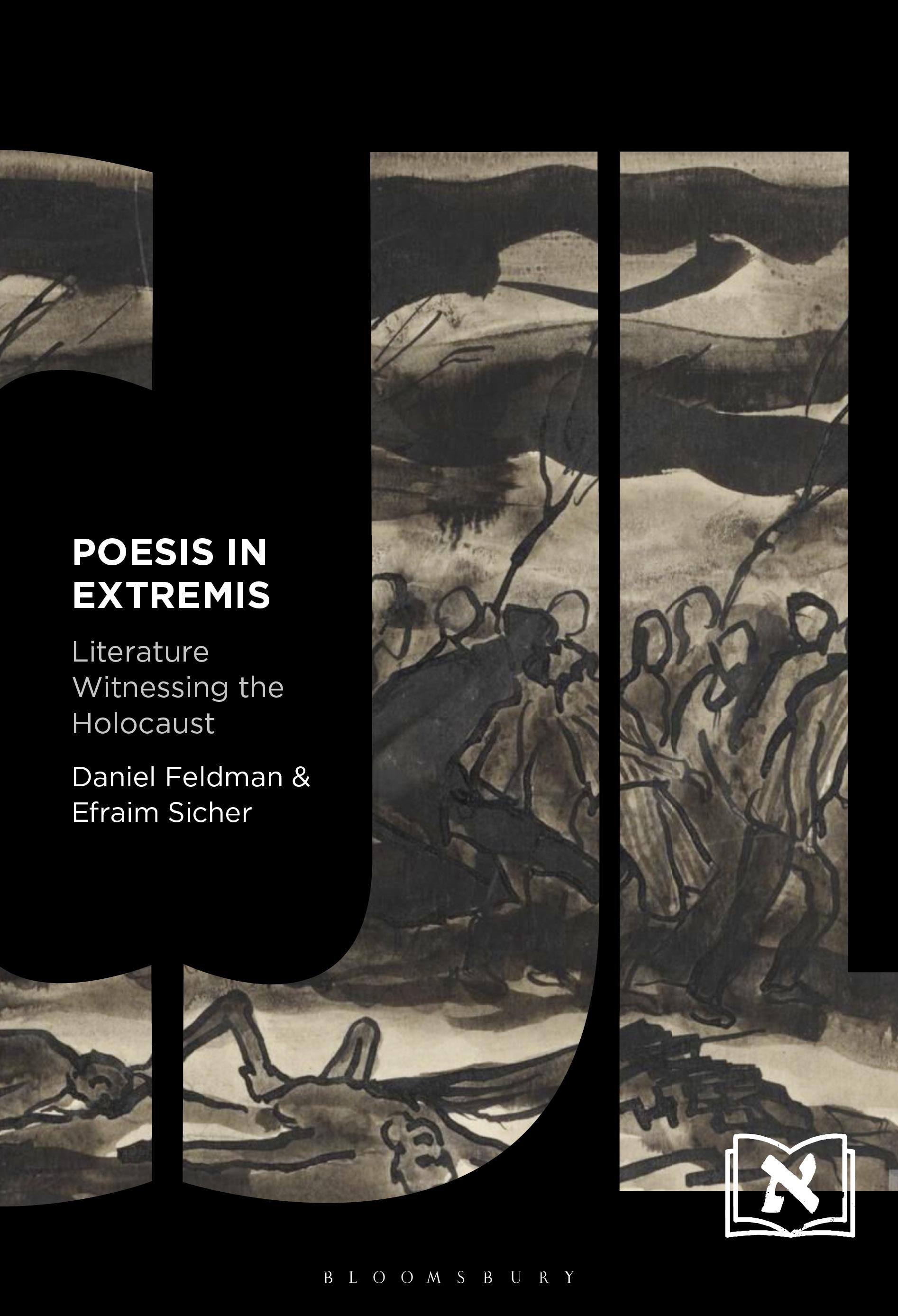
A Choice Outstanding Academic Title of 2025
How can genocide be witnessed through imaginative literature? How can the Holocaust affect readers who were not there?
Reading the work of major figures such as Elie Wiesel, Paul Celan, Avrom Sutzkever, Ida Fink, Wladyslaw Szlengel, Itzhak Katzenelson, and Czeslaw Milosz, Poesis in Extremis poses fundamental questions about how prose and poetry are written under extreme conditions, either in real time or immediately after the Holocaust.
Framed by discussion of literary testimony, with Wiesel's literary memoir Night as an entry point, this innovative study explores the blurred boundary of fact and fiction in Holocaust literature. It asks whether there is a poetics of the Holocaust and what might be the criteria for literary witnessing. Wartime writing in particular tests the limits of “poesis in extremis” when poets faced their own annihilation and wrote in the hope that their words, like a message in a bottle, would somehow reach readers. Through Poesis in Extremis, Daniel Feldman and Efraim Sicher probe the boundaries of Holocaust literature, as well as the limits of representation.
How can genocide be witnessed through imaginative literature? How can the Holocaust affect readers who were not there?
Reading the work of major figures such as Elie Wiesel, Paul Celan, Avrom Sutzkever, Ida Fink, Wladyslaw Szlengel, Itzhak Katzenelson, and Czeslaw Milosz, Poesis in Extremis poses fundamental questions about how prose and poetry are written under extreme conditions, either in real time or immediately after the Holocaust.
Framed by discussion of literary testimony, with Wiesel's literary memoir Night as an entry point, this innovative study explores the blurred boundary of fact and fiction in Holocaust literature. It asks whether there is a poetics of the Holocaust and what might be the criteria for literary witnessing. Wartime writing in particular tests the limits of “poesis in extremis” when poets faced their own annihilation and wrote in the hope that their words, like a message in a bottle, would somehow reach readers. Through Poesis in Extremis, Daniel Feldman and Efraim Sicher probe the boundaries of Holocaust literature, as well as the limits of representation.
Seiten: 272
Kategorie: Litteraturvetenskap & Teori
e-ISBN: 9798765100196
Versandgewicht: 1.2 kg
Versand in: 1-2 Tage
Zahle einfach mit Karte, Klarna, Apple Pay oder Google Pay. Nicht zufrieden? Du hast immer ein 14-tägiges Widerrufsrecht. Lies mehr in unseren AGB. Hast du Fragen, schreib uns eine E-Mail an hello@memmo.org.
Memmo macht das Lernen einfacher – wo auch immer du bist. Bei uns findest du deine Kursbücher und smarte Lerntools an einem Ort: Zusammenfassungen, Quizzes, Podcasts und Lernkarten. Und Ted, dein Lernbuddy, beantwortet alles, was du wissen möchtest. Über 50.000 Studierende lernen bereits hier – gemacht, damit du schneller lernst und weniger Stress hast.