
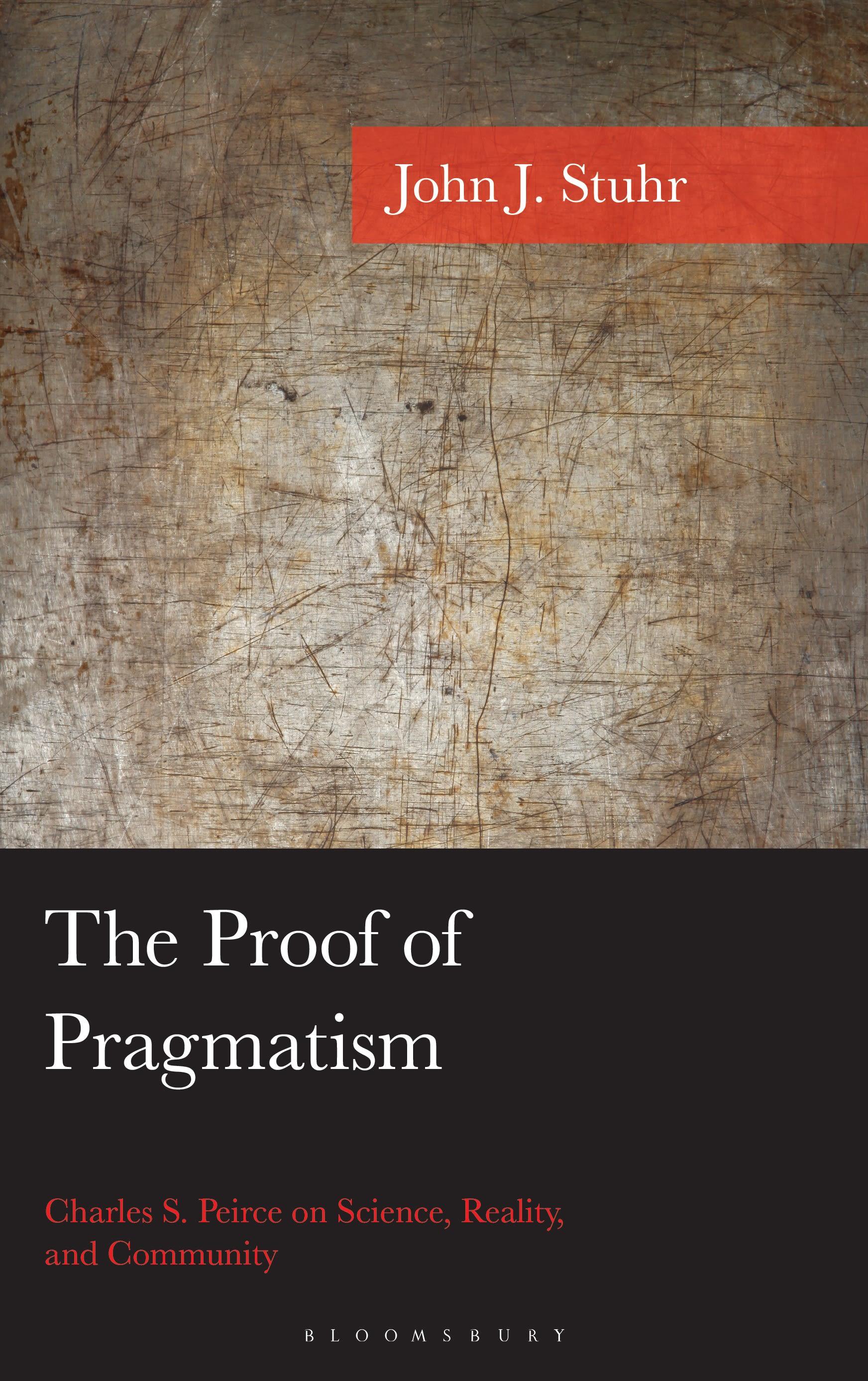
Pragmatism is true and not only useful.
Drawing critically on the writings of Charles Peirce, this book presents a proof of pragmatism and explores its implications for using scientific method, understanding the nature of reality, and recognizing and deepening the centrality of community.
Peirce's development of a successful proof of pragmatism had three stages, each improving on the earlier: a proof based in the psychology of belief; a proof based in a phenomenology of perception; and a proof based in semiotics. In reconstructing and refashioning Peirce's philosophy and its theoretical and practical consequences, John J. Stuhr demonstrates how Peirce makes it possible for pragmatists to reject fully the mission, methods, and conclusions of modern European philosophy and, in so doing, to articulate a revolutionary new philosophy rooted in experimental, fallible, and public thought. For this pragmatism, community is not simply a prerequisite of communication; it is an end and, as an ideal, it is an instrument for transformation, a way to change the world.
In establishing a proof of the truth of pragmatism, Stuhr clarifies the logical, ontological, and normative commitments of pragmatism, making clear their impact for inquiry and problem solving, reasoning and an understanding of reality, and ethical commitments and social ideals. The book provides a thorough and clear account of the development of pragmatism and a lively and original extension and application of pragmatic theory to practice.
Drawing critically on the writings of Charles Peirce, this book presents a proof of pragmatism and explores its implications for using scientific method, understanding the nature of reality, and recognizing and deepening the centrality of community.
Peirce's development of a successful proof of pragmatism had three stages, each improving on the earlier: a proof based in the psychology of belief; a proof based in a phenomenology of perception; and a proof based in semiotics. In reconstructing and refashioning Peirce's philosophy and its theoretical and practical consequences, John J. Stuhr demonstrates how Peirce makes it possible for pragmatists to reject fully the mission, methods, and conclusions of modern European philosophy and, in so doing, to articulate a revolutionary new philosophy rooted in experimental, fallible, and public thought. For this pragmatism, community is not simply a prerequisite of communication; it is an end and, as an ideal, it is an instrument for transformation, a way to change the world.
In establishing a proof of the truth of pragmatism, Stuhr clarifies the logical, ontological, and normative commitments of pragmatism, making clear their impact for inquiry and problem solving, reasoning and an understanding of reality, and ethical commitments and social ideals. The book provides a thorough and clear account of the development of pragmatism and a lively and original extension and application of pragmatic theory to practice.
Zahle einfach mit Karte, Klarna, Apple Pay oder Google Pay. Nicht zufrieden? Du hast immer ein 14-tägiges Widerrufsrecht. Lies mehr in unseren AGB. Hast du Fragen, schreib uns eine E-Mail an hello@memmo.org.
Memmo macht das Lernen einfacher – wo auch immer du bist. Bei uns findest du deine Kursbücher und smarte Lerntools an einem Ort: Zusammenfassungen, Quizzes, Podcasts und Lernkarten. Und Ted, dein Lernbuddy, beantwortet alles, was du wissen möchtest. Über 50.000 Studierende lernen bereits hier – gemacht, damit du schneller lernst und weniger Stress hast.