
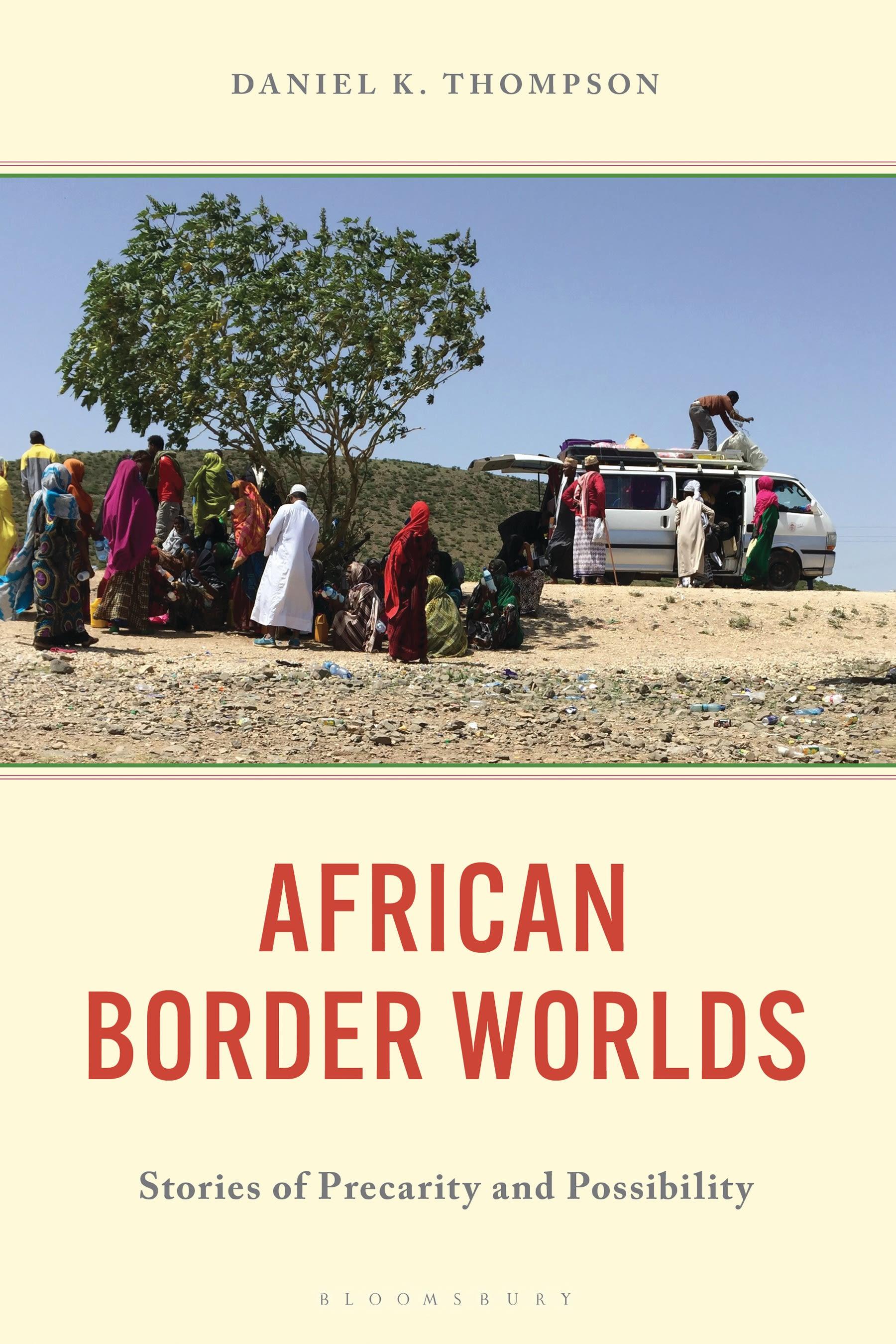
Every border is a world of stories, not just a line on a map or a political frontier. This book introduces readers to the worlds of African borderlands by following border-jumpers, asylum seekers, return migrants, and contraband traders across borders in eastern and southern Africa.
Through vivid, character-driven narratives drawn from ethnographic fieldwork and relationships spanning fifteen years, African Border Worlds challenges three common assumptions about African borders: that they are arbitrary colonial impositions, that they are peripheral spaces of poverty and marginalization, and that they should be thought of in terms of binaries such as good/bad or open/closed. Instead, it shows that borders are dynamic, contested, and full of paradox. They are sites of violence and engines of opportunity, zones of exclusion and platforms for reinvention. The people at the center of these stories are active participants in shaping how borders work, not simply passive victims of border regimes.
Grounding the analysis in his own experiences of border-crossing, anthropologist Daniel K. Thompson also reflects on what it means to conduct research across borders defined by deep global inequalities, and on the relationships that make such work possible and morally consequential.
Through vivid, character-driven narratives drawn from ethnographic fieldwork and relationships spanning fifteen years, African Border Worlds challenges three common assumptions about African borders: that they are arbitrary colonial impositions, that they are peripheral spaces of poverty and marginalization, and that they should be thought of in terms of binaries such as good/bad or open/closed. Instead, it shows that borders are dynamic, contested, and full of paradox. They are sites of violence and engines of opportunity, zones of exclusion and platforms for reinvention. The people at the center of these stories are active participants in shaping how borders work, not simply passive victims of border regimes.
Grounding the analysis in his own experiences of border-crossing, anthropologist Daniel K. Thompson also reflects on what it means to conduct research across borders defined by deep global inequalities, and on the relationships that make such work possible and morally consequential.
Seiten: 154
Kategorie: Samhällsvetenskap
e-ISBN: 9798216441946
Versandgewicht: 1.2 kg
Versand in: 1-2 Tage
Zahle einfach mit Karte, Klarna, Apple Pay oder Google Pay. Nicht zufrieden? Du hast immer ein 14-tägiges Widerrufsrecht. Lies mehr in unseren AGB. Hast du Fragen, schreib uns eine E-Mail an hello@memmo.org.
Memmo macht das Lernen einfacher – wo auch immer du bist. Bei uns findest du deine Kursbücher und smarte Lerntools an einem Ort: Zusammenfassungen, Quizzes, Podcasts und Lernkarten. Und Ted, dein Lernbuddy, beantwortet alles, was du wissen möchtest. Über 50.000 Studierende lernen bereits hier – gemacht, damit du schneller lernst und weniger Stress hast.