
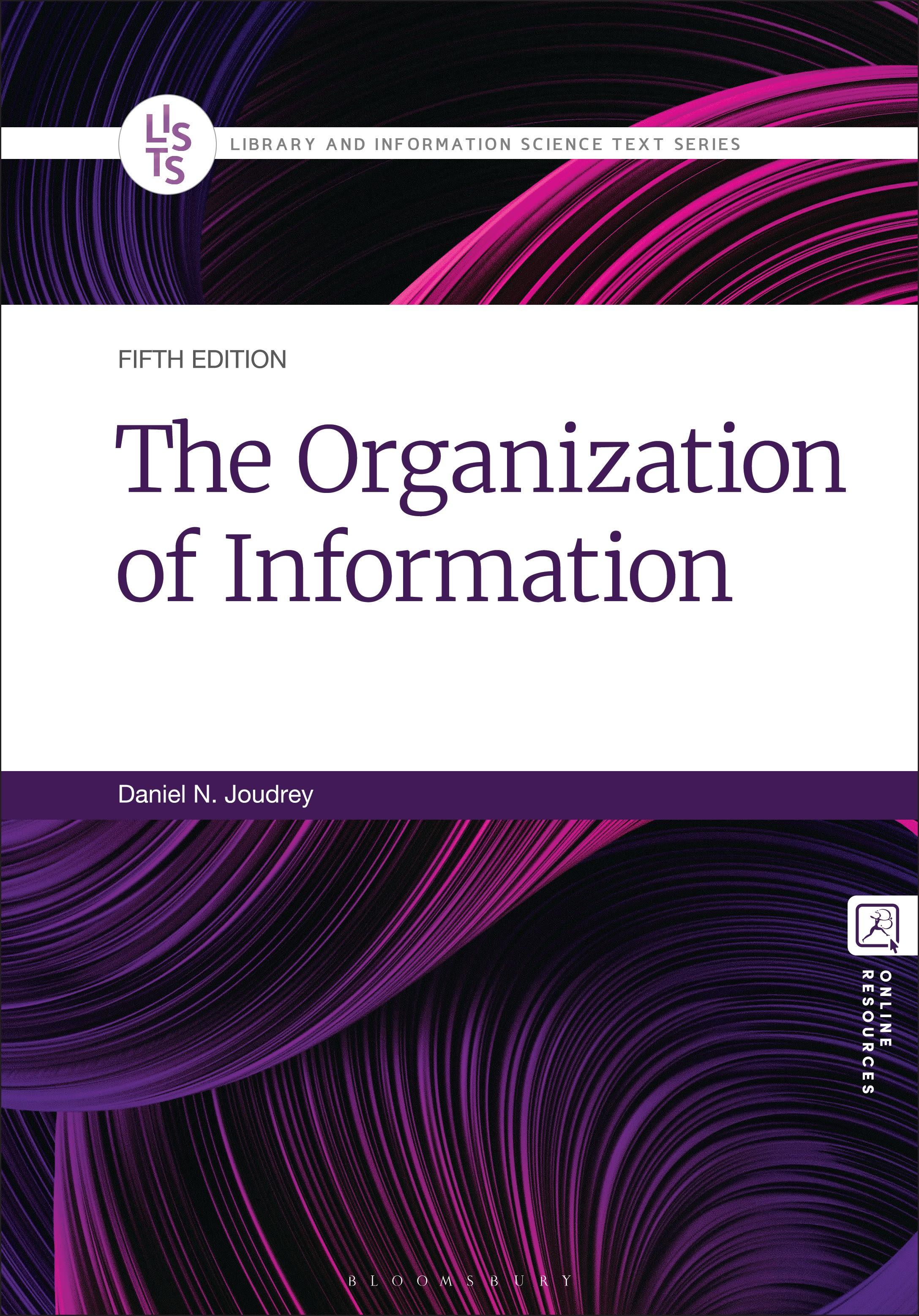
Organizing information is at the heart of the information professions, and the fifth edition of The Organization of Information is a key resource for anyone seeking up-to-date guidance.
For millennia, information organization has been central to the functioning of libraries and other information institutions. The fifth edition of The Organization of Information provides a timely, detailed introduction to organizing in a variety of information contexts, including library cataloging, archival description, indexing, museum registration, metadata creation for digital collections, organizing on the web, linked data, and the development of the Semantic Web.
Examining how and why information professionals organize information in contemporary libraries, archives, museums, and in a variety of online settings, expert Daniel N. Joudrey addresses the types of retrieval tools used throughout information organizations, the functionality of information systems, and the role and effect of technology on information organization. A discussion of encoding follows, explaining the basics of the MARC format, several XML schemas, and the developing BIBFRAME standard. A section on the principles and functionality of metadata covers metadata types, metadata characteristics, and tools used to manage metadata projects. A timely new chapter on conceptual models and frameworks articulates the visions behind the Library Reference Model (LRM), Records-in-Contexts (RiC), and the Semantic Web, including a discussion of RDF as its underlying structural model. Finally, the latter portion of the book describes practices related to the creation of descriptive metadata.
Providing a thorough overview of the field's major issues, challenges, and standards, The Organization of Information is an essential resource for students in library and information science programs as well as for established professionals who want to refresh their knowledge of the latest developments in the field.
For millennia, information organization has been central to the functioning of libraries and other information institutions. The fifth edition of The Organization of Information provides a timely, detailed introduction to organizing in a variety of information contexts, including library cataloging, archival description, indexing, museum registration, metadata creation for digital collections, organizing on the web, linked data, and the development of the Semantic Web.
Examining how and why information professionals organize information in contemporary libraries, archives, museums, and in a variety of online settings, expert Daniel N. Joudrey addresses the types of retrieval tools used throughout information organizations, the functionality of information systems, and the role and effect of technology on information organization. A discussion of encoding follows, explaining the basics of the MARC format, several XML schemas, and the developing BIBFRAME standard. A section on the principles and functionality of metadata covers metadata types, metadata characteristics, and tools used to manage metadata projects. A timely new chapter on conceptual models and frameworks articulates the visions behind the Library Reference Model (LRM), Records-in-Contexts (RiC), and the Semantic Web, including a discussion of RDF as its underlying structural model. Finally, the latter portion of the book describes practices related to the creation of descriptive metadata.
Providing a thorough overview of the field's major issues, challenges, and standards, The Organization of Information is an essential resource for students in library and information science programs as well as for established professionals who want to refresh their knowledge of the latest developments in the field.
Seiten: 688
Kategorie: Samhällsvetenskap
e-ISBN: 9798216184331
Versandgewicht: 1.2 kg
Versand in: 1-2 Tage
Zahle einfach mit Karte, Klarna, Apple Pay oder Google Pay. Nicht zufrieden? Du hast immer ein 14-tägiges Widerrufsrecht. Lies mehr in unseren AGB. Hast du Fragen, schreib uns eine E-Mail an hello@memmo.org.
Memmo macht das Lernen einfacher – wo auch immer du bist. Bei uns findest du deine Kursbücher und smarte Lerntools an einem Ort: Zusammenfassungen, Quizzes, Podcasts und Lernkarten. Und Ted, dein Lernbuddy, beantwortet alles, was du wissen möchtest. Über 50.000 Studierende lernen bereits hier – gemacht, damit du schneller lernst und weniger Stress hast.