
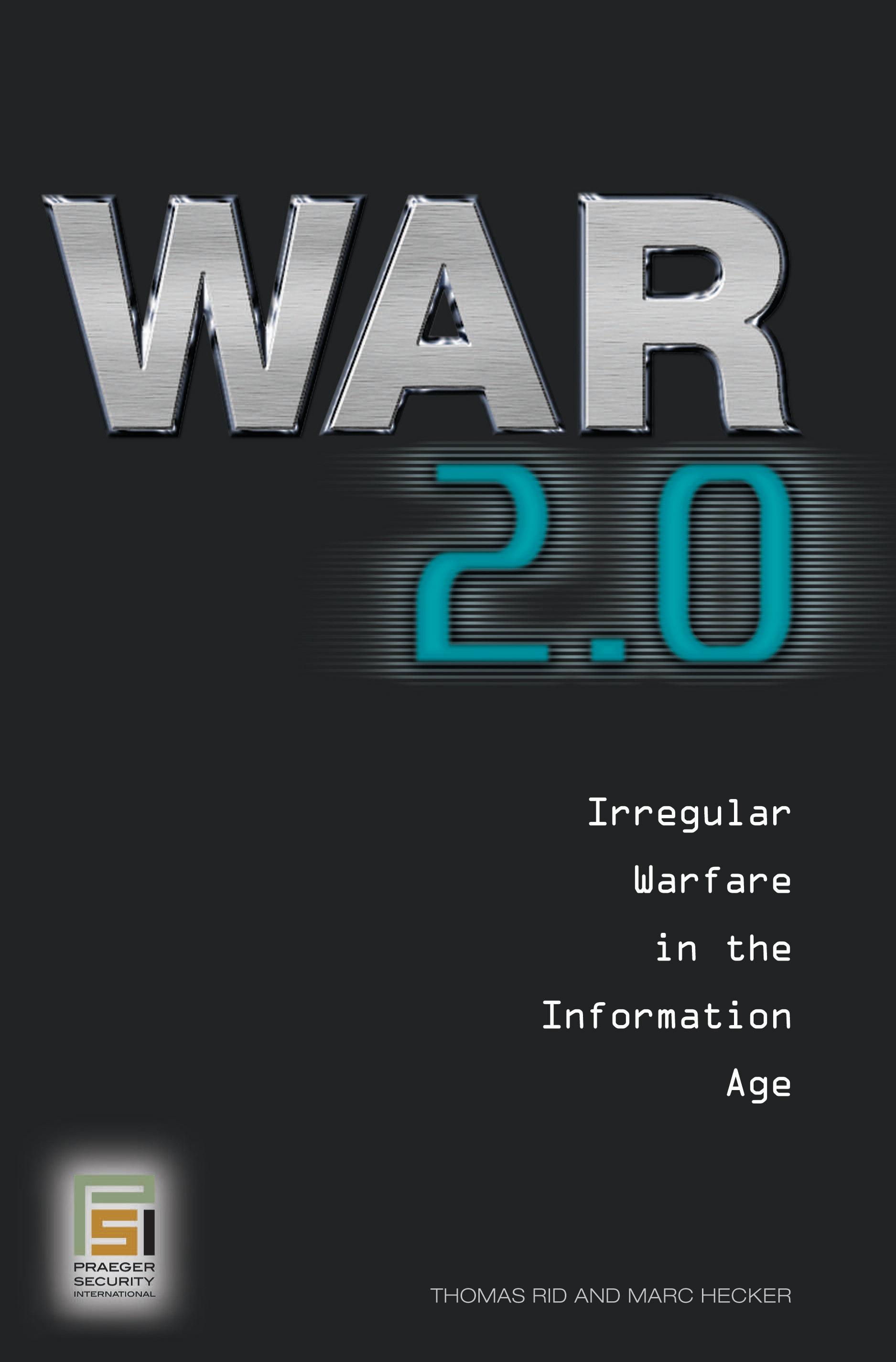
War 2.0: Irregular Warfare in the Information Age argues that two intimately connected grassroots trends—the rise of insurgencies and the rise of the web—are putting modern armies under huge pressure to adapt new forms of counterinsurgency to new forms of social war.
After the U.S. military—transformed into a lean, lethal, computerized force—faltered in Iraq after 2003, a robust insurgency arose. Counterinsurgency became a social form of war—indeed, the U.S. Army calls it "armed social work"—in which the local population was the center of gravity and public opinion at home the critical vulnerability.
War 2.0 traces the contrasting ways in which insurgents and counterinsurgents have adapted irregular conflict to novel media platforms. It examines the public affairs policies of the U.S. land forces, the British Army, and the Israel Defense Forces. Then, it compares the media-related counterinsurgency methods of these conventional armies with the methods devised by their irregular adversaries, showing how such organizations as al-Qaeda, the Taliban, and Hezbollah use the web, not merely to advertise their political agenda and influence public opinion, but to mobilize a following and put violent ideas into action.
After the U.S. military—transformed into a lean, lethal, computerized force—faltered in Iraq after 2003, a robust insurgency arose. Counterinsurgency became a social form of war—indeed, the U.S. Army calls it "armed social work"—in which the local population was the center of gravity and public opinion at home the critical vulnerability.
War 2.0 traces the contrasting ways in which insurgents and counterinsurgents have adapted irregular conflict to novel media platforms. It examines the public affairs policies of the U.S. land forces, the British Army, and the Israel Defense Forces. Then, it compares the media-related counterinsurgency methods of these conventional armies with the methods devised by their irregular adversaries, showing how such organizations as al-Qaeda, the Taliban, and Hezbollah use the web, not merely to advertise their political agenda and influence public opinion, but to mobilize a following and put violent ideas into action.
Zahle einfach mit Karte, Klarna, Apple Pay oder Google Pay. Nicht zufrieden? Du hast immer ein 14-tägiges Widerrufsrecht. Lies mehr in unseren AGB. Hast du Fragen, schreib uns eine E-Mail an hello@memmo.org.
Memmo macht das Lernen einfacher – wo auch immer du bist. Bei uns findest du deine Kursbücher und smarte Lerntools an einem Ort: Zusammenfassungen, Quizzes, Podcasts und Lernkarten. Und Ted, dein Lernbuddy, beantwortet alles, was du wissen möchtest. Über 50.000 Studierende lernen bereits hier – gemacht, damit du schneller lernst und weniger Stress hast.