
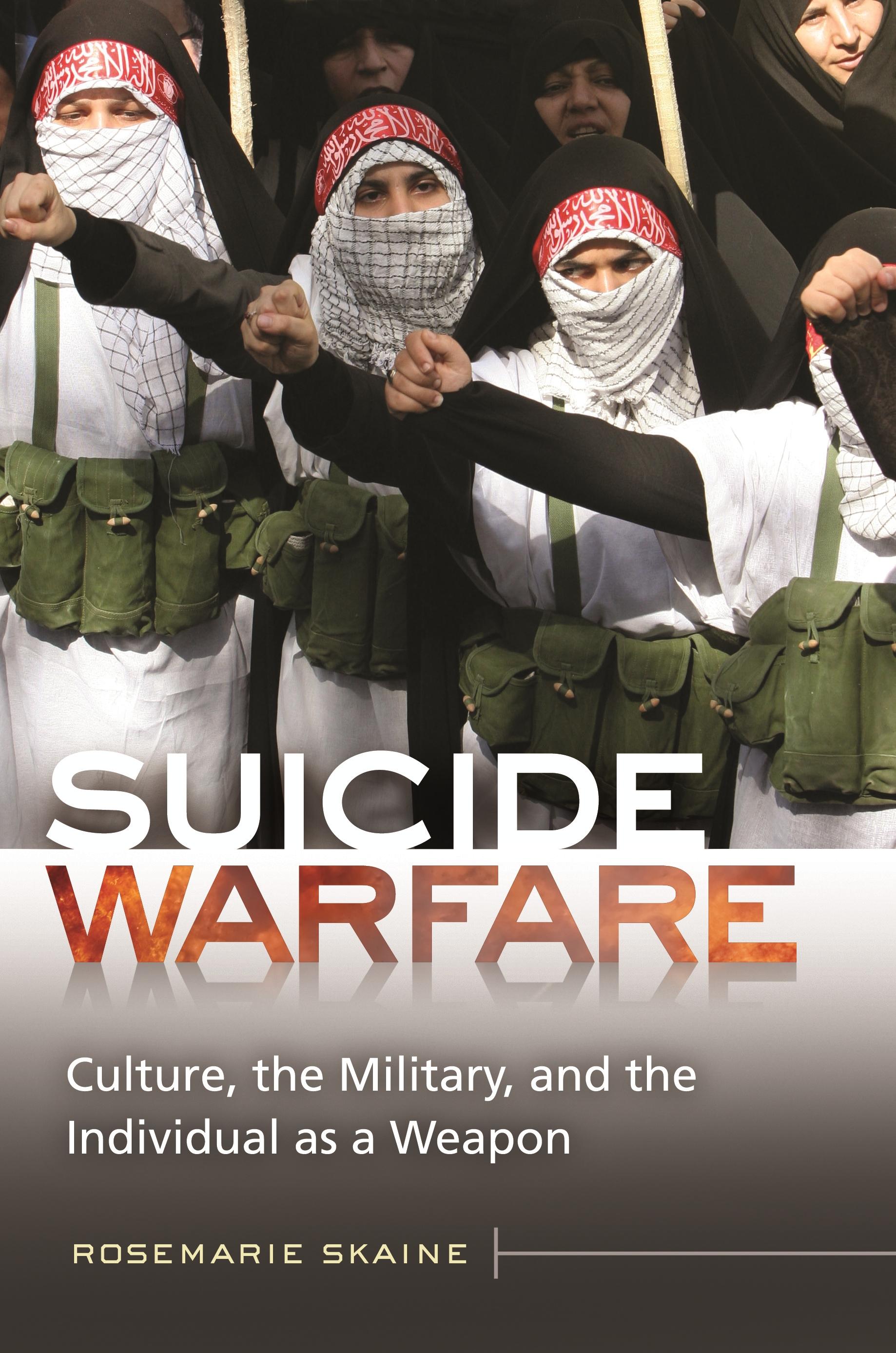
This book provides up-to-date coverage of the policies, strategies, and effects of suicide in war, examining this subject from societal and military perspectives to shed light on the justifications for using human beings as expendable weapons.
Suicide warfare has expanded over the years and become a global phenomenon. In some parts of the world, it has become rooted in the fabric of society. Westerners often find it difficult to grasp why someone would be willing to sacrifice their life in order to take the lives of others. Suicide Warfare: Culture, the Military, and the Individual as a Weapon provides a thorough examination of the topic that enables readers to understand the justification for suicide warfare and better appreciate how the ideology of the individuals and organizations that resort to suicide warfare greatly complicates security issues in the 21st century.
The book covers the policies, strategies, and effects of suicide in war, examining suicide warfare in its entirety from a theoretical standpoint, and then applying those theories to the actual manifestations of and politico-military responses to suicide warfare. The author discusses specific organizations such as Al Qaeda and the Chechen rebels, analyzing each within its societal context, military justification, individual motivation, and outcomes, and addresses principles of sociological and conflict theory to place suicide warfare in a clearer conceptual framework. The book presents case studies that allow readers to better understand abstract theories and make distinctions between individual cases of suicide warfare.
Suicide warfare has expanded over the years and become a global phenomenon. In some parts of the world, it has become rooted in the fabric of society. Westerners often find it difficult to grasp why someone would be willing to sacrifice their life in order to take the lives of others. Suicide Warfare: Culture, the Military, and the Individual as a Weapon provides a thorough examination of the topic that enables readers to understand the justification for suicide warfare and better appreciate how the ideology of the individuals and organizations that resort to suicide warfare greatly complicates security issues in the 21st century.
The book covers the policies, strategies, and effects of suicide in war, examining suicide warfare in its entirety from a theoretical standpoint, and then applying those theories to the actual manifestations of and politico-military responses to suicide warfare. The author discusses specific organizations such as Al Qaeda and the Chechen rebels, analyzing each within its societal context, military justification, individual motivation, and outcomes, and addresses principles of sociological and conflict theory to place suicide warfare in a clearer conceptual framework. The book presents case studies that allow readers to better understand abstract theories and make distinctions between individual cases of suicide warfare.
Zahle einfach mit Karte, Klarna, Apple Pay oder Google Pay. Nicht zufrieden? Du hast immer ein 14-tägiges Widerrufsrecht. Lies mehr in unseren AGB. Hast du Fragen, schreib uns eine E-Mail an hello@memmo.org.
Memmo macht das Lernen einfacher – wo auch immer du bist. Bei uns findest du deine Kursbücher und smarte Lerntools an einem Ort: Zusammenfassungen, Quizzes, Podcasts und Lernkarten. Und Ted, dein Lernbuddy, beantwortet alles, was du wissen möchtest. Über 50.000 Studierende lernen bereits hier – gemacht, damit du schneller lernst und weniger Stress hast.