
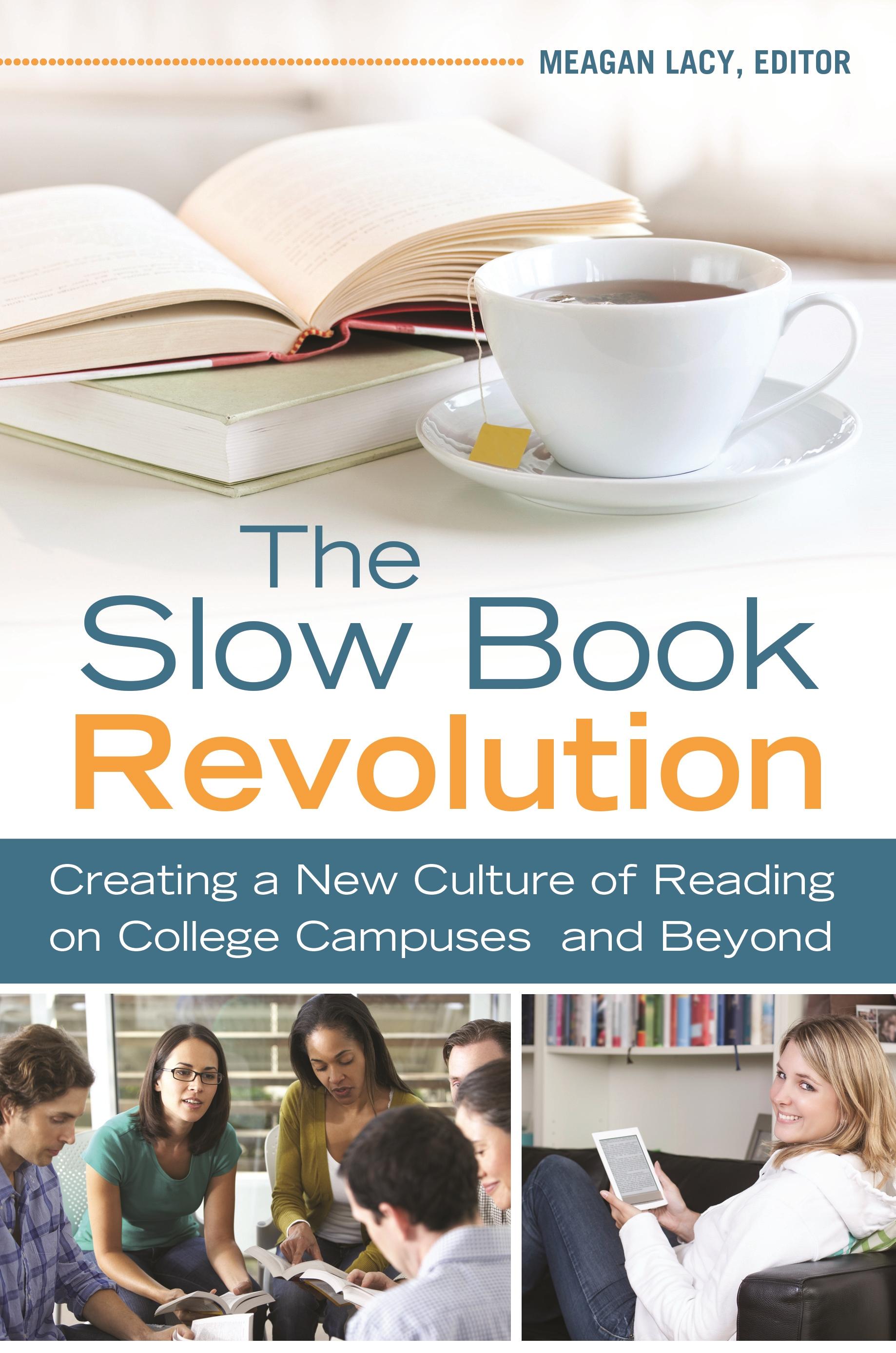
This inspiring guide shows how to implement the principles of the Slow Book movement in college campus libraries as well as public and high school libraries, with the ultimate goals of encouraging pensive reading habits and creating a lifelong enjoyment of books.
In a world of constant Facebook posts and Tweets, digital distractions and online reading habits are wearing at students' ability to focus, reflect, synthesize, and think deeply. This professional text, based on a concept introduced by Maura Kelly in the online edition of The Atlantic, delves into the trend toward contemplative reading—otherwise known as the Slow Book movement—explaining what it is, why it's important, and how you can implement it in various ways and in multiple settings.
Author and librarian Meagan Lacy, along with contributions from others in the field, offers insights, advice, and practical tools to help you foster an appreciation of reading in students both during and after college. The first part of the book establishes the importance of the Slow Book movement, while the second and third sections combine case studies and guidance for employing the principles of this method across multiple genres, including fiction, nonfiction, classics, and contemporary works. Chapters build a rationale for the approach, describe its underlying philosophy, and articulate concrete ways to apply the methodology in different venues.
In a world of constant Facebook posts and Tweets, digital distractions and online reading habits are wearing at students' ability to focus, reflect, synthesize, and think deeply. This professional text, based on a concept introduced by Maura Kelly in the online edition of The Atlantic, delves into the trend toward contemplative reading—otherwise known as the Slow Book movement—explaining what it is, why it's important, and how you can implement it in various ways and in multiple settings.
Author and librarian Meagan Lacy, along with contributions from others in the field, offers insights, advice, and practical tools to help you foster an appreciation of reading in students both during and after college. The first part of the book establishes the importance of the Slow Book movement, while the second and third sections combine case studies and guidance for employing the principles of this method across multiple genres, including fiction, nonfiction, classics, and contemporary works. Chapters build a rationale for the approach, describe its underlying philosophy, and articulate concrete ways to apply the methodology in different venues.
Zahle einfach mit Karte, Klarna, Apple Pay oder Google Pay. Nicht zufrieden? Du hast immer ein 14-tägiges Widerrufsrecht. Lies mehr in unseren AGB. Hast du Fragen, schreib uns eine E-Mail an hello@memmo.org.
Memmo macht das Lernen einfacher – wo auch immer du bist. Bei uns findest du deine Kursbücher und smarte Lerntools an einem Ort: Zusammenfassungen, Quizzes, Podcasts und Lernkarten. Und Ted, dein Lernbuddy, beantwortet alles, was du wissen möchtest. Über 50.000 Studierende lernen bereits hier – gemacht, damit du schneller lernst und weniger Stress hast.