
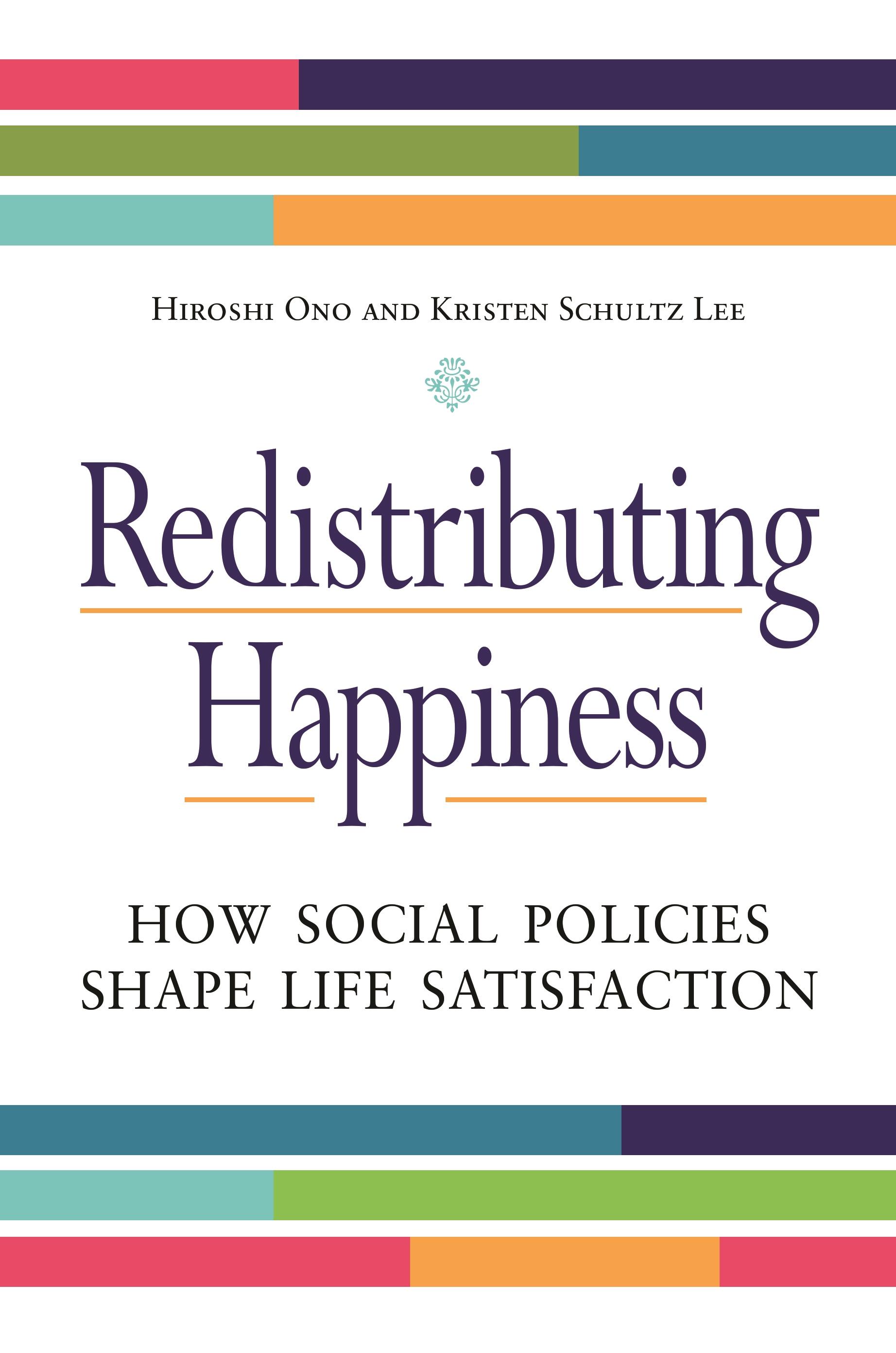
Drawing on international comparisons of data on happiness, this book offers both general and academic audiences a simple, deep, and honest answer to the timeless question: "What makes people happy"?
The conventional recipe for happiness has long included money, marriage, and parenthood as basic ingredients. What research is telling us, however, is that these elements don't relate to happiness in quite the way we might expect them to. Redistributing Happiness: How Social Policies Shape Life Satisfaction explores the factors that determine "life satisfaction" and demonstrate how an individual's happiness is largely shaped by social context—by where they live and local policies, norms and attitudes about religious beliefs, economic and political security, income redistribution, and more.
The book begins with a review of the contributions of other disciplines—such as economics, psychology, and political science—to common explanations of the sources of happiness. Next, the authors offer an international comparison based on their own research on what makes people happy, taking into consideration factors such as marriage, children, money, and job status. Most importantly, special attention is paid to how social policies and social context directly affect people's happiness. All readers high school age and up will enjoy the book's comprehensive—and fascinating—answer to the happiness question because of how the authors connect an individual's experience to the broader environment of the social system and situation in which that person resides.
The conventional recipe for happiness has long included money, marriage, and parenthood as basic ingredients. What research is telling us, however, is that these elements don't relate to happiness in quite the way we might expect them to. Redistributing Happiness: How Social Policies Shape Life Satisfaction explores the factors that determine "life satisfaction" and demonstrate how an individual's happiness is largely shaped by social context—by where they live and local policies, norms and attitudes about religious beliefs, economic and political security, income redistribution, and more.
The book begins with a review of the contributions of other disciplines—such as economics, psychology, and political science—to common explanations of the sources of happiness. Next, the authors offer an international comparison based on their own research on what makes people happy, taking into consideration factors such as marriage, children, money, and job status. Most importantly, special attention is paid to how social policies and social context directly affect people's happiness. All readers high school age and up will enjoy the book's comprehensive—and fascinating—answer to the happiness question because of how the authors connect an individual's experience to the broader environment of the social system and situation in which that person resides.
Zahle einfach mit Karte, Klarna, Apple Pay oder Google Pay. Nicht zufrieden? Du hast immer ein 14-tägiges Widerrufsrecht. Lies mehr in unseren AGB. Hast du Fragen, schreib uns eine E-Mail an hello@memmo.org.
Memmo macht das Lernen einfacher – wo auch immer du bist. Bei uns findest du deine Kursbücher und smarte Lerntools an einem Ort: Zusammenfassungen, Quizzes, Podcasts und Lernkarten. Und Ted, dein Lernbuddy, beantwortet alles, was du wissen möchtest. Über 50.000 Studierende lernen bereits hier – gemacht, damit du schneller lernst und weniger Stress hast.