
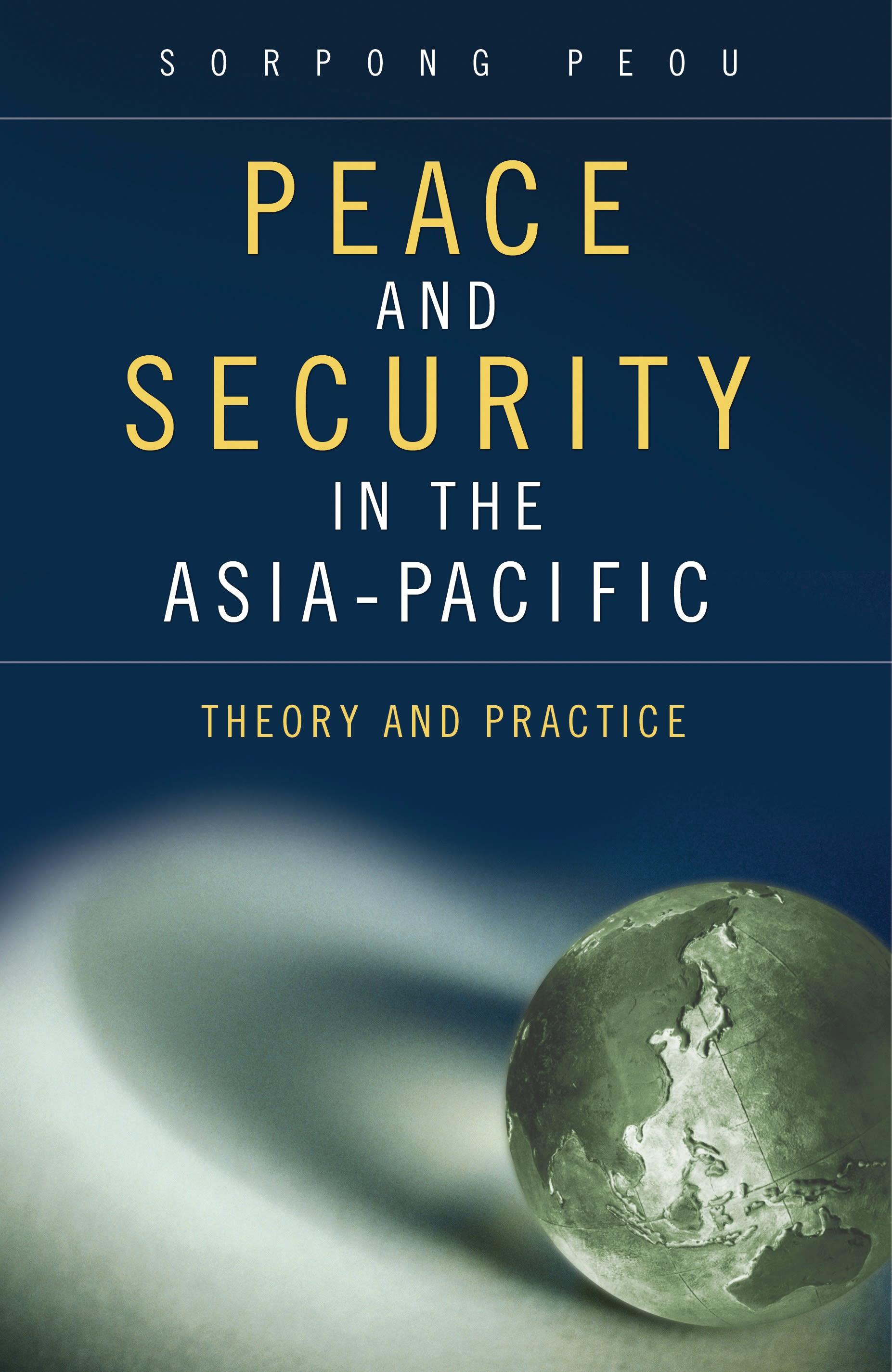
Demonstrating that none of the various perspectives under review has emerged as the clear winner in the struggle for theoretical hegemony in security studies, this book shows that eclectic perspectives, like democratic realist institutionalism, can better explain peace and security in the Asian Pacific.
The Asian Pacific has emerged as one of the most important regions in the world, causing scholars to pay increased attention to the various challenges, old and new, to peace and security there. Peace and Security in the Asia-Pacific: Theory and Practice is a comprehensive, critical review of the established theoretical perspectives relevant to contemporary peace and security studies in the light of recent experiences.
Illuminating ongoing debates in the field, the book covers some 20 theoretical perspectives on peace and security in the Asian Pacific, including realist, liberal, socialist, peace and human security, constructivist, feminist, and nontraditional security studies. The first section of the book discusses perspectives in realist security studies, the second part covers perspectives critical of realism. The author's goal is to assess whether any of the perspectives found in nonrealist security studies are capable of undermining realism. His conclusion is that each theoretical perspective has its strengths and weaknesses, leaving eclecticism as the best way to understand the region's dynamics.
The Asian Pacific has emerged as one of the most important regions in the world, causing scholars to pay increased attention to the various challenges, old and new, to peace and security there. Peace and Security in the Asia-Pacific: Theory and Practice is a comprehensive, critical review of the established theoretical perspectives relevant to contemporary peace and security studies in the light of recent experiences.
Illuminating ongoing debates in the field, the book covers some 20 theoretical perspectives on peace and security in the Asian Pacific, including realist, liberal, socialist, peace and human security, constructivist, feminist, and nontraditional security studies. The first section of the book discusses perspectives in realist security studies, the second part covers perspectives critical of realism. The author's goal is to assess whether any of the perspectives found in nonrealist security studies are capable of undermining realism. His conclusion is that each theoretical perspective has its strengths and weaknesses, leaving eclecticism as the best way to understand the region's dynamics.
Zahle einfach mit Karte, Klarna, Apple Pay oder Google Pay. Nicht zufrieden? Du hast immer ein 14-tägiges Widerrufsrecht. Lies mehr in unseren AGB. Hast du Fragen, schreib uns eine E-Mail an hello@memmo.org.
Memmo macht das Lernen einfacher – wo auch immer du bist. Bei uns findest du deine Kursbücher und smarte Lerntools an einem Ort: Zusammenfassungen, Quizzes, Podcasts und Lernkarten. Und Ted, dein Lernbuddy, beantwortet alles, was du wissen möchtest. Über 50.000 Studierende lernen bereits hier – gemacht, damit du schneller lernst und weniger Stress hast.