
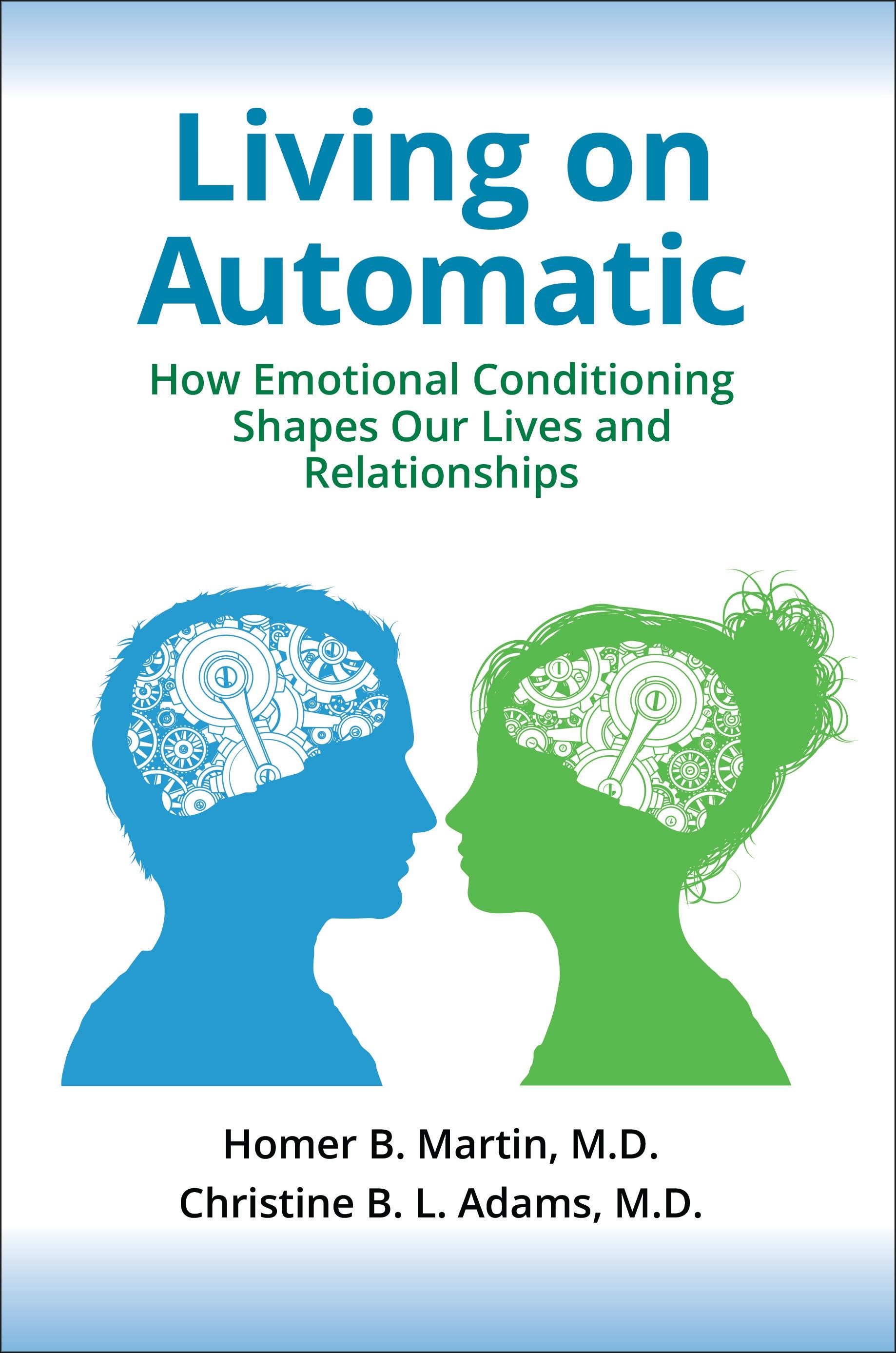
Two veteran psychiatrists unravel the mystery of how thought and emotional patterns are passed from parents to children, generation after generation, "conditioning" each of us in ways that endure throughout our lives and affect all of our relationships.
Living on Automatic not only introduces the concept of emotional conditioning, including how it occurs and becomes entrenched in our minds, but also explains how individuals can "decondition" themselves to become more adept at choosing and negotiating more rewarding relationships.
Authored by two psychiatrists, the text draws from more than 80 years of their combined psychotherapy work with thousands of people. The authors focus on helping readers to understand their roles in relationships and to develop more rewarding relationships. Case studies and questions are provided to illustrate emotional conditioning and the personality roles that emerge from it. Readers will learn why people choose the mates that they do; why the ways we learn to relate as children often do not change later in life; and how to observe and engage in introspection to begin to decondition themselves from auto-pilot, knee-jerk emotional responses, allowing for the formation of better relationships with their spouse or partner, children, and other family members.
Living on Automatic not only introduces the concept of emotional conditioning, including how it occurs and becomes entrenched in our minds, but also explains how individuals can "decondition" themselves to become more adept at choosing and negotiating more rewarding relationships.
Authored by two psychiatrists, the text draws from more than 80 years of their combined psychotherapy work with thousands of people. The authors focus on helping readers to understand their roles in relationships and to develop more rewarding relationships. Case studies and questions are provided to illustrate emotional conditioning and the personality roles that emerge from it. Readers will learn why people choose the mates that they do; why the ways we learn to relate as children often do not change later in life; and how to observe and engage in introspection to begin to decondition themselves from auto-pilot, knee-jerk emotional responses, allowing for the formation of better relationships with their spouse or partner, children, and other family members.
Zahle einfach mit Karte, Klarna, Apple Pay oder Google Pay. Nicht zufrieden? Du hast immer ein 14-tägiges Widerrufsrecht. Lies mehr in unseren AGB. Hast du Fragen, schreib uns eine E-Mail an hello@memmo.org.
Memmo macht das Lernen einfacher – wo auch immer du bist. Bei uns findest du deine Kursbücher und smarte Lerntools an einem Ort: Zusammenfassungen, Quizzes, Podcasts und Lernkarten. Und Ted, dein Lernbuddy, beantwortet alles, was du wissen möchtest. Über 50.000 Studierende lernen bereits hier – gemacht, damit du schneller lernst und weniger Stress hast.