
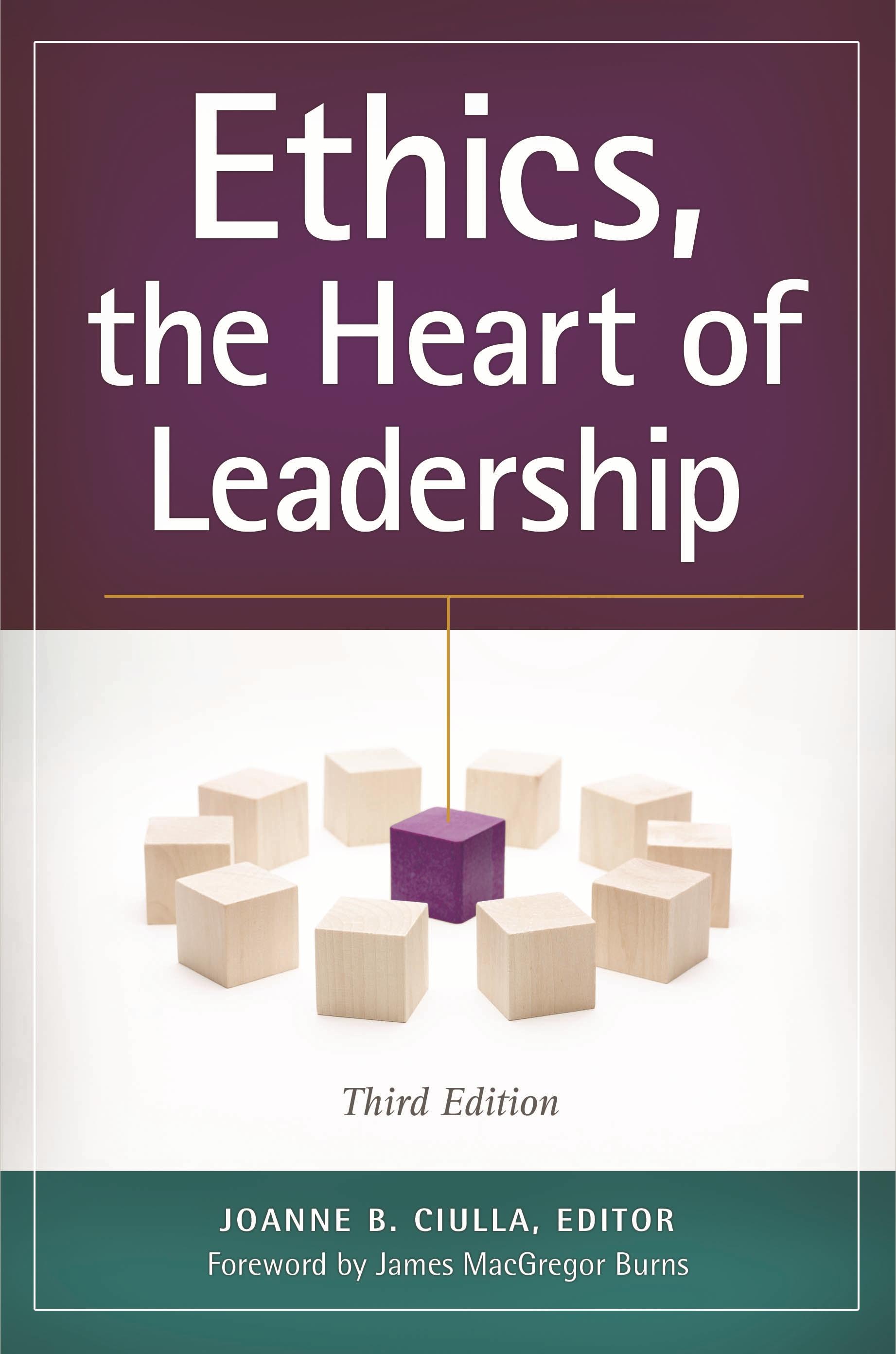
Top academic scholars ponder the question of ethics as it pertains to all aspects of leadership in business, government, and nonprofit organizations.
If leaders were defined by their influence on history, Hitler would be on par with Gandhi, Lincoln, and Mother Theresa. Yet most of us believe that our superiors have a responsibility to exercise power with a purpose far greater than any political agenda and a motive more noble than personal gain. This thought-provoking collection of essays explores the ethical challenges that leaders face in their relationships with followers, the choices they make, and the ways in which they influence others.
Joanne Ciulla and her contributors examine the traits and characteristics of top-tier leaders. She questions the assumption that moral fortitude is an inherent part of being in charge; analyzes the roles that charisma, morality, and delegation play in the leadership paradigm; and considers whether individuals who want to lead with integrity but are sometimes forced to get their hands dirty for their constituents can be called "moral leaders." Readers will gain an appreciation for how ethics is not an add-on to the practice of leadership but rather an integral part of it—an element that informs the very idea of what it means to lead and to lead well.
If leaders were defined by their influence on history, Hitler would be on par with Gandhi, Lincoln, and Mother Theresa. Yet most of us believe that our superiors have a responsibility to exercise power with a purpose far greater than any political agenda and a motive more noble than personal gain. This thought-provoking collection of essays explores the ethical challenges that leaders face in their relationships with followers, the choices they make, and the ways in which they influence others.
Joanne Ciulla and her contributors examine the traits and characteristics of top-tier leaders. She questions the assumption that moral fortitude is an inherent part of being in charge; analyzes the roles that charisma, morality, and delegation play in the leadership paradigm; and considers whether individuals who want to lead with integrity but are sometimes forced to get their hands dirty for their constituents can be called "moral leaders." Readers will gain an appreciation for how ethics is not an add-on to the practice of leadership but rather an integral part of it—an element that informs the very idea of what it means to lead and to lead well.
Zahle einfach mit Karte, Klarna, Apple Pay oder Google Pay. Nicht zufrieden? Du hast immer ein 14-tägiges Widerrufsrecht. Lies mehr in unseren AGB. Hast du Fragen, schreib uns eine E-Mail an hello@memmo.org.
Memmo macht das Lernen einfacher – wo auch immer du bist. Bei uns findest du deine Kursbücher und smarte Lerntools an einem Ort: Zusammenfassungen, Quizzes, Podcasts und Lernkarten. Und Ted, dein Lernbuddy, beantwortet alles, was du wissen möchtest. Über 50.000 Studierende lernen bereits hier – gemacht, damit du schneller lernst und weniger Stress hast.