
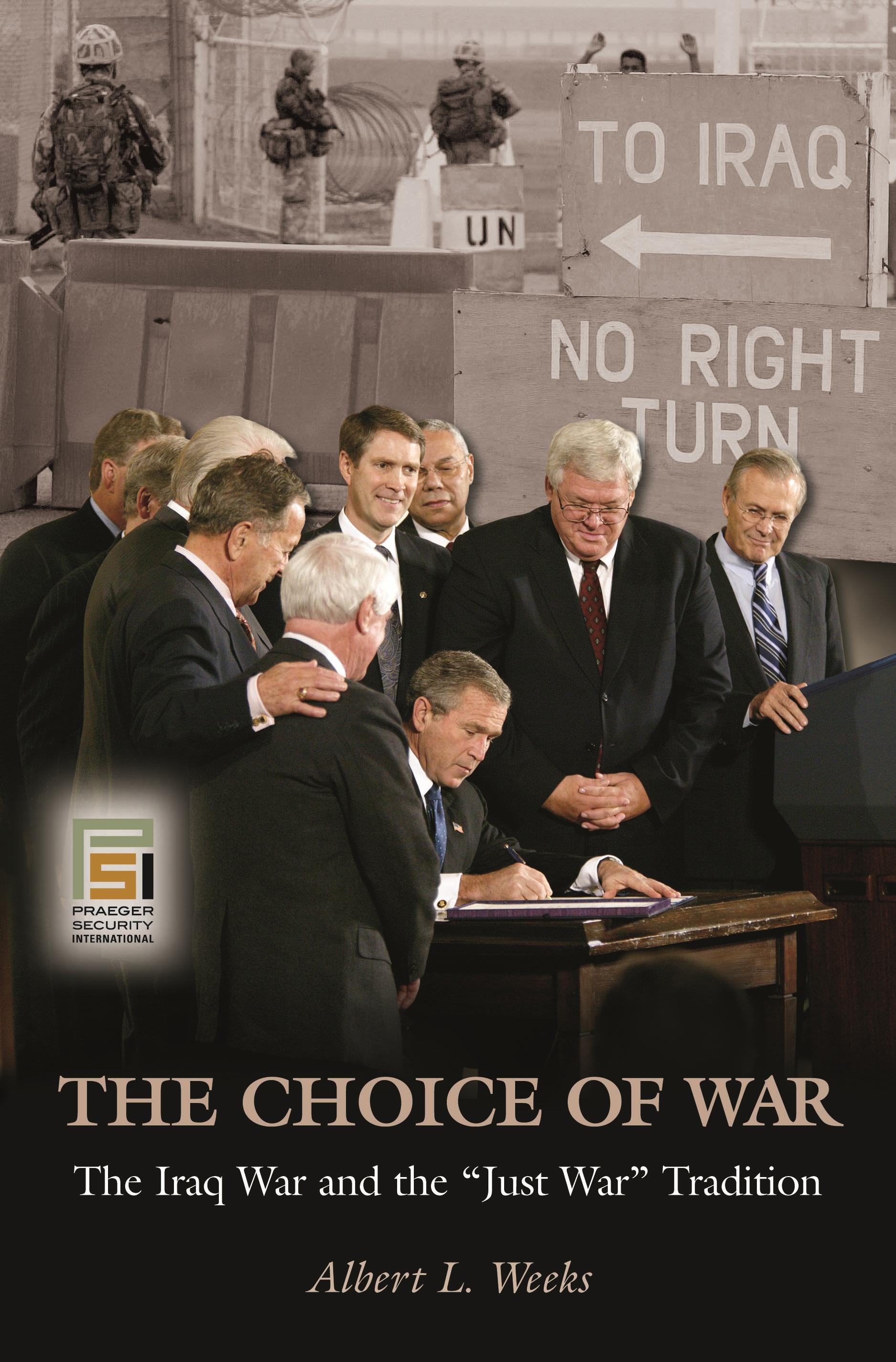
A longtime scholar of the Cold War deftly weaves together the tradition of "just war" and an examination of current events to show how the time-honored concepts of jus ad bellum (justice of war) and jus in bello (justice in war) apply to the U.S. military involvement in Iraq.
This timely analysis of President George W. Bush's foreign policy deals with the cornerstone of his administrations—the "war on terror"—as implemented in Afghanistan, Iraq, Guantanamo Bay, and at Abu Ghraib prison. The Choice of War: The Iraq War and the "Just War" Tradition discusses NSS 2002, the national security statement that became the blueprint for the Bush Doctrine. It explains the differences and similarities between preventive and pre-emptive war and explores the administration's justification of the necessity of the March 2003 invasion. Finally, it analyzes the conduct of the war, the occupation, and the post-occupation phases of the conflict.
In evaluating the Bush Doctrine, both as declared strategy and as implemented, Albert L. Weeks asks whether going it virtually alone in the global struggle against 21st-century terrorism should be incorporated permanently into American political and military policy. Answering no, he suggests an alternative to a doctrine that has isolated the United States and left the world divided.
This timely analysis of President George W. Bush's foreign policy deals with the cornerstone of his administrations—the "war on terror"—as implemented in Afghanistan, Iraq, Guantanamo Bay, and at Abu Ghraib prison. The Choice of War: The Iraq War and the "Just War" Tradition discusses NSS 2002, the national security statement that became the blueprint for the Bush Doctrine. It explains the differences and similarities between preventive and pre-emptive war and explores the administration's justification of the necessity of the March 2003 invasion. Finally, it analyzes the conduct of the war, the occupation, and the post-occupation phases of the conflict.
In evaluating the Bush Doctrine, both as declared strategy and as implemented, Albert L. Weeks asks whether going it virtually alone in the global struggle against 21st-century terrorism should be incorporated permanently into American political and military policy. Answering no, he suggests an alternative to a doctrine that has isolated the United States and left the world divided.
Zahle einfach mit Karte, Klarna, Apple Pay oder Google Pay. Nicht zufrieden? Du hast immer ein 14-tägiges Widerrufsrecht. Lies mehr in unseren AGB. Hast du Fragen, schreib uns eine E-Mail an hello@memmo.org.
Memmo macht das Lernen einfacher – wo auch immer du bist. Bei uns findest du deine Kursbücher und smarte Lerntools an einem Ort: Zusammenfassungen, Quizzes, Podcasts und Lernkarten. Und Ted, dein Lernbuddy, beantwortet alles, was du wissen möchtest. Über 50.000 Studierende lernen bereits hier – gemacht, damit du schneller lernst und weniger Stress hast.