
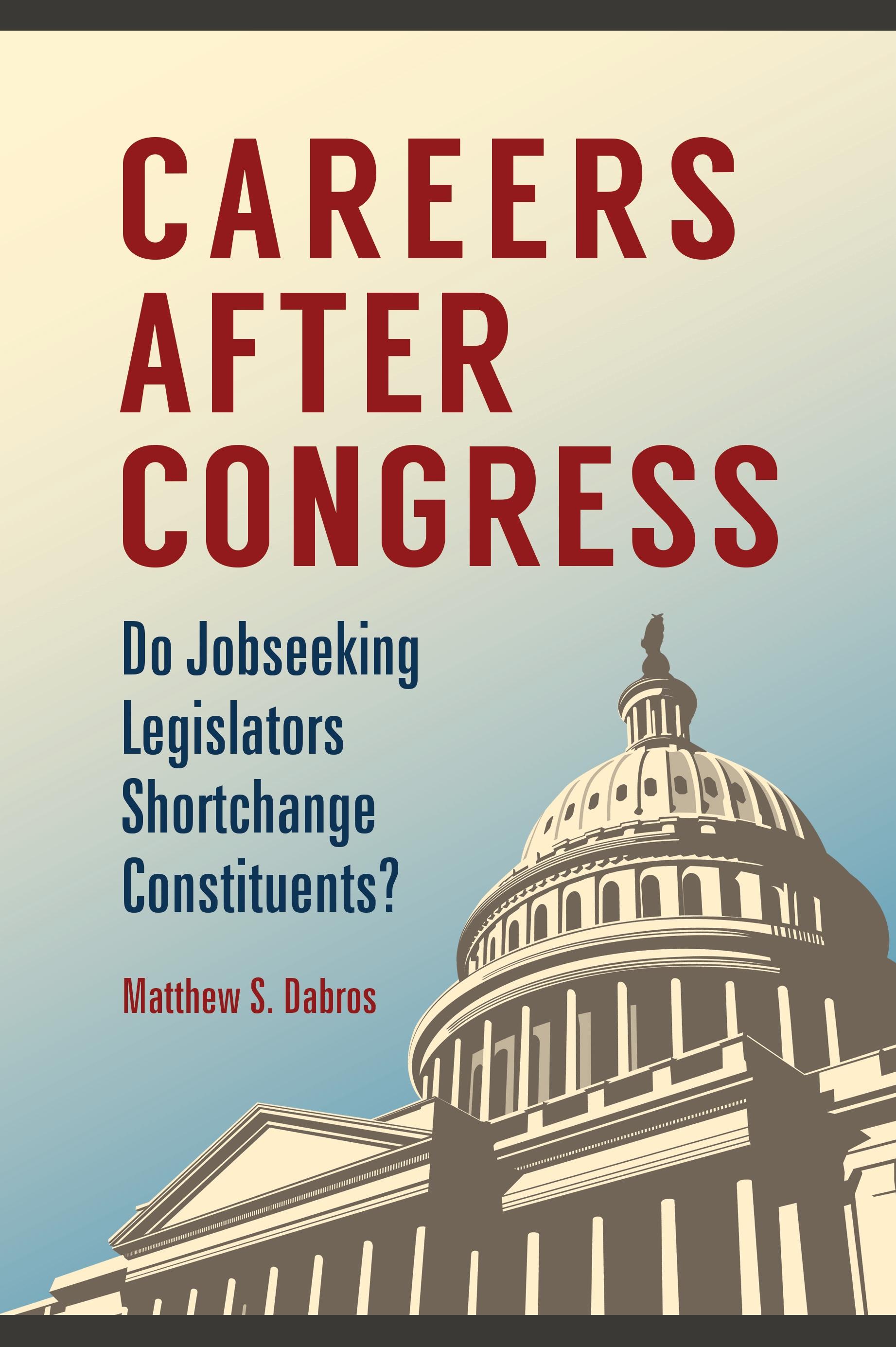
Citizens, journalists, and watchdog organizations claim that U.S. Congress members serve special interest groups in return for lucrative jobs in industry once they leave office—and that these legislators become lax in their final term of office as they are no longer compelled by elections to provide quality representation to citizens. This book investigates the veracity of these claims.
The established consensus among scholars and citizens groups is that democracy suffers when U.S. Congress members prepare to leave office—that legislators are quick to satisfy pressure groups' requests in part because they anticipate being rewarded with financially compelling positions in those organizations once they leave office. But is this actually true? Focusing on 346 of the senators and representatives who left office during the 107th through 111th Congresses (January 2001 to January 2011), this book makes a counterintuitive argument: that job-seeking legislators provide stalwart service to citizens during their final term of office for fear of damaging their reputations and imperiling their post-Congressional career prospects.
After an introductory chapter, author Matthew S. Dabros summarizes past research on political opportunism before discussing how nonelectoral constraints imposed by special interests (namely, diminished post-Congressional employment opportunities) actually encourage job-seeking legislators to provide quality representation to citizens even in their final term in office. The book also describes the nature and identifies the determinants of post-Congressional careers. The chapters use numerous contemporary examples and draw parallels to topics familiar to general readers to ensure that the book is highly accessible and interesting to nonspecialists.
The established consensus among scholars and citizens groups is that democracy suffers when U.S. Congress members prepare to leave office—that legislators are quick to satisfy pressure groups' requests in part because they anticipate being rewarded with financially compelling positions in those organizations once they leave office. But is this actually true? Focusing on 346 of the senators and representatives who left office during the 107th through 111th Congresses (January 2001 to January 2011), this book makes a counterintuitive argument: that job-seeking legislators provide stalwart service to citizens during their final term of office for fear of damaging their reputations and imperiling their post-Congressional career prospects.
After an introductory chapter, author Matthew S. Dabros summarizes past research on political opportunism before discussing how nonelectoral constraints imposed by special interests (namely, diminished post-Congressional employment opportunities) actually encourage job-seeking legislators to provide quality representation to citizens even in their final term in office. The book also describes the nature and identifies the determinants of post-Congressional careers. The chapters use numerous contemporary examples and draw parallels to topics familiar to general readers to ensure that the book is highly accessible and interesting to nonspecialists.
Zahle einfach mit Karte, Klarna, Apple Pay oder Google Pay. Nicht zufrieden? Du hast immer ein 14-tägiges Widerrufsrecht. Lies mehr in unseren AGB. Hast du Fragen, schreib uns eine E-Mail an hello@memmo.org.
Memmo macht das Lernen einfacher – wo auch immer du bist. Bei uns findest du deine Kursbücher und smarte Lerntools an einem Ort: Zusammenfassungen, Quizzes, Podcasts und Lernkarten. Und Ted, dein Lernbuddy, beantwortet alles, was du wissen möchtest. Über 50.000 Studierende lernen bereits hier – gemacht, damit du schneller lernst und weniger Stress hast.