
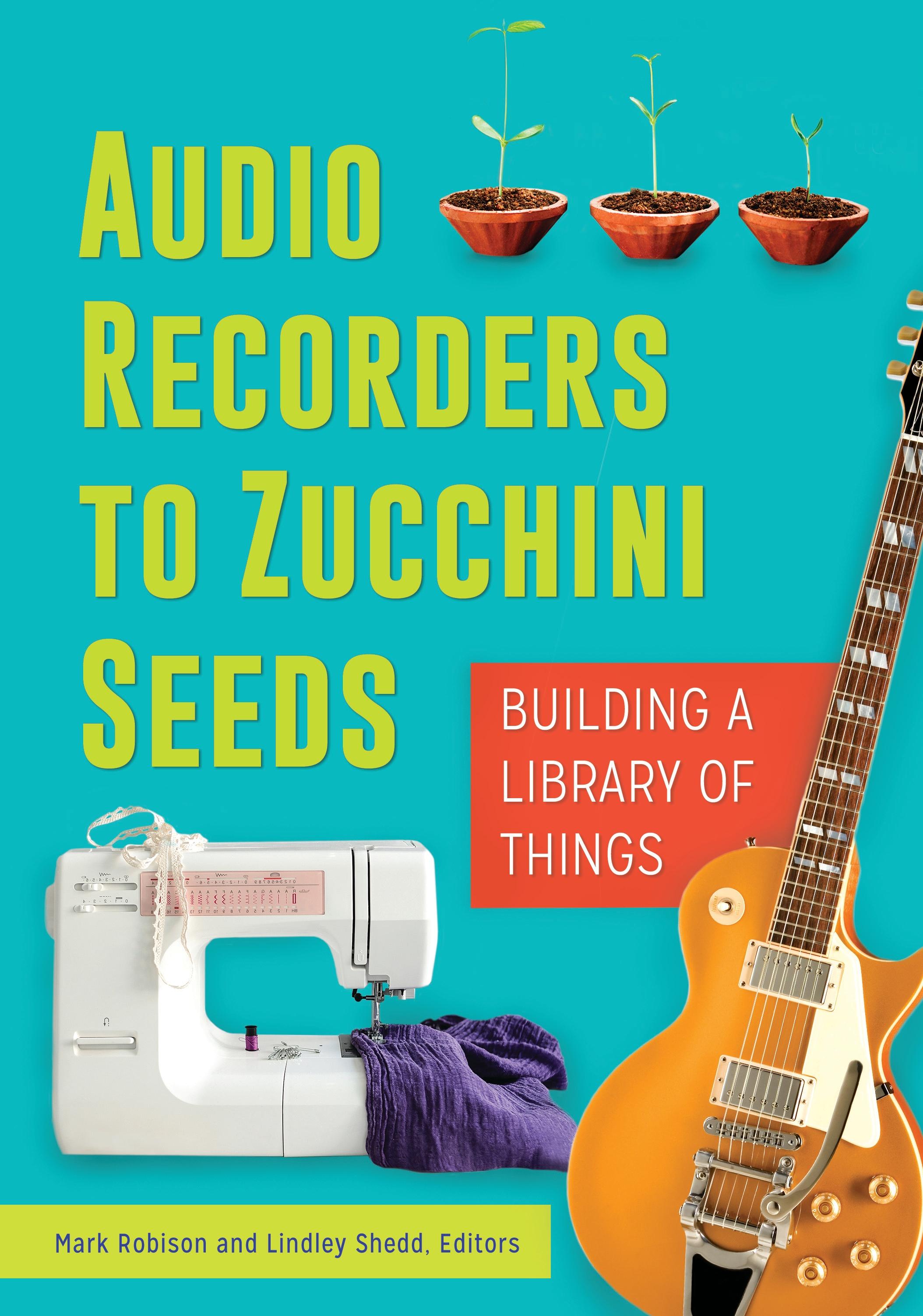
This exploration of the range of options for a "library of things" collection demonstrates what has been implemented successfully and offers practical insights regarding these nontraditional projects, from the development of concepts to the everyday realities of maintaining these collections.
What services libraries provide and how they function in their communities is constantly being reconsidered and redefined. One example of this is the trend of experimenting with building circulating collections of nonliterary "things"—such as tools, seeds, cooking equipment, bicycles, household machinery, and educational materials—by drawing on traditional library functions and strengths of acquisition, organization, and circulation. Audio Recorders to Zucchini Seeds: Building a Library of Things enables you to consider the feasibility of creating a specific type of "thing" collection in your library and get practical advice about the processes necessary to successfully launch and maintain it, from planning and funding to circulation, promotion, and upkeep.
This contributed volume provides a survey of "library of things" projects within the United States, from both public and academic libraries, offering real-world lessons learned from these early experiments with nontraditional collections. The authors offer practical insights from their projects, from the development of their initial ideas to the everyday realities of maintaining and circulating these collections, including cataloging, space needs, safety concerns, staff training, circulation, marketing, and assessment. The contributed chapters are organized thematically, covering "things" collections that encompass a wide variety of objects first, followed by collections with a community-building focus (seeds, recreation, tools) and those that serve an educational purpose, such as curriculum centers, children's toys, or collections that support a university curriculum. The last section addresses collections that support media production.
What services libraries provide and how they function in their communities is constantly being reconsidered and redefined. One example of this is the trend of experimenting with building circulating collections of nonliterary "things"—such as tools, seeds, cooking equipment, bicycles, household machinery, and educational materials—by drawing on traditional library functions and strengths of acquisition, organization, and circulation. Audio Recorders to Zucchini Seeds: Building a Library of Things enables you to consider the feasibility of creating a specific type of "thing" collection in your library and get practical advice about the processes necessary to successfully launch and maintain it, from planning and funding to circulation, promotion, and upkeep.
This contributed volume provides a survey of "library of things" projects within the United States, from both public and academic libraries, offering real-world lessons learned from these early experiments with nontraditional collections. The authors offer practical insights from their projects, from the development of their initial ideas to the everyday realities of maintaining and circulating these collections, including cataloging, space needs, safety concerns, staff training, circulation, marketing, and assessment. The contributed chapters are organized thematically, covering "things" collections that encompass a wide variety of objects first, followed by collections with a community-building focus (seeds, recreation, tools) and those that serve an educational purpose, such as curriculum centers, children's toys, or collections that support a university curriculum. The last section addresses collections that support media production.
Zahle einfach mit Karte, Klarna, Apple Pay oder Google Pay. Nicht zufrieden? Du hast immer ein 14-tägiges Widerrufsrecht. Lies mehr in unseren AGB. Hast du Fragen, schreib uns eine E-Mail an hello@memmo.org.
Memmo macht das Lernen einfacher – wo auch immer du bist. Bei uns findest du deine Kursbücher und smarte Lerntools an einem Ort: Zusammenfassungen, Quizzes, Podcasts und Lernkarten. Und Ted, dein Lernbuddy, beantwortet alles, was du wissen möchtest. Über 50.000 Studierende lernen bereits hier – gemacht, damit du schneller lernst und weniger Stress hast.