
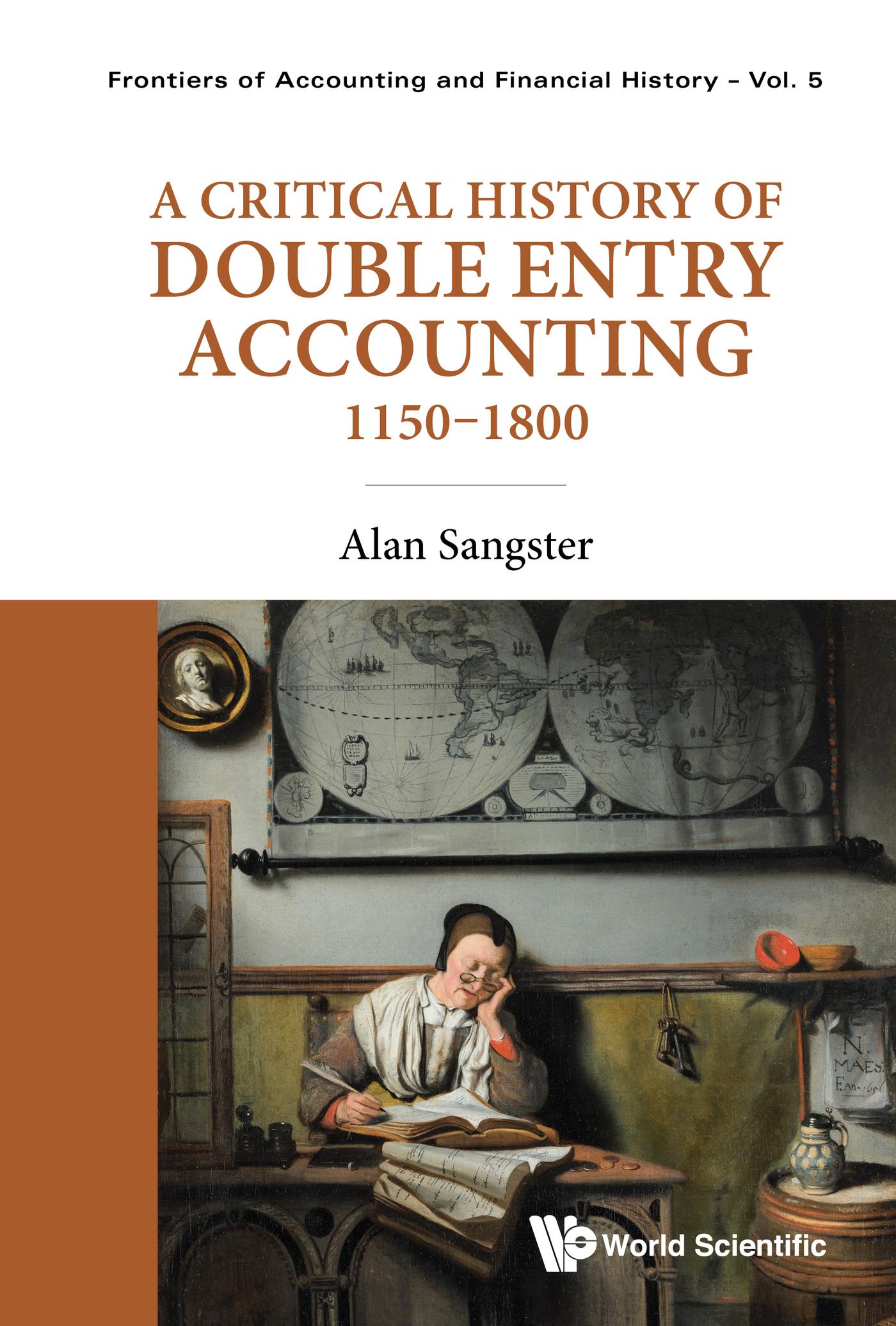
The English language accounting history of double entry accounting before 1800 has reached an impasse. The doors to its reawakening are fiercely guarded by combination locks powered by confirmation bias and adherence to a priori wisdom requiring vast amounts of supportive scholarship to make public the smallest contribution to what is known and understood of the first 600 years of its use. To open those doors, a foundation is needed upon which scholarship can begin anew — a framework of reference that can be used to justify the validity and relevance of scholarship and discovery in this field. That is the purpose and role of this book.
It does not focus on the technical. It focuses on the environment and context of use of the method, and its function. It considers 'why' and consequences. It asks who, when, where, and what, along with 'how'. It adopts the perspective that the reason for the bookkeeping drove how it was adopted, not the availability of parchment or paper, nor the emergence of the concept of the technology — the book — in which it was recorded. Rather its use was driven by a need of the person who wrote the record, or by the needs of those who wished a record to be kept.
A critical traditional historical method is adopted. Explanations are sought and identified utilising knowledge of the environment and context of practice that, to this point, rarely if ever feature in the antiquarian historiography this book ideally seeks to replace. The approach adopted is multi-disciplinary and the sources used are multi-disciplinary and multi-lingual. This book is essential reading for anyone with an interest in accounting's past.
Contents:
- Preface: Double Entry Accounting — A Cautionary Word About Definitions
- About the Author
- Double Entry Accounting — A Cautionary Word About Definitions
- Double Entry Accounting 1150–1800:
- Introduction
- An Accounting History Primer
- Before Double Entry Accounting Emerged
- The Emergence of Double Entry Accounting
- Context and Catalysts for the Emergence of Double Entry Accounting
- The Diffusion of Double Entry Accounting
- Double Entry Accounting and Early Capitalism
- Luca Pacioli:
- Who was Luca Pacioli?
- Pacioli's Theorisation of the Double Entry Method
- Lost in Translation: Pacioli's De Computis et Scripturis
- Problems in the Literature and a New Dawn:
- Problems in the Literature on Double Entry Accounting
- Digitalising Accounting History: Embracing Opportunity
- Bibliography
- Index
Readership: Accounting historians; historians of medieval and early modern business; and medieval and early modern economic historians. Also accounting and business undergraduate and post-graduate students, researchers, and accounting practitioners.
Zahle einfach mit Karte, Klarna, Apple Pay oder Google Pay. Nicht zufrieden? Du hast immer ein 14-tägiges Widerrufsrecht. Lies mehr in unseren AGB. Hast du Fragen, schreib uns eine E-Mail an hello@memmo.org.
Memmo macht das Lernen einfacher – wo auch immer du bist. Bei uns findest du deine Kursbücher und smarte Lerntools an einem Ort: Zusammenfassungen, Quizzes, Podcasts und Lernkarten. Und Ted, dein Lernbuddy, beantwortet alles, was du wissen möchtest. Über 50.000 Studierende lernen bereits hier – gemacht, damit du schneller lernst und weniger Stress hast.