
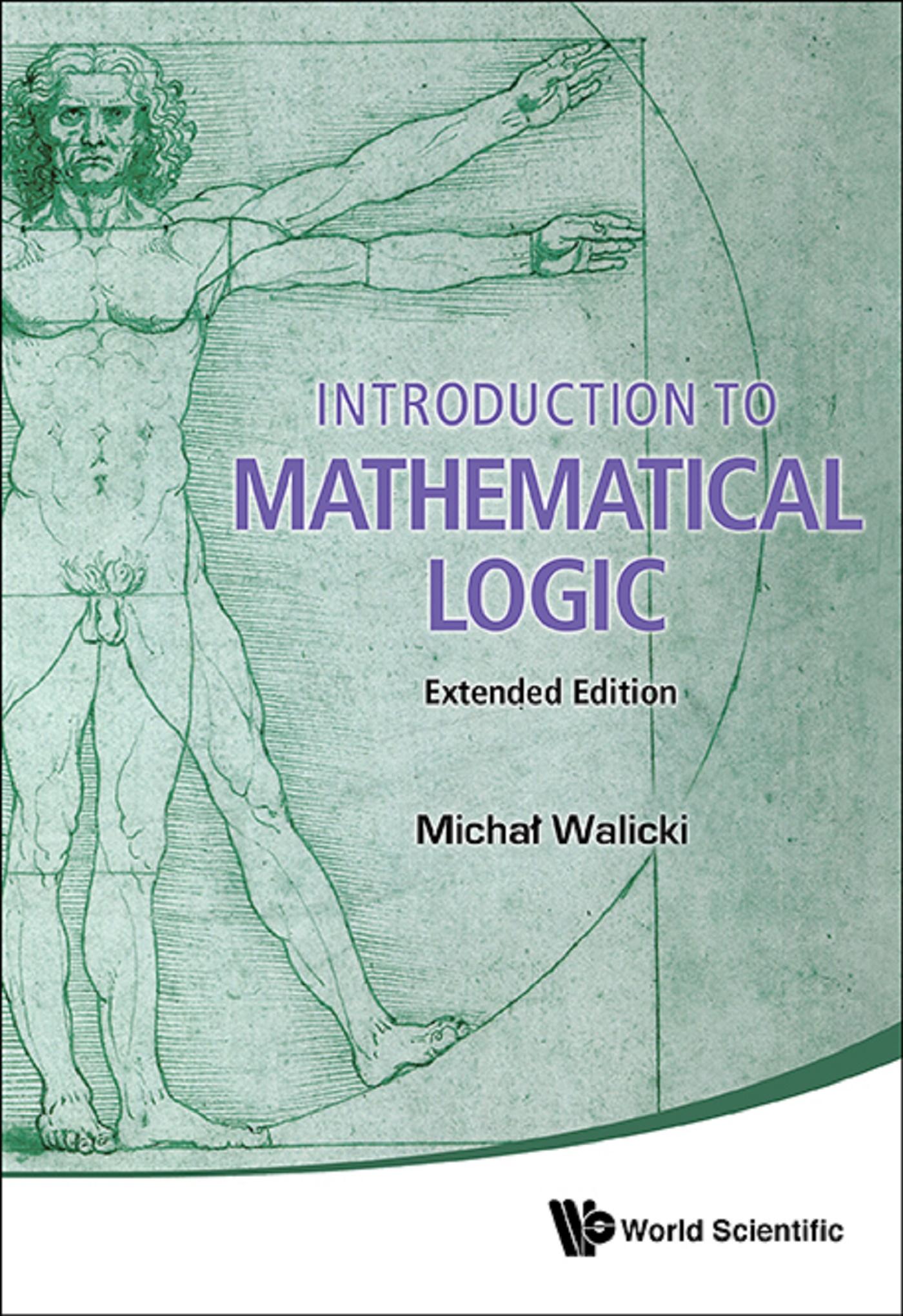
This is a systematic and well-paced introduction to mathematical logic. Excellent as a course text, the book presupposes only elementary background and can be used also for self-study by more ambitious students.Starting with the basics of set theory, induction and computability, it covers propositional and first order logic — their syntax, reasoning systems and semantics. Soundness and completeness results for Hilbert's and Gentzen's systems are presented, along with simple decidability arguments. The general applicability of various concepts and techniques is demonstrated by highlighting their consistent reuse in different contexts.Unlike in most comparable texts, presentation of syntactic reasoning systems precedes the semantic explanations. The simplicity of syntactic constructions and rules — of a high, though often neglected, pedagogical value — aids students in approaching more complex semantic issues. This order of presentation also brings forth the relative independence of syntax from the semantics, helping to appreciate the importance of the purely symbolic systems, like those underlying computers.An overview of the history of logic precedes the main text, while informal analogies precede introduction of most central concepts. These informal aspects are kept clearly apart from the technical ones. Together, they form a unique text which may be appreciated equally by lecturers and students occupied with mathematical precision, as well as those interested in the relations of logical formalisms to the problems of computability and the philosophy of logic.This revised edition contains also, besides many new exercises, a new chapter on semantic paradoxes. An equivalence of logical and graphical representations allows us to see vicious circularity as the odd cycles in the graphical representation and can be used as a simple tool for diagnosing paradoxes in natural discourse.
Zahle einfach mit Karte, Klarna, Apple Pay oder Google Pay. Nicht zufrieden? Du hast immer ein 14-tägiges Widerrufsrecht. Lies mehr in unseren AGB. Hast du Fragen, schreib uns eine E-Mail an hello@memmo.org.
Memmo macht das Lernen einfacher – wo auch immer du bist. Bei uns findest du deine Kursbücher und smarte Lerntools an einem Ort: Zusammenfassungen, Quizzes, Podcasts und Lernkarten. Und Ted, dein Lernbuddy, beantwortet alles, was du wissen möchtest. Über 50.000 Studierende lernen bereits hier – gemacht, damit du schneller lernst und weniger Stress hast.
Das könnte dir auch gefallen
Buch kaufen0