
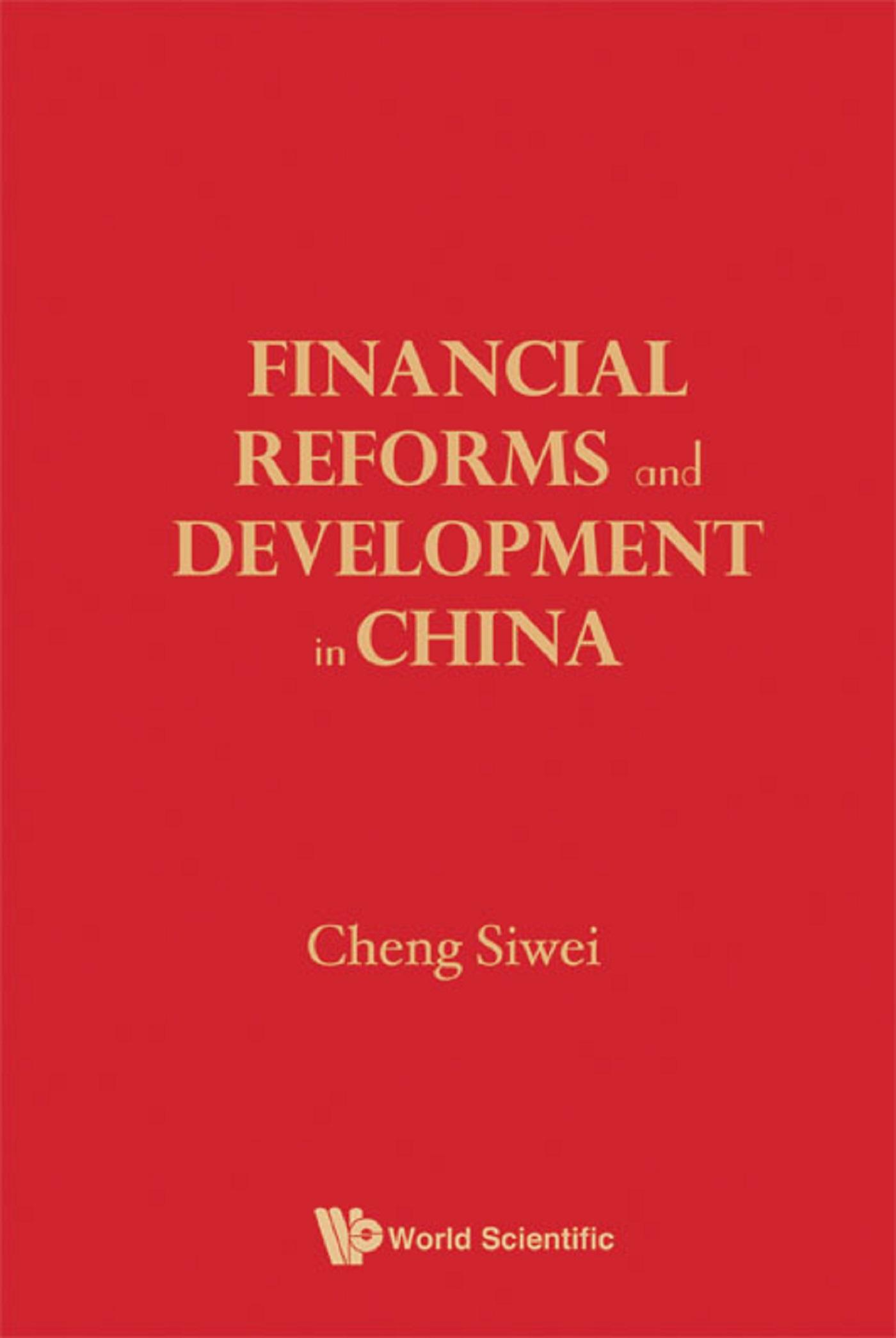
China has initiated and implemented its economic reforms for over 30 years, however, the comprehensive economic reforms and opening up is still unfolding. The author was a state leader, who has personally engaged in China's economic policy-making process from 1999 to 2008, and is an economist, who has deeply studied and thought over China's financial reform in various aspects. This book summarizes the results of the author's research on China's financial reforms, adopting the fictitious economy theory, in the past 10 years.Financial Reforms and Development in China focuses on the developmental process and main features of the fictitious economy; the essence and the law of the fictitious capital (including credit capital, knowledge capital, social capital, etc.); the relationship between the fictitious economy and the real economy. The book attempts to use the fictitious economy theory to analyze the chaos and self-organization of financial system, financial crisis, inflation and deflation, economic globalization, and knowledge-based economy and society.The book, comprising 12 chapters, covers all the main aspects of China's financial reform and provides readers with a practitioner's reading of China's financial markets, including financial globalization, the financial system and product innovation, financial crisis, financial security, financial regulation, universal banking, capital markets, money market, commercial banks, rural finance, futures markets, foreign exchange markets, financial derivatives, equity markets, insurance and so on.The book is invaluable from the perspectives of its contribution to economic theory, in developing an understanding of the actual workings of China's economic and financial reforms in the past decade, and in forecasting future developments in China's economy and financial markets. It will appeal to academics, undergraduate students, graduate students, professionals, general readers interested in finance, the financial reform and market in China, as well as China's development and the fictitious economy.
Zahle einfach mit Karte, Klarna, Apple Pay oder Google Pay. Nicht zufrieden? Du hast immer ein 14-tägiges Widerrufsrecht. Lies mehr in unseren AGB. Hast du Fragen, schreib uns eine E-Mail an hello@memmo.org.
Memmo macht das Lernen einfacher – wo auch immer du bist. Bei uns findest du deine Kursbücher und smarte Lerntools an einem Ort: Zusammenfassungen, Quizzes, Podcasts und Lernkarten. Und Ted, dein Lernbuddy, beantwortet alles, was du wissen möchtest. Über 50.000 Studierende lernen bereits hier – gemacht, damit du schneller lernst und weniger Stress hast.
Das könnte dir auch gefallen
Buch kaufen0