
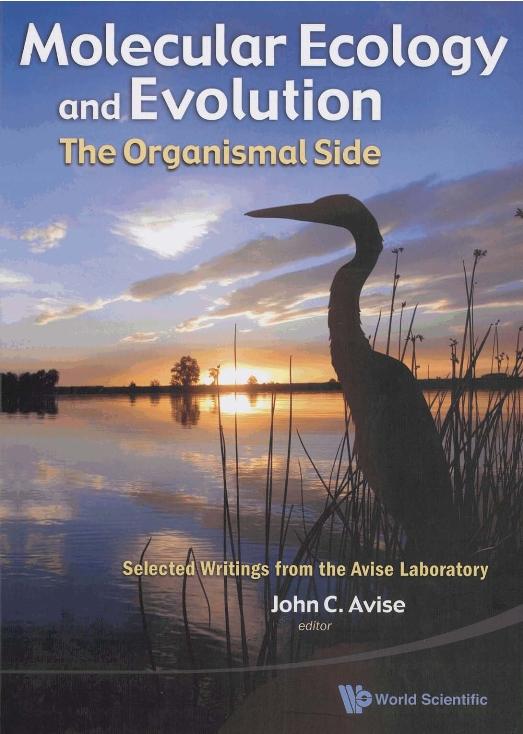
This volume is a reprinted collection of 69 “classics” from the Avise laboratory, chosen to illustrate a trademark brand of research that harnesses molecular markers to scientific studies of natural history and evolution in the wild. Spanning the early 1970s through the late 2000s, these articles trace how the author and his colleagues have used molecular genetics techniques to address multifarious conceptual topics in genetics, ecology, and evolution, in a fascinating menagerie of creatures with oft-peculiar lifestyles. The organisms described in this volume range from blind cavefish to male-pregnant pipefishes and sea spiders, from clonal armadillos to natal-homing marine turtles, from hermaphroditic sea snails to hybridizing monkeys and tree frogs, from clonal marine sponges to pseudohermaphroditic mollusks to introgressing oysters, and from endangered pocket gophers, terrapins, and sparrows to unisexual (all-female) fish species to “living-fossil” horseshoe crabs, and even to a strange little fish that routinely mates with itself. The conceptual and molecular topics addressed in this volume are also universal, ranging from punctuated equilibrium to coalescent theory to the need for greater standardization in taxonomy, from cytonuclear disequilibrium statistics to the ideas of speciation duration and sympatric speciation, from historical population demography to phylogenetic reconstructions of males' sexual ornaments, from the population genetic consequences of inbreeding to Pleistocene effects on phylogeography, and from the molecular underpinnings of null alleles to the notion of clustered mutations that arise in groups to compelling empirical evidence for the unanticipated processes of gene conversion and concerted evolution in animal mitochondrial DNA. Overall, this collection includes many of the best, most influential, sometimes controversial, occasionally provocative, always intriguing, or otherwise entertaining publications to have emerged from the Avise laboratory over the last four decades. Thus, this book conveys, through the eyes of one of the field's longstanding pioneers, what “the organismal side” of molecular ecology and evolution really means.
Zahle einfach mit Karte, Klarna, Apple Pay oder Google Pay. Nicht zufrieden? Du hast immer ein 14-tägiges Widerrufsrecht. Lies mehr in unseren AGB. Hast du Fragen, schreib uns eine E-Mail an hello@memmo.org.
Memmo macht das Lernen einfacher – wo auch immer du bist. Bei uns findest du deine Kursbücher und smarte Lerntools an einem Ort: Zusammenfassungen, Quizzes, Podcasts und Lernkarten. Und Ted, dein Lernbuddy, beantwortet alles, was du wissen möchtest. Über 50.000 Studierende lernen bereits hier – gemacht, damit du schneller lernst und weniger Stress hast.
Das könnte dir auch gefallen
Buch kaufen0