
'This is an an absolutely wonderful book that is full of gems about the elements and the periodic table … All in all, the book is highly recommended to philosophers of chemistry. As philosophers we have a natural tendency to concentrate on generalities and not to get too involved in the specifics and the details. Above all else, this new book reminds us that such an approach needs to be tempered by a detailed knowledge of the exceptions and features that go against the simplified generalities which we so cherish.' [Read Full Review]
Eric ScerriFoundations of Chemistry
'Many questions are dealt with in a clearly written way in this stimulating and innovative book. The reader will quickly become interested in the subject and will be taken on tour through this Periodic Table in a very readable way, both for students and teachers … The number of illustrations is good, and clear. This book is indeed unique and quite thought-provoking … This book is highly recommended for students, teachers, researchers and not only chemists! Geologists, biochemist and also physicists will find it very interesting to read.' [Read Full Review]Chemistry International
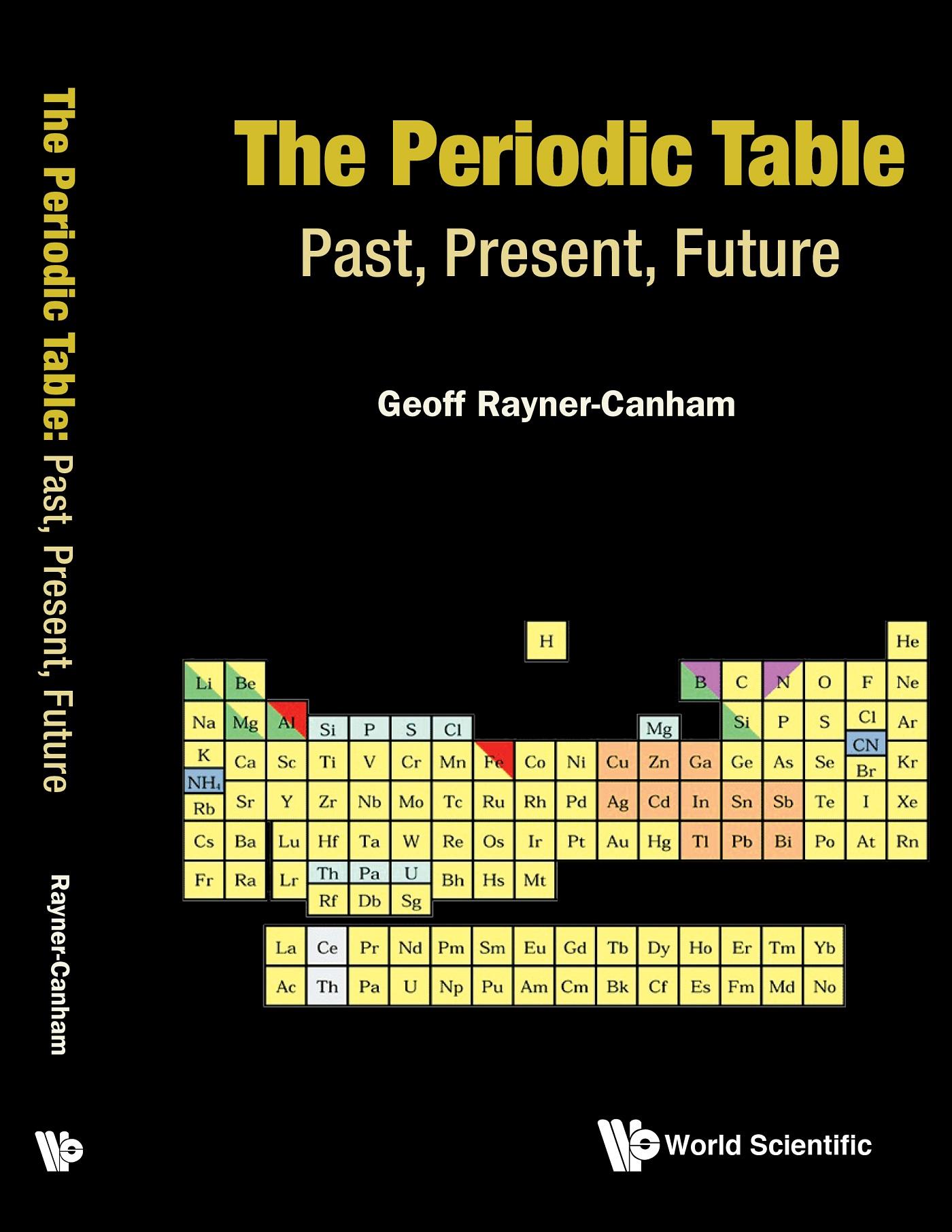
That fossilized chart on every classroom wall — isn't that The Periodic Table? Isn't that what Mendeléev devised about a century ago? No and No. There are many ways of organizing the chemical elements, some of which are thought-provoking, and which reveal philosophical challenges. Where does hydrogen 'belong'? Can an element occupy more than one location on the chart? Which are the Group 3 elements? Is aluminum in the wrong place? Why is silver(I) like thallium(I)? Why is vanadium like molybdenum? Why does gold form an auride ion like a halide ion? Does an atom 'know' if it is a non-metal or metal? Which elements are the 'metalloids'? Which are the triels? So many questions! In this stimulating and innovative book, the Reader will be taken on a voyage from the past to the present to the future of the Periodic Table. This book is unique. This book is readable. This book is thought-provoking. It is a multi-dimensional examination of patterns and trends among the chemical elements. Every reader will discover something about the chemical elements which will provoke thought and a new appreciation as to how the elements relate together.Zahle einfach mit Karte, Klarna, Apple Pay oder Google Pay. Nicht zufrieden? Du hast immer ein 14-tägiges Widerrufsrecht. Lies mehr in unseren AGB. Hast du Fragen, schreib uns eine E-Mail an hello@memmo.org.
Memmo macht das Lernen einfacher – wo auch immer du bist. Bei uns findest du deine Kursbücher und smarte Lerntools an einem Ort: Zusammenfassungen, Quizzes, Podcasts und Lernkarten. Und Ted, dein Lernbuddy, beantwortet alles, was du wissen möchtest. Über 50.000 Studierende lernen bereits hier – gemacht, damit du schneller lernst und weniger Stress hast.
Das könnte dir auch gefallen
Buch kaufen0