
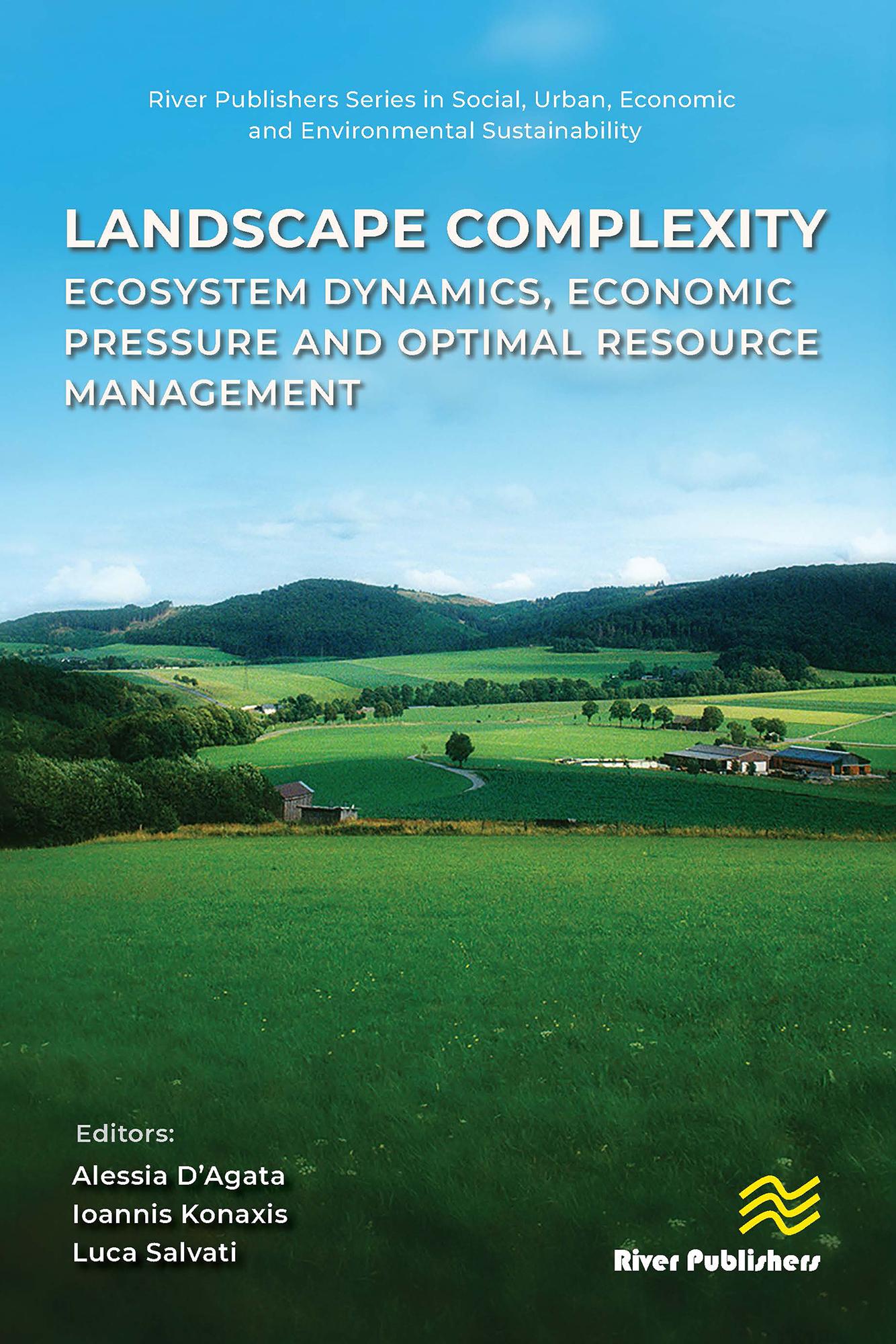
In advanced economies, landscapes have evolved into complex mosaics shaped by the dynamic interplay between forests, shrublands, agricultural fields, pastures, and urban or industrial areas. This intricate structure creates multiple layers of ecological and socioeconomic interactions that influence how land is used, valued, and managed.
Despite increasing awareness of environmental sustainability, the absence of comprehensive continental and national accounting systems for landscape evaluation has hindered the full recognition of landscapes as vital components of economic systems. Bridging this gap requires new methods to quantify and interpret landscape functions, services, and transformations.
This book proposes an integrative approach to landscape assessment—combining official statistics, field surveys, remote sensing, forest inventories, and spatial analysis. It demonstrates how these diverse tools can be harnessed to evaluate both quantitative and qualitative aspects of natural ecosystems, offering a clearer understanding of how landscapes contribute to environmental resilience and economic well-being.
Through practical examples and detailed case studies, this book provides an essential framework for scholars, environmental planners, policymakers, and practitioners seeking to connect ecological insights with sustainable regional development and policy design.
Zahle einfach mit Karte, Klarna, Apple Pay oder Google Pay. Nicht zufrieden? Du hast immer ein 14-tägiges Widerrufsrecht. Lies mehr in unseren AGB. Hast du Fragen, schreib uns eine E-Mail an hello@memmo.org.
Memmo macht das Lernen einfacher – wo auch immer du bist. Bei uns findest du deine Kursbücher und smarte Lerntools an einem Ort: Zusammenfassungen, Quizzes, Podcasts und Lernkarten. Und Ted, dein Lernbuddy, beantwortet alles, was du wissen möchtest. Über 50.000 Studierende lernen bereits hier – gemacht, damit du schneller lernst und weniger Stress hast.