
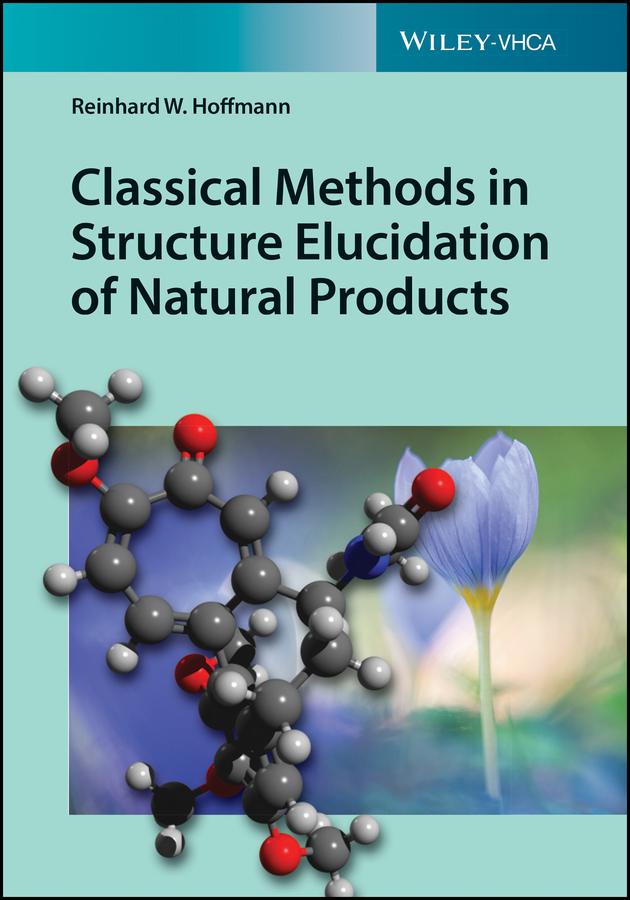
The structures of many natural products are given in standard textbooks on organic chemistry as 'established facts'. Yet for those natural products whose structures were determined between 1860 and 1960 by classical chemical methods, the lines of evidence are frequently buried under any number of investigations that led to dead ends and to revised structure assignments. Since very little is known about the structure clarification of these products at present, this volume serves to shed light once again on the achievements of previous generations of chemists, who worked with minimal experimental tools.
The selection of the 25 representative examples is subjective and arbitrary, dictated by the author's pleasure in recovering fundamental milestones in organic chemistry, with each chapter devoted to one organic compound. The time period covered, however, is more precisely defined: 1860 represents the advent of structure theory, prior to which there was no conceptual framework to address the 'structure' of a compound. One hundred years later, 1960 approximately marks the change from classical structure elucidation to the era in which structure elucidation is mainly based on spectroscopic evidence and X-ray crystallography. Since the emphasis of this work is on classical structure elucidation, work performed later than 1960 is only considered in exceptional cases.
Rather than simply provide a history of structure elucidation of particular natural products, the author combines results from historic experiments to trace a line of evidence for those structures that are nowadays accepted as established. This line of evidence may follow the path put forward by the original contributors, yet in some cases the experimental facts have been combined to form another, hopefully shorter, line of evidence. As a result, readers are able to ascertain for themselves the 'facts behind the established structure assignments' of a number of important natural products.
The selection of the 25 representative examples is subjective and arbitrary, dictated by the author's pleasure in recovering fundamental milestones in organic chemistry, with each chapter devoted to one organic compound. The time period covered, however, is more precisely defined: 1860 represents the advent of structure theory, prior to which there was no conceptual framework to address the 'structure' of a compound. One hundred years later, 1960 approximately marks the change from classical structure elucidation to the era in which structure elucidation is mainly based on spectroscopic evidence and X-ray crystallography. Since the emphasis of this work is on classical structure elucidation, work performed later than 1960 is only considered in exceptional cases.
Rather than simply provide a history of structure elucidation of particular natural products, the author combines results from historic experiments to trace a line of evidence for those structures that are nowadays accepted as established. This line of evidence may follow the path put forward by the original contributors, yet in some cases the experimental facts have been combined to form another, hopefully shorter, line of evidence. As a result, readers are able to ascertain for themselves the 'facts behind the established structure assignments' of a number of important natural products.
Zahle einfach mit Karte, Klarna, Apple Pay oder Google Pay. Nicht zufrieden? Du hast immer ein 14-tägiges Widerrufsrecht. Lies mehr in unseren AGB. Hast du Fragen, schreib uns eine E-Mail an hello@memmo.org.
Memmo macht das Lernen einfacher – wo auch immer du bist. Bei uns findest du deine Kursbücher und smarte Lerntools an einem Ort: Zusammenfassungen, Quizzes, Podcasts und Lernkarten. Und Ted, dein Lernbuddy, beantwortet alles, was du wissen möchtest. Über 50.000 Studierende lernen bereits hier – gemacht, damit du schneller lernst und weniger Stress hast.