
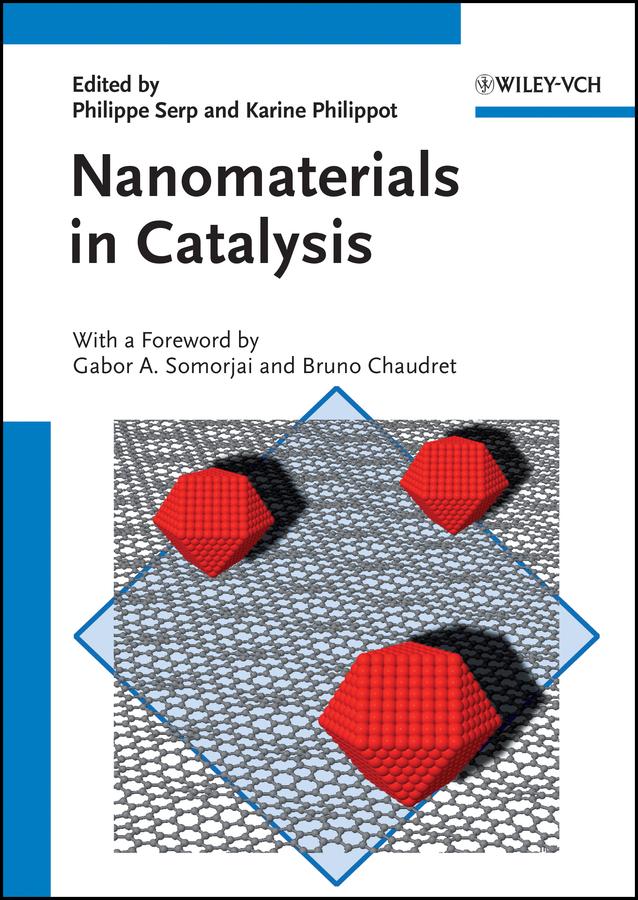
Nanocatalysis has emerged as a field at the interface between homogeneous and heterogeneous catalysis and offers unique solutions to
the demanding requirements for catalyst improvement. Heterogeneous catalysis represents one of the oldest commercial applications of nanoscience and nanoparticles of metals, semiconductors, oxides, and other compounds have been widely used for important chemical reactions. The main focus of this fi eld is the development of well-defined catalysts, which may include both metal nanoparticles and a nanomaterial as the support. These nanocatalysts should display the benefits of both homogenous and heterogeneous catalysts, such as high efficiency and selectivity, stability and easy recovery/recycling. The concept of nanocatalysis is outlined in this book and, in particular, it provides a comprehensive overview of the science of colloidal nanoparticles. A broad range of topics, from the fundamentals to applications in catalysis, are covered, without excluding micelles, nanoparticles in ionic liquids, dendrimers, nanotubes, and nanooxides, as well as modeling, and the characterization of nanocatalysts, making it an indispensable reference for both researchers at universities and
professionals in industry.
the demanding requirements for catalyst improvement. Heterogeneous catalysis represents one of the oldest commercial applications of nanoscience and nanoparticles of metals, semiconductors, oxides, and other compounds have been widely used for important chemical reactions. The main focus of this fi eld is the development of well-defined catalysts, which may include both metal nanoparticles and a nanomaterial as the support. These nanocatalysts should display the benefits of both homogenous and heterogeneous catalysts, such as high efficiency and selectivity, stability and easy recovery/recycling. The concept of nanocatalysis is outlined in this book and, in particular, it provides a comprehensive overview of the science of colloidal nanoparticles. A broad range of topics, from the fundamentals to applications in catalysis, are covered, without excluding micelles, nanoparticles in ionic liquids, dendrimers, nanotubes, and nanooxides, as well as modeling, and the characterization of nanocatalysts, making it an indispensable reference for both researchers at universities and
professionals in industry.
Zahle einfach mit Karte, Klarna, Apple Pay oder Google Pay. Nicht zufrieden? Du hast immer ein 14-tägiges Widerrufsrecht. Lies mehr in unseren AGB. Hast du Fragen, schreib uns eine E-Mail an hello@memmo.org.
Memmo macht das Lernen einfacher – wo auch immer du bist. Bei uns findest du deine Kursbücher und smarte Lerntools an einem Ort: Zusammenfassungen, Quizzes, Podcasts und Lernkarten. Und Ted, dein Lernbuddy, beantwortet alles, was du wissen möchtest. Über 50.000 Studierende lernen bereits hier – gemacht, damit du schneller lernst und weniger Stress hast.