
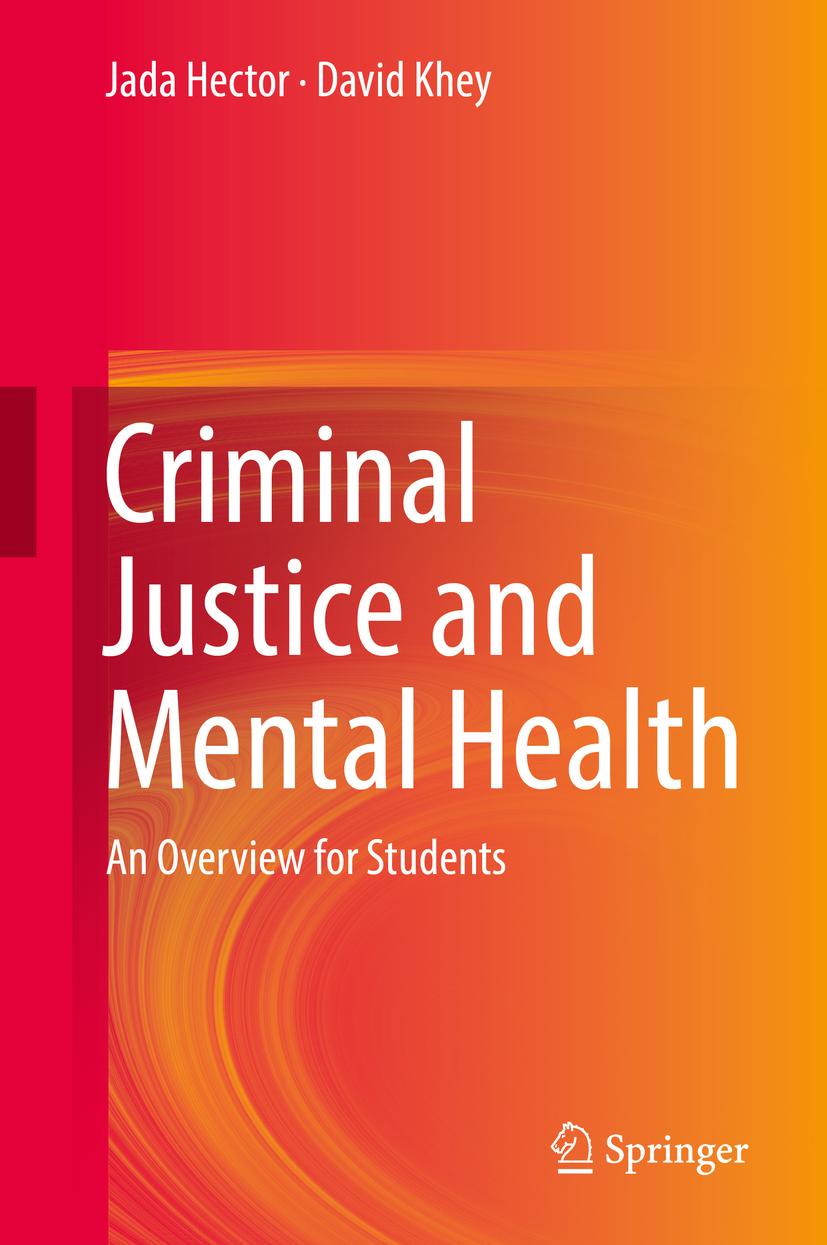
This textbook provides an overview for students in Criminology and Criminal Justice about the overlap between the criminal justice system and mental health. It provides an accessible overview of basic signs and symptoms of major mental illnesses and size of scope of justice-involved individuals with mental illness.
In the United States, the criminal justice system is often the first public service to be in contact with individuals suffering from mental illness or in mental distress. Those with untreated mental illnesses are often at higher risk for committing criminal acts, yet research on this population continues to shed light on common myths – such a prevailing assumption that those with mental illness tend to commit more violent crimes. Law enforcement agents may be called in as first responders for cases of mental distress; and due to a lack of mental health facilities, resources, and pervasive misconceptions about this population, those with mental illness often end up inthe corrections system.
In this environment, students in Criminology and Criminal Justice are likely to encounter those with mental illness in their future career paths, and need to be prepared for this reality. This timely work covers the roles of each part of the criminal justice system interacting with mentally ill individuals, from law enforcement and first responders, social services, public health services, sentencing and corrections, to release and re-entry. It also covers the crucial topic of mental health for criminal justice professionals, who suffer from high rates of job stress, PTSD, and other mental health issues. The final section of the book includes suggestions for future research.
This work will be of interest to students of criminology and criminal justice with an interest in working in the professional sector, as well as those in related fields of sociology, psychology, and public health. It will also be of interest to policy-makers and practitioners already working in the field. The overall goal of this work is to inform, educate, and inspire change.
In the United States, the criminal justice system is often the first public service to be in contact with individuals suffering from mental illness or in mental distress. Those with untreated mental illnesses are often at higher risk for committing criminal acts, yet research on this population continues to shed light on common myths – such a prevailing assumption that those with mental illness tend to commit more violent crimes. Law enforcement agents may be called in as first responders for cases of mental distress; and due to a lack of mental health facilities, resources, and pervasive misconceptions about this population, those with mental illness often end up inthe corrections system.
In this environment, students in Criminology and Criminal Justice are likely to encounter those with mental illness in their future career paths, and need to be prepared for this reality. This timely work covers the roles of each part of the criminal justice system interacting with mentally ill individuals, from law enforcement and first responders, social services, public health services, sentencing and corrections, to release and re-entry. It also covers the crucial topic of mental health for criminal justice professionals, who suffer from high rates of job stress, PTSD, and other mental health issues. The final section of the book includes suggestions for future research.
This work will be of interest to students of criminology and criminal justice with an interest in working in the professional sector, as well as those in related fields of sociology, psychology, and public health. It will also be of interest to policy-makers and practitioners already working in the field. The overall goal of this work is to inform, educate, and inspire change.
Zahle einfach mit Karte, Klarna, Apple Pay oder Google Pay. Nicht zufrieden? Du hast immer ein 14-tägiges Widerrufsrecht. Lies mehr in unseren AGB. Hast du Fragen, schreib uns eine E-Mail an hello@memmo.org.
Memmo macht das Lernen einfacher – wo auch immer du bist. Bei uns findest du deine Kursbücher und smarte Lerntools an einem Ort: Zusammenfassungen, Quizzes, Podcasts und Lernkarten. Und Ted, dein Lernbuddy, beantwortet alles, was du wissen möchtest. Über 50.000 Studierende lernen bereits hier – gemacht, damit du schneller lernst und weniger Stress hast.