
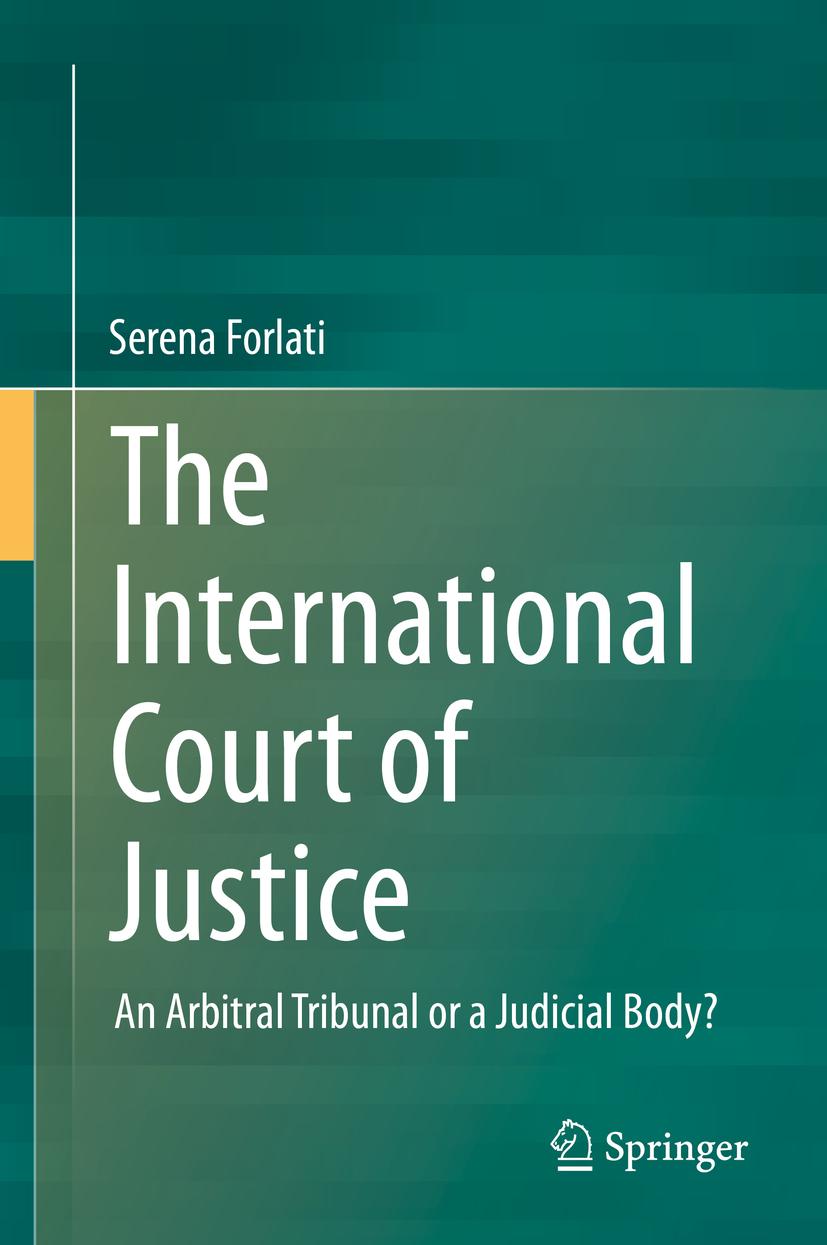
The International Court of Justice is the principal judicial organ of the United Nations, and epitomizes the very notion of international judicial institution. Yet, it decides inter-State disputes only with the parties’ consent. This makes it more similar to international arbitral tribunals than other international courts.
However, the permanent nature of the Court, the predetermination of procedural rules by the Statute and the Rules of Court, the public character of proceedings, the opportunity for third States to intervene in a case under Articles 62 and 63 of the Statute and the Court's role as the principal judicial organ of the United Nations mark a structural difference between the ICJ and non-institutionalized international arbitral tribunals.
This book analyses if and to what extent these features have influenced the approach of the ICJ (and of the PCIJ before it) to its own judicial function and have led it to depart from the principles established in international arbitration.
Zahle einfach mit Karte, Klarna, Apple Pay oder Google Pay. Nicht zufrieden? Du hast immer ein 14-tägiges Widerrufsrecht. Lies mehr in unseren AGB. Hast du Fragen, schreib uns eine E-Mail an hello@memmo.org.
Memmo macht das Lernen einfacher – wo auch immer du bist. Bei uns findest du deine Kursbücher und smarte Lerntools an einem Ort: Zusammenfassungen, Quizzes, Podcasts und Lernkarten. Und Ted, dein Lernbuddy, beantwortet alles, was du wissen möchtest. Über 50.000 Studierende lernen bereits hier – gemacht, damit du schneller lernst und weniger Stress hast.