
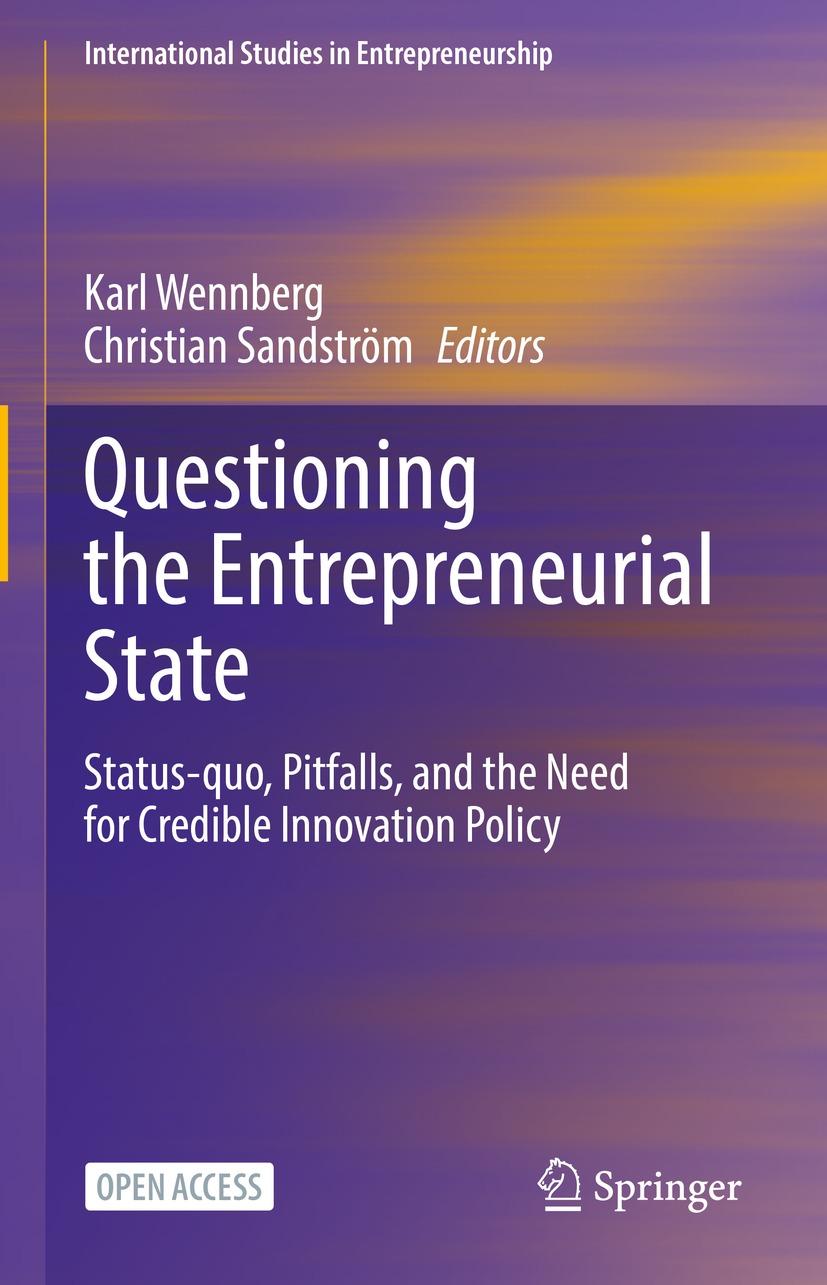
The 2008 financial crisis and the COVID-19 pandemic have made the authorities to increasingly turn inward and use ethnocentrism, protectionism, and top-down approaches to guide policy on trade, competition, and industrial development. The continuing aftereffects of such policies range from the rise and seeming success of authoritarian states, rise of populist and protectionist trends, and evolving academic agendas inspiring the reemergence of top-down industrial policies across the world.
This open access edited volume contains contributions from over 30 scholars with expertise in economics, innovation, management, and economic history. The chapters offer unique theoretical and empirical contributions discussing topics such as how industrial policies affect risk, incentives, and information for investments. They also address the policy perspectives on new technologies such as AI and its implications for market entry, the role for independent entrepreneurship in increasingly regulated markets, and whether governments should focus on market interventions or institutional capacity-building.Questioning the Entrepreneurial State initiates a much sought-after debate on the notion of an Entrepreneurial State. It discusses the dangers of top-down approaches to industrial policy, examines lessons from such approaches for future policy design, and calls attention to the progress of open and contestable markets in a sound economy and society.
“Creative destruction, innovation and entrepreneurship are at the core of economic growth. The government has a clear role, to provide the basic fabric of a dynamic society, but industrial policy and state-owned companies are the boulevard of broken dreams and unrealized visions. This important message is convincingly stated in Questioning the Entrepreneurial State.”Anders Borg, former Minister of Finance, Sweden
“Misreading the dynamism of American entrepreneurship, European intellectuals and policy makers have embraced a dangerous fantasy: catching up requires constructing an entrepreneurial state. This book provides a vital antidote: The entrepreneur comes first: The state may support. It cannot lead.”
Amar Bhidé, Thomas Schmidheiny Professor of International Business, Tufts University
“This important new book subjects the emergence of the entrepreneurial state, which reflects a shift in the locus of entrepreneurship from the individual to the public sector, to the scrutiny of rigorous analysis. The resulting concerns, flaws and biases inherent in the entrepreneurial state exposed are both alarming and sobering. The skill and scholarly craftsmanship brought to bear in this crucial analysis is evident throughout the book, along with the even, but ultimately consequential thinking of the authors. A must read for researchers and thought leaders in business and policy."
David Audtretsch, Distinguished Professor, Ameritech Chair of Economic Development, Indiana UniversityZahle einfach mit Karte, Klarna, Apple Pay oder Google Pay. Nicht zufrieden? Du hast immer ein 14-tägiges Widerrufsrecht. Lies mehr in unseren AGB. Hast du Fragen, schreib uns eine E-Mail an hello@memmo.org.
Memmo macht das Lernen einfacher – wo auch immer du bist. Bei uns findest du deine Kursbücher und smarte Lerntools an einem Ort: Zusammenfassungen, Quizzes, Podcasts und Lernkarten. Und Ted, dein Lernbuddy, beantwortet alles, was du wissen möchtest. Über 50.000 Studierende lernen bereits hier – gemacht, damit du schneller lernst und weniger Stress hast.