
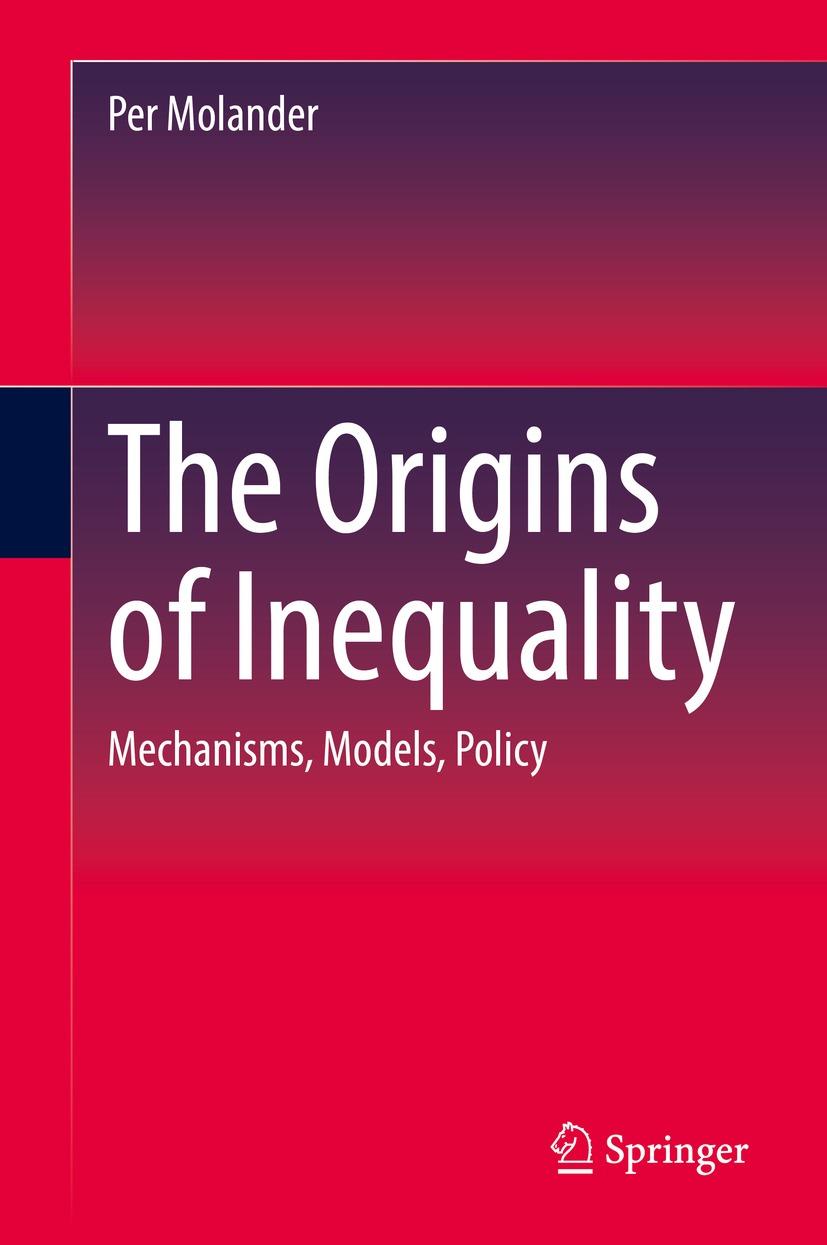
This book presents a unified approach to the problem of inequality, combining results from a variety of research fields – the human life cycle, group dynamics, networks, markets, and economic geography. Its main message is that inequality emerges as the natural result of mechanisms operating both in individual human development and in social interaction. It posits that inequality is not an anomalous deviation from a naturally egalitarian social structure; quite to the contrary, inequality is to be expected as part of the human condition. The author states that the growth of inequality, on the other hand, is not a natural law – the level and character of inequality can be affected by collective decisions. This perspective on human inequality has potentially far-reaching consequences both for the political philosophy of inequality and for public policy-making.
This book is of interest to a wide interdisciplinary social science readership, including public policy, decisionsciences, economic geography, and life course studies.
Zahle einfach mit Karte, Klarna, Apple Pay oder Google Pay. Nicht zufrieden? Du hast immer ein 14-tägiges Widerrufsrecht. Lies mehr in unseren AGB. Hast du Fragen, schreib uns eine E-Mail an hello@memmo.org.
Memmo macht das Lernen einfacher – wo auch immer du bist. Bei uns findest du deine Kursbücher und smarte Lerntools an einem Ort: Zusammenfassungen, Quizzes, Podcasts und Lernkarten. Und Ted, dein Lernbuddy, beantwortet alles, was du wissen möchtest. Über 50.000 Studierende lernen bereits hier – gemacht, damit du schneller lernst und weniger Stress hast.