
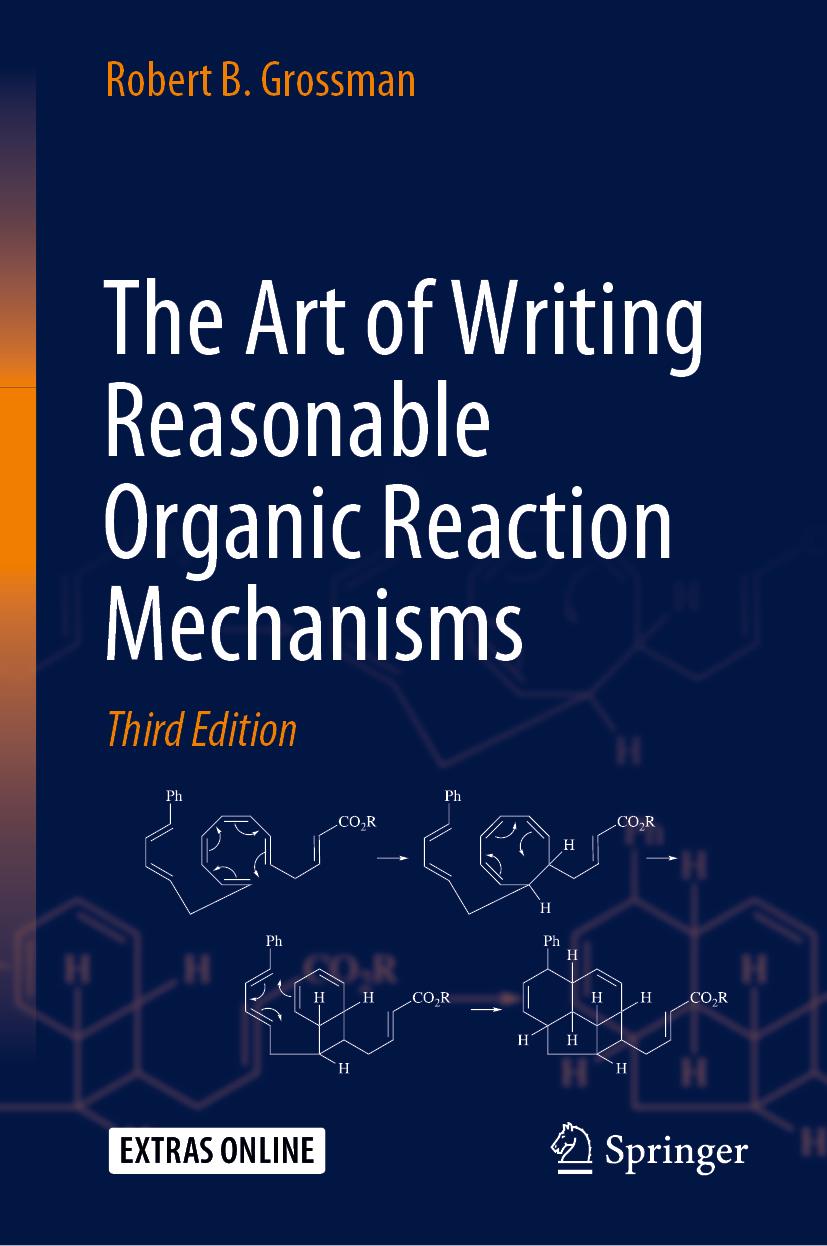
Intended for students of intermediate organic chemistry, this text shows how to write a reasonable mechanism for an organic chemical transformation. The discussion is organized by types of mechanisms and the conditions under which the reaction is executed, rather than by the overall reaction as is the case in most textbooks. The treatment emphasizes unifying principles, showing how common mechanisms link seemingly disparate reactions.
Each chapter discusses common mechanistic pathways and suggests practical tips for drawing them. Worked problems are included in the discussion of each mechanism, and “common error alerts” are scattered throughout the text to warn readers about pitfalls and misconceptions that bedevil students. Each chapter is capped by a large problem set.
The author has drawn on his own research and the current literature to ensure that appropriate attention is given to topics across the range of modern organic chemistry. The text is unique inits inclusion of a chapter on reactions mediated or catalyzed by transition metals, an area in which mechanistic understanding is now essential. More modern topics such as olefin metathesis and cycloaromatization are covered without giving short shrift to more traditional areas such as carbonyl chemistry. The text assumes a basic knowledge of organic chemistry. It can be used either in a formal course or by students working on their own, and will be particularly useful for graduate students studying for qualifying examinations. It will also be useful to students and researchers in biochemistry, pharmacology, and inorganic chemistry.
The third edition includes greater discussion of the reactions of biological cofactors such as thiamine and pyridoxal, and discussions of modern developments such as metal-catalyzed C–H activation reactions have been added. In terms of stylistic improvements, the author has introduced color into drawings to improve visual clarity and has improved the depictions of radical anions and radical chain reactions.
Zahle einfach mit Karte, Klarna, Apple Pay oder Google Pay. Nicht zufrieden? Du hast immer ein 14-tägiges Widerrufsrecht. Lies mehr in unseren AGB. Hast du Fragen, schreib uns eine E-Mail an hello@memmo.org.
Memmo macht das Lernen einfacher – wo auch immer du bist. Bei uns findest du deine Kursbücher und smarte Lerntools an einem Ort: Zusammenfassungen, Quizzes, Podcasts und Lernkarten. Und Ted, dein Lernbuddy, beantwortet alles, was du wissen möchtest. Über 50.000 Studierende lernen bereits hier – gemacht, damit du schneller lernst und weniger Stress hast.