
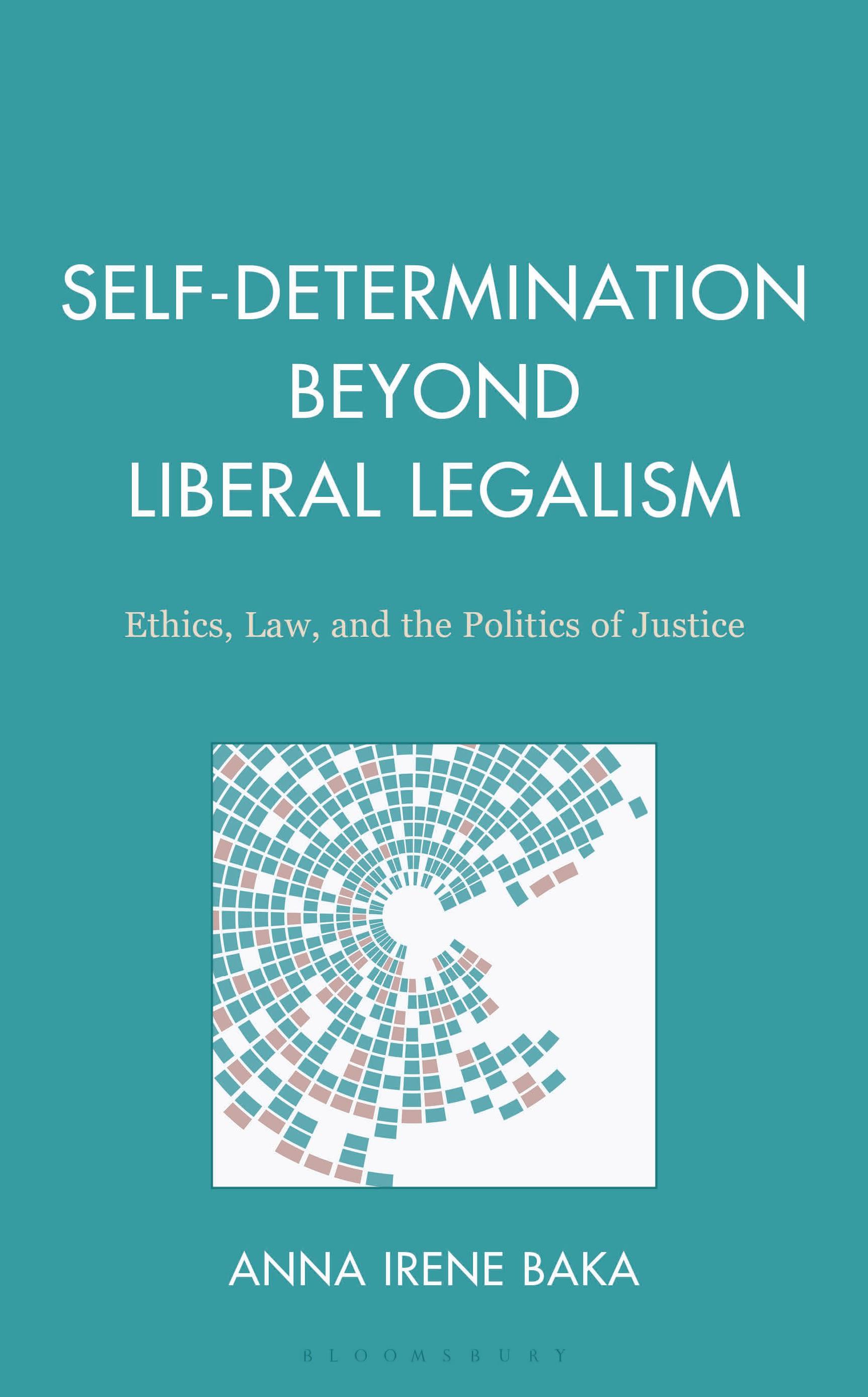
Anna Irene Baka challenges dominant liberal and legalist paradigms in international law by reinterpreting the right of peoples to self-determination through the lenses of Aristotelian philosophy, phenomenology, social psychology, and corrective justice.
Focusing on high-profile postcolonial conflicts in Kosovo, Cyprus, and Palestine, Baka argues that abstract international and constitutional legal doctrines on self-determination fail to account for the lived realities of collective deprivation and historical trauma. Baka offers a compelling critique not only of mainstream theories of self-determination, but also of the shortcomings of critical movements such as Critical Legal Studies. In their place, she advances a renewed ethical and conceptual framework for international law-one grounded in responsibility, rational judgment, and moral engagement. This interdisciplinary method brings fresh insight into questions of collective identity, legitimacy, and the moral accountability of law itself. Ultimately suggesting that meaningful responses to historical injustice require international jurists to cultivate intellectual independence and legal virtue, this is a timely and essential contribution for scholars and practitioners of international law, human rights, legal philosophy, and global justice.
Focusing on high-profile postcolonial conflicts in Kosovo, Cyprus, and Palestine, Baka argues that abstract international and constitutional legal doctrines on self-determination fail to account for the lived realities of collective deprivation and historical trauma. Baka offers a compelling critique not only of mainstream theories of self-determination, but also of the shortcomings of critical movements such as Critical Legal Studies. In their place, she advances a renewed ethical and conceptual framework for international law-one grounded in responsibility, rational judgment, and moral engagement. This interdisciplinary method brings fresh insight into questions of collective identity, legitimacy, and the moral accountability of law itself. Ultimately suggesting that meaningful responses to historical injustice require international jurists to cultivate intellectual independence and legal virtue, this is a timely and essential contribution for scholars and practitioners of international law, human rights, legal philosophy, and global justice.
Zahle einfach mit Karte, Klarna, Apple Pay oder Google Pay. Nicht zufrieden? Du hast immer ein 14-tägiges Widerrufsrecht. Lies mehr in unseren AGB. Hast du Fragen, schreib uns eine E-Mail an hello@memmo.org.
Memmo macht das Lernen einfacher – wo auch immer du bist. Bei uns findest du deine Kursbücher und smarte Lerntools an einem Ort: Zusammenfassungen, Quizzes, Podcasts und Lernkarten. Und Ted, dein Lernbuddy, beantwortet alles, was du wissen möchtest. Über 50.000 Studierende lernen bereits hier – gemacht, damit du schneller lernst und weniger Stress hast.