
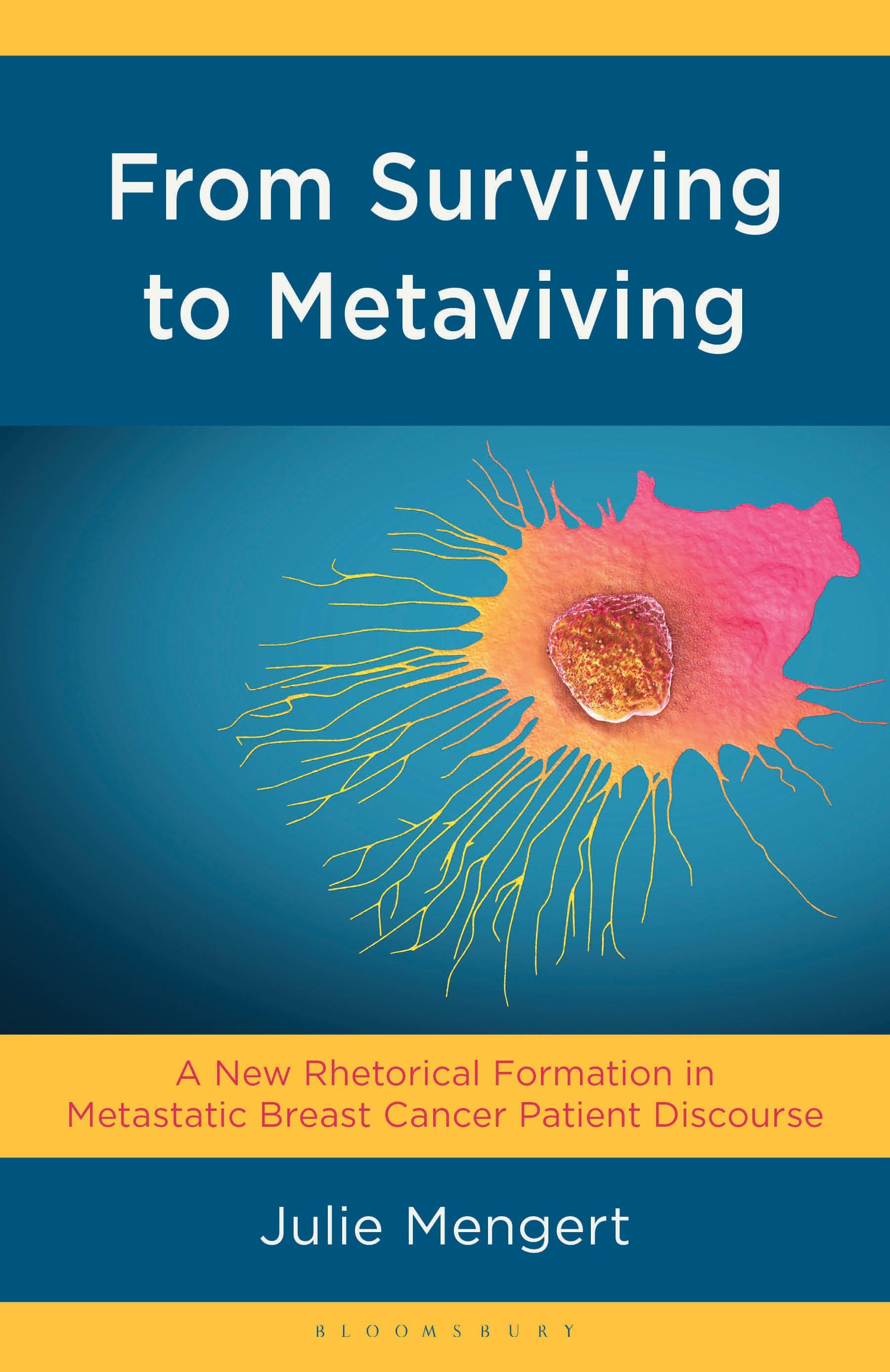
As treatments have advanced, metastatic breast cancer has become a disease that some women can live with for years, which has changed the language that women use to discuss living with this form of breast cancer as discussed in this book.
Using the framework of Celeste Condit's rhetorical formations, which includes uses of metaphors, topics, and values, among other rhetorical features, the author examines how language has shifted from one of war and survivor rhetoric to that of metavivor rhetoric, which includes metaphors of water and prison, among others. Another hallmark of this emerging rhetorical formation is existing in a state of liminality where the cancer neither progresses nor retreats, leading to women experiencing time differently. By examining how women discuss living with cancer in an online breast cancer support group, the author analyzes the language shifts taking place and argues that women have moved from the dominant war/survivor rhetorical formation to one grounded in metavivor rhetoric.
Within this evolution comes an understanding of what it means to live with a chronic, yet ultimately, terminal, illness and an acknowledgment of the impact that their lives' perceived time has on these language choices.
Using the framework of Celeste Condit's rhetorical formations, which includes uses of metaphors, topics, and values, among other rhetorical features, the author examines how language has shifted from one of war and survivor rhetoric to that of metavivor rhetoric, which includes metaphors of water and prison, among others. Another hallmark of this emerging rhetorical formation is existing in a state of liminality where the cancer neither progresses nor retreats, leading to women experiencing time differently. By examining how women discuss living with cancer in an online breast cancer support group, the author analyzes the language shifts taking place and argues that women have moved from the dominant war/survivor rhetorical formation to one grounded in metavivor rhetoric.
Within this evolution comes an understanding of what it means to live with a chronic, yet ultimately, terminal, illness and an acknowledgment of the impact that their lives' perceived time has on these language choices.
Zahle einfach mit Karte, Klarna, Apple Pay oder Google Pay. Nicht zufrieden? Du hast immer ein 14-tägiges Widerrufsrecht. Lies mehr in unseren AGB. Hast du Fragen, schreib uns eine E-Mail an hello@memmo.org.
Memmo macht das Lernen einfacher – wo auch immer du bist. Bei uns findest du deine Kursbücher und smarte Lerntools an einem Ort: Zusammenfassungen, Quizzes, Podcasts und Lernkarten. Und Ted, dein Lernbuddy, beantwortet alles, was du wissen möchtest. Über 50.000 Studierende lernen bereits hier – gemacht, damit du schneller lernst und weniger Stress hast.