
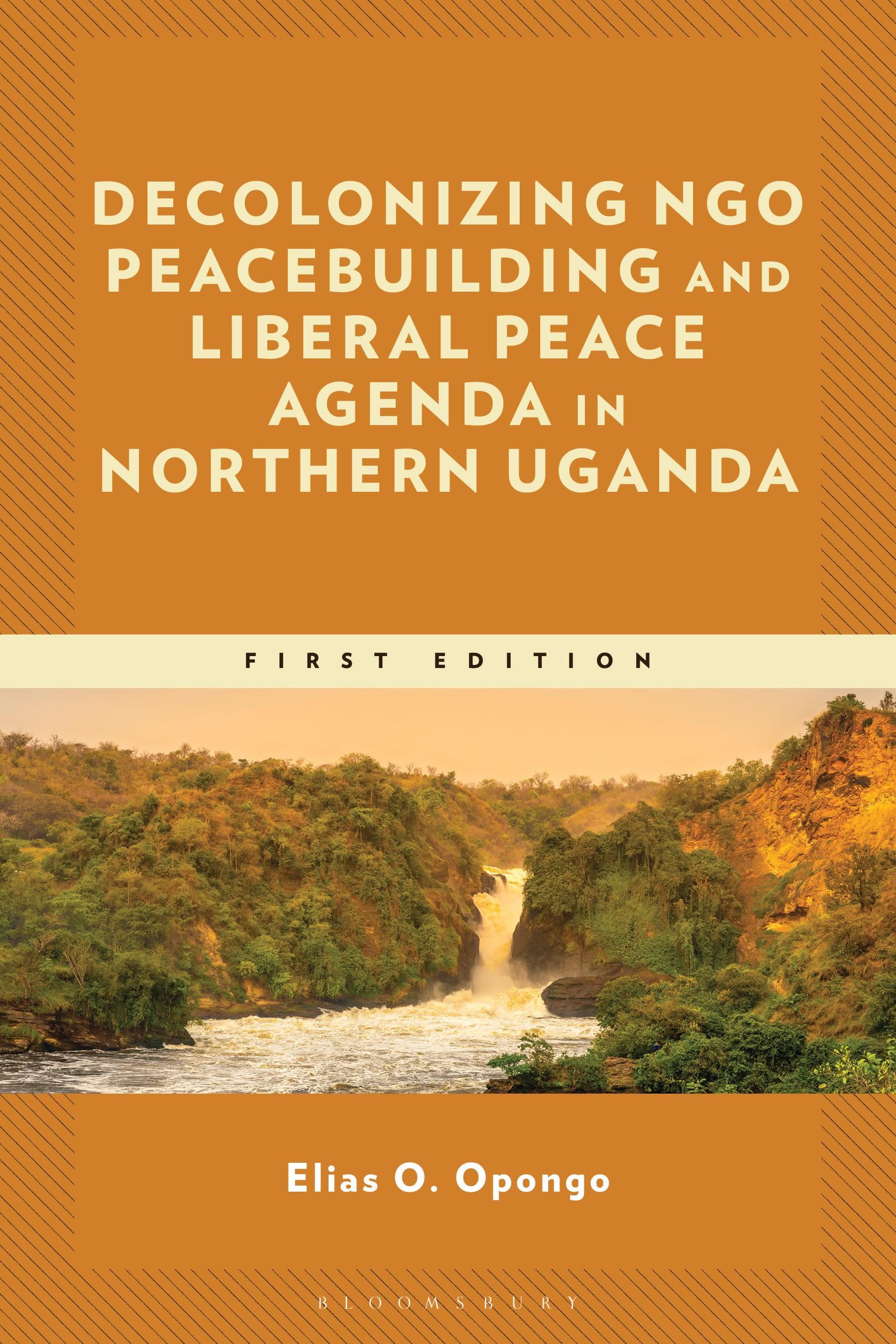
Critically examining how Western-funded NGO interventions have shaped post-conflict recovery in Northern Uganda, Elias O. Opongo argues that the liberal peace agenda-focused on democracy promotion, market reforms, and human rights-often marginalizes local agency and undermines culturally rooted approaches to peacebuilding.
Drawing on extensive fieldwork and grounded theory, Opongo explores how these externally driven models disconnect from the lived realities of conflict-affected communities. He introduces relational constructionism as a framework that emphasizes participatory, context-sensitive, and indigenous approaches-such as the Acholi Mato Oput ritual-that center dialogue, reintegration, and restorative justice.
The book also critiques the role of international actors, particularly the International Criminal Court (ICC), whose interventions can clash with local reconciliation efforts. Opongo's findings in Northern Uganda offer critical insights for other post-conflict African contexts dominated by donor-driven peacebuilding. He calls for a decolonial shift toward frameworks that restore African agency, reduce dependency, and prioritize community-led solutions for sustainable peace. This book is essential reading for scholars, practitioners, and policymakers seeking more inclusive, grounded, and transformative peacebuilding models in Africa and beyond.
Drawing on extensive fieldwork and grounded theory, Opongo explores how these externally driven models disconnect from the lived realities of conflict-affected communities. He introduces relational constructionism as a framework that emphasizes participatory, context-sensitive, and indigenous approaches-such as the Acholi Mato Oput ritual-that center dialogue, reintegration, and restorative justice.
The book also critiques the role of international actors, particularly the International Criminal Court (ICC), whose interventions can clash with local reconciliation efforts. Opongo's findings in Northern Uganda offer critical insights for other post-conflict African contexts dominated by donor-driven peacebuilding. He calls for a decolonial shift toward frameworks that restore African agency, reduce dependency, and prioritize community-led solutions for sustainable peace. This book is essential reading for scholars, practitioners, and policymakers seeking more inclusive, grounded, and transformative peacebuilding models in Africa and beyond.
Zahle einfach mit Karte, Klarna, Apple Pay oder Google Pay. Nicht zufrieden? Du hast immer ein 14-tägiges Widerrufsrecht. Lies mehr in unseren AGB. Hast du Fragen, schreib uns eine E-Mail an hello@memmo.org.
Memmo macht das Lernen einfacher – wo auch immer du bist. Bei uns findest du deine Kursbücher und smarte Lerntools an einem Ort: Zusammenfassungen, Quizzes, Podcasts und Lernkarten. Und Ted, dein Lernbuddy, beantwortet alles, was du wissen möchtest. Über 50.000 Studierende lernen bereits hier – gemacht, damit du schneller lernst und weniger Stress hast.