
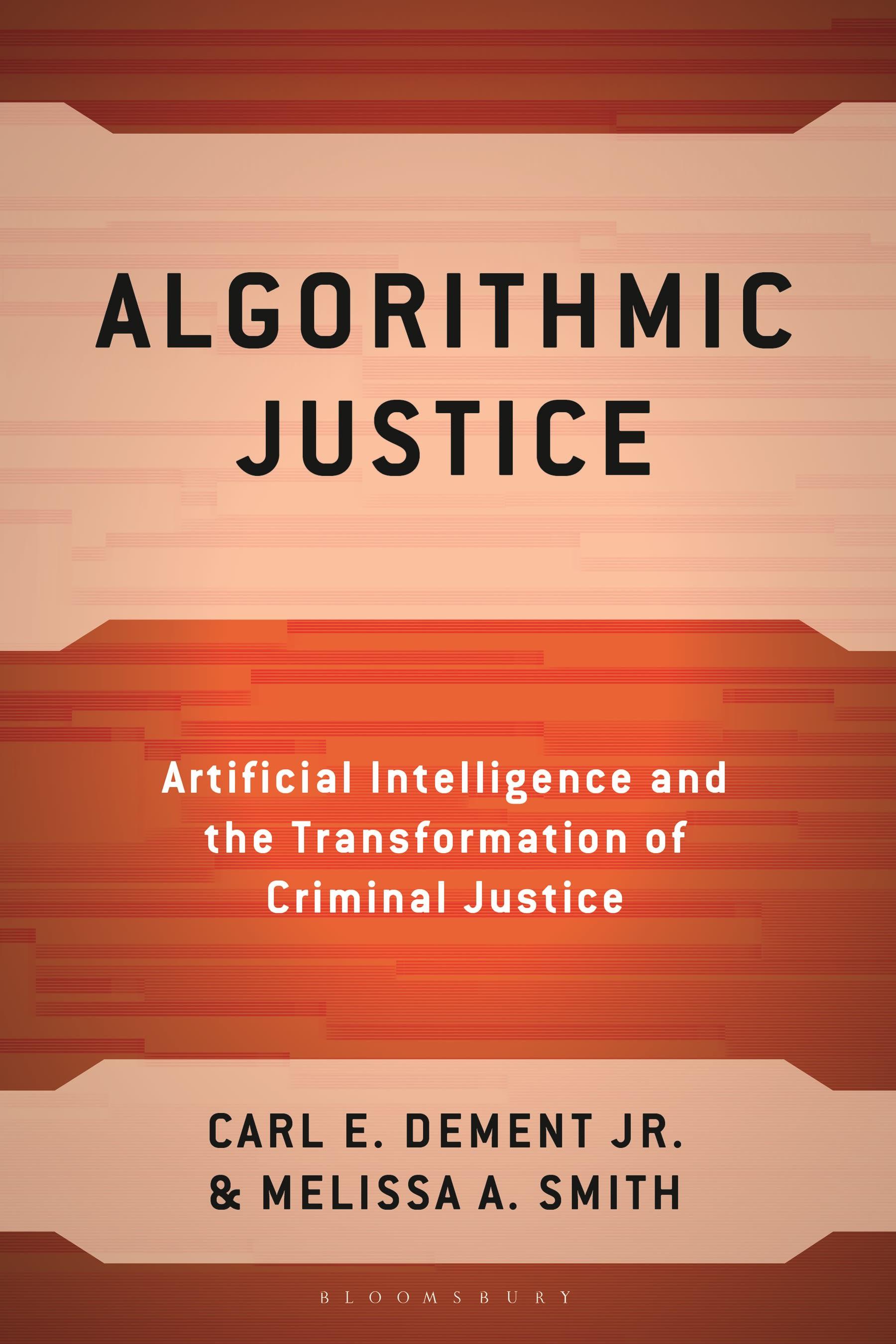
While AI-assisted tools promise greater efficiency, consistency, and accuracy in criminal justice, they also introduce ethical, procedural, and epistemological challenges demanding careful oversight.
Carl E. Dement Jr. and Melissa A. Smith investigate the rapidly evolving relationship between artificial intelligence and the written narratives that shape the criminal justice process. Drawing on original interviews with judges, prosecutors, defense attorneys, law enforcement officers, and forensic specialists, they examine how large language models are transforming the way case narratives are drafted, reviewed, and interpreted. Situating these shifts within wider debates about trust, human judgment, and the role of technology in public service, the book blends empirical insight with careful analysis, offering a balanced, accessible framework for understanding both the promise and the risks of AI-assisted writing in criminal justice settings. Dement and Smith ultimately show that the integrity of future justice narratives will depend not on AI alone, but on thoughtful human–AI collaboration grounded in expertise, ethics, and accountability-reminding readers that how and who writes justice shapes how we deliver it.
Carl E. Dement Jr. and Melissa A. Smith investigate the rapidly evolving relationship between artificial intelligence and the written narratives that shape the criminal justice process. Drawing on original interviews with judges, prosecutors, defense attorneys, law enforcement officers, and forensic specialists, they examine how large language models are transforming the way case narratives are drafted, reviewed, and interpreted. Situating these shifts within wider debates about trust, human judgment, and the role of technology in public service, the book blends empirical insight with careful analysis, offering a balanced, accessible framework for understanding both the promise and the risks of AI-assisted writing in criminal justice settings. Dement and Smith ultimately show that the integrity of future justice narratives will depend not on AI alone, but on thoughtful human–AI collaboration grounded in expertise, ethics, and accountability-reminding readers that how and who writes justice shapes how we deliver it.
Zahle einfach mit Karte, Klarna, Apple Pay oder Google Pay. Nicht zufrieden? Du hast immer ein 14-tägiges Widerrufsrecht. Lies mehr in unseren AGB. Hast du Fragen, schreib uns eine E-Mail an hello@memmo.org.
Memmo macht das Lernen einfacher – wo auch immer du bist. Bei uns findest du deine Kursbücher und smarte Lerntools an einem Ort: Zusammenfassungen, Quizzes, Podcasts und Lernkarten. Und Ted, dein Lernbuddy, beantwortet alles, was du wissen möchtest. Über 50.000 Studierende lernen bereits hier – gemacht, damit du schneller lernst und weniger Stress hast.