
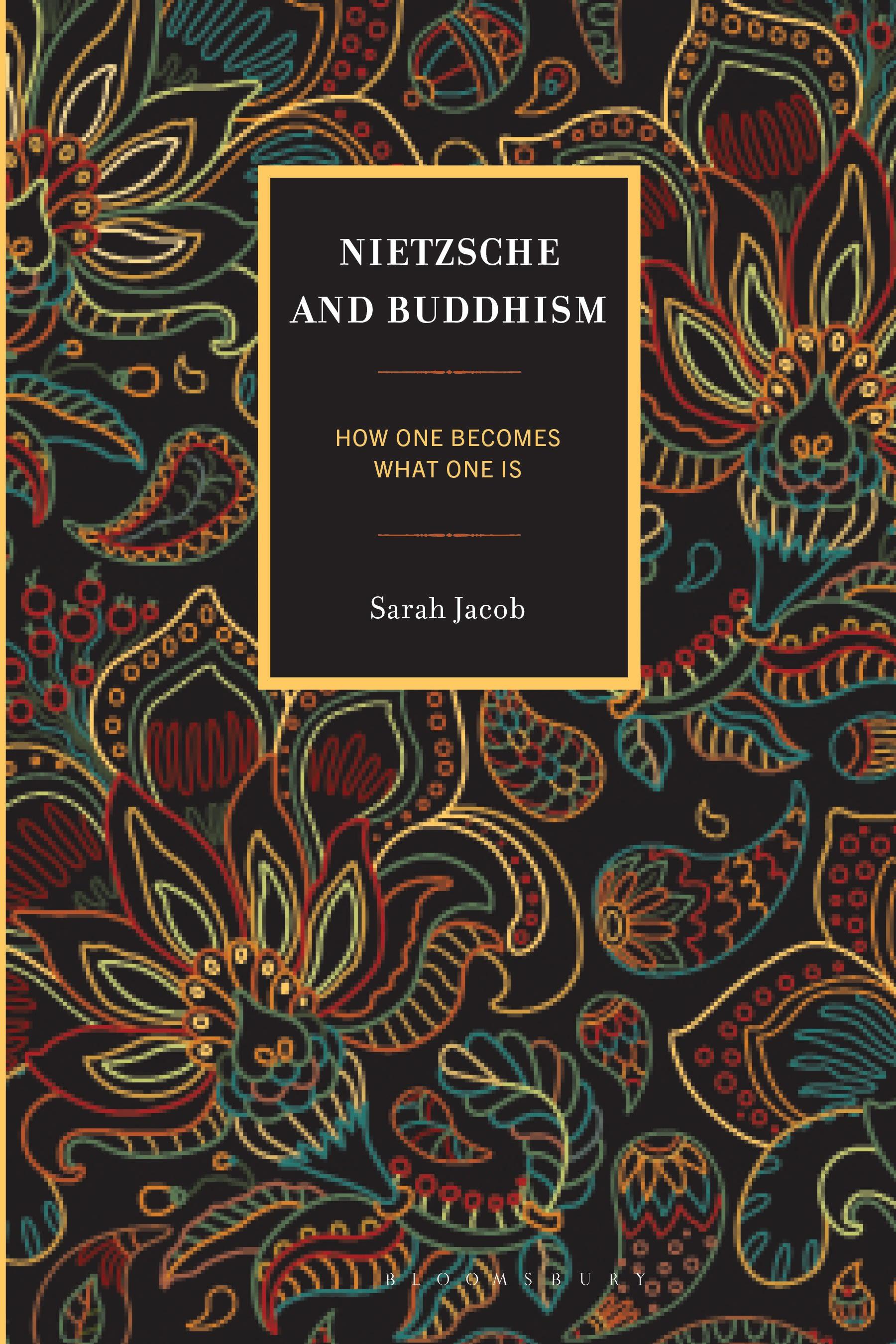
The claim that Nietzsche was aware of Buddhist, Vedic, or Eastern thought more generally is uncontroversial. However, any stronger claims about the sphere of influence remain niche in Nietzsche studies. Any non-Western flavors in Nietzsche's writings are most often considered ornamental and wholly unnecessary in the quest to interpret what Nietzsche means. To the contrary, in Nietzsche and Buddhism: How One Becomes What One Is, Sarah Jacob argues that Nietzsche's work is further illuminated when seen as an endeavor that seriously engages with Buddhist ontology, and that Nietzsche's philosophy marks a paradigm shift in “Western” thought because of this encounter. Though the second half of this book offers a thorough comparative analysis between Nietzsche and Buddhism, its validity rests upon the often understated importance of Indian thought for German intellectuals prior to and during Nietzsche's life. Indeed, the author argues that Nietzsche's “philosophy of the future” should be recognized as a transcultural contribution to the history of ideas, one that has import for the perplexed global zeitgeist in the twenty-first century.
Zahle einfach mit Karte, Klarna, Apple Pay oder Google Pay. Nicht zufrieden? Du hast immer ein 14-tägiges Widerrufsrecht. Lies mehr in unseren AGB. Hast du Fragen, schreib uns eine E-Mail an hello@memmo.org.
Memmo macht das Lernen einfacher – wo auch immer du bist. Bei uns findest du deine Kursbücher und smarte Lerntools an einem Ort: Zusammenfassungen, Quizzes, Podcasts und Lernkarten. Und Ted, dein Lernbuddy, beantwortet alles, was du wissen möchtest. Über 50.000 Studierende lernen bereits hier – gemacht, damit du schneller lernst und weniger Stress hast.