
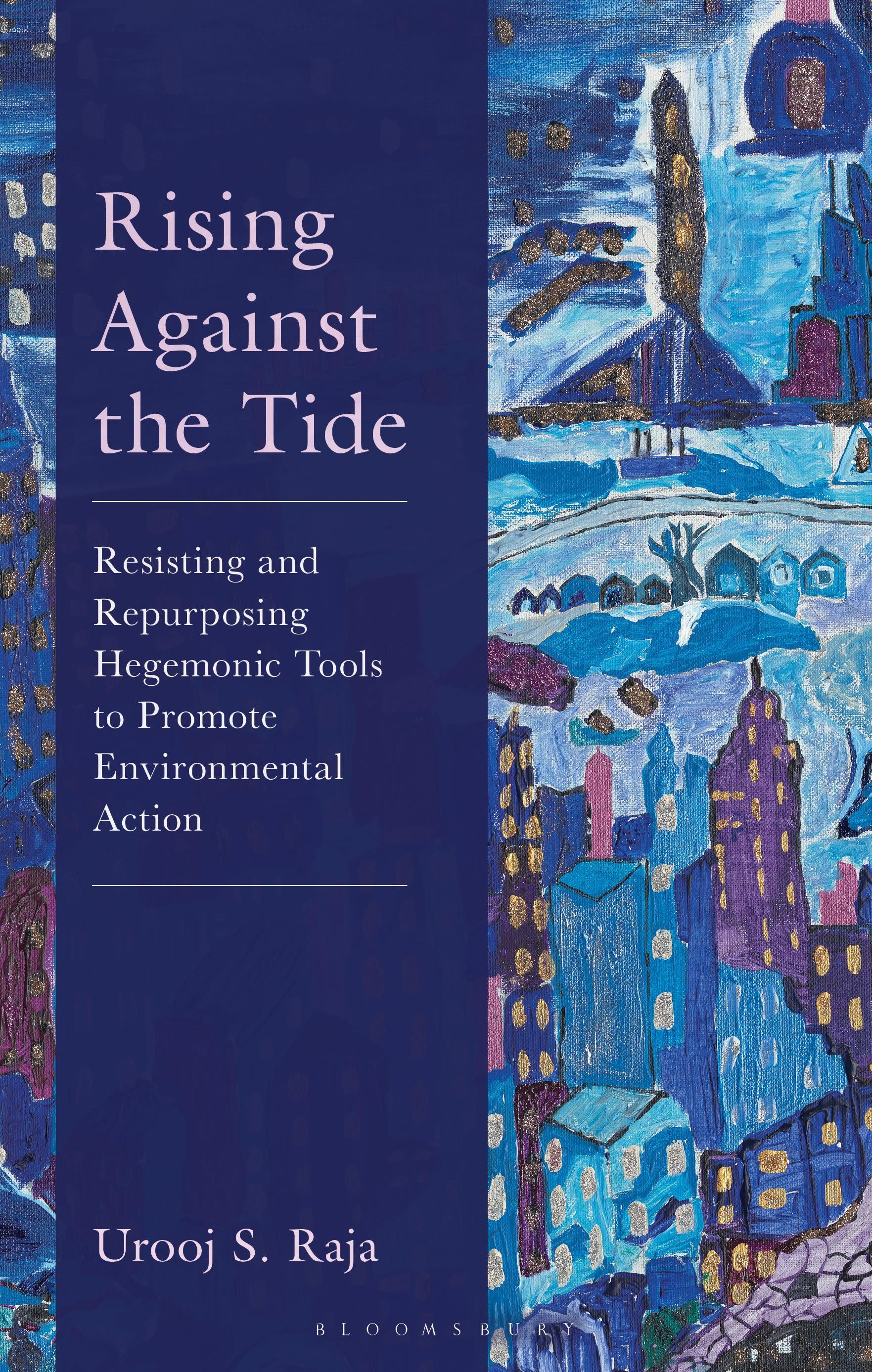
Environmental social scientist Urooj Raja explores how to promote environmental action through the repurposing of six hegemonic forces – anthropocentrism, extractivism, capitalism, legal hegemony, technofixes, and imaginative hegemony – drawing upon and offering practical insights rooted in both everyday actions and contemporary resistance studies.
This book delves into the concept of adaptive resilience, through which climate and environmental actors (CEAs) resist or repurpose these hegemonic forces by leveraging a combination of firsthand experiences, knowledge, networks, and skills. Raja argues that CEAs lean on adaptive resilience to resist and sometimes repurpose hegemonic forces and tools, which, when left unchallenged, often impede attempts to combat environmental inaction and climate change by design.
The author addresses the complexity and contradictions of how CEAs have engaged in contemporary climate action in the face of oppression, cautioning against a reliance on "purity solutions." This book's analysis traverses the environmental action ecosystems, engaging in discussions on traditional modes of activism, such as environmental campaigns, but also touches on novel ways of doing and thinking about environmental activism and action, including how CEAs harness and leverage technology and their imagination to do more for the climate. In doing so, this book offers an updated mapping of some of the less-discussed components of 21st-century environmental and climate activism and how CEAs, despite the odds, deliver and act when it comes to environmental action.
This book delves into the concept of adaptive resilience, through which climate and environmental actors (CEAs) resist or repurpose these hegemonic forces by leveraging a combination of firsthand experiences, knowledge, networks, and skills. Raja argues that CEAs lean on adaptive resilience to resist and sometimes repurpose hegemonic forces and tools, which, when left unchallenged, often impede attempts to combat environmental inaction and climate change by design.
The author addresses the complexity and contradictions of how CEAs have engaged in contemporary climate action in the face of oppression, cautioning against a reliance on "purity solutions." This book's analysis traverses the environmental action ecosystems, engaging in discussions on traditional modes of activism, such as environmental campaigns, but also touches on novel ways of doing and thinking about environmental activism and action, including how CEAs harness and leverage technology and their imagination to do more for the climate. In doing so, this book offers an updated mapping of some of the less-discussed components of 21st-century environmental and climate activism and how CEAs, despite the odds, deliver and act when it comes to environmental action.
Zahle einfach mit Karte, Klarna, Apple Pay oder Google Pay. Nicht zufrieden? Du hast immer ein 14-tägiges Widerrufsrecht. Lies mehr in unseren AGB. Hast du Fragen, schreib uns eine E-Mail an hello@memmo.org.
Memmo macht das Lernen einfacher – wo auch immer du bist. Bei uns findest du deine Kursbücher und smarte Lerntools an einem Ort: Zusammenfassungen, Quizzes, Podcasts und Lernkarten. Und Ted, dein Lernbuddy, beantwortet alles, was du wissen möchtest. Über 50.000 Studierende lernen bereits hier – gemacht, damit du schneller lernst und weniger Stress hast.