
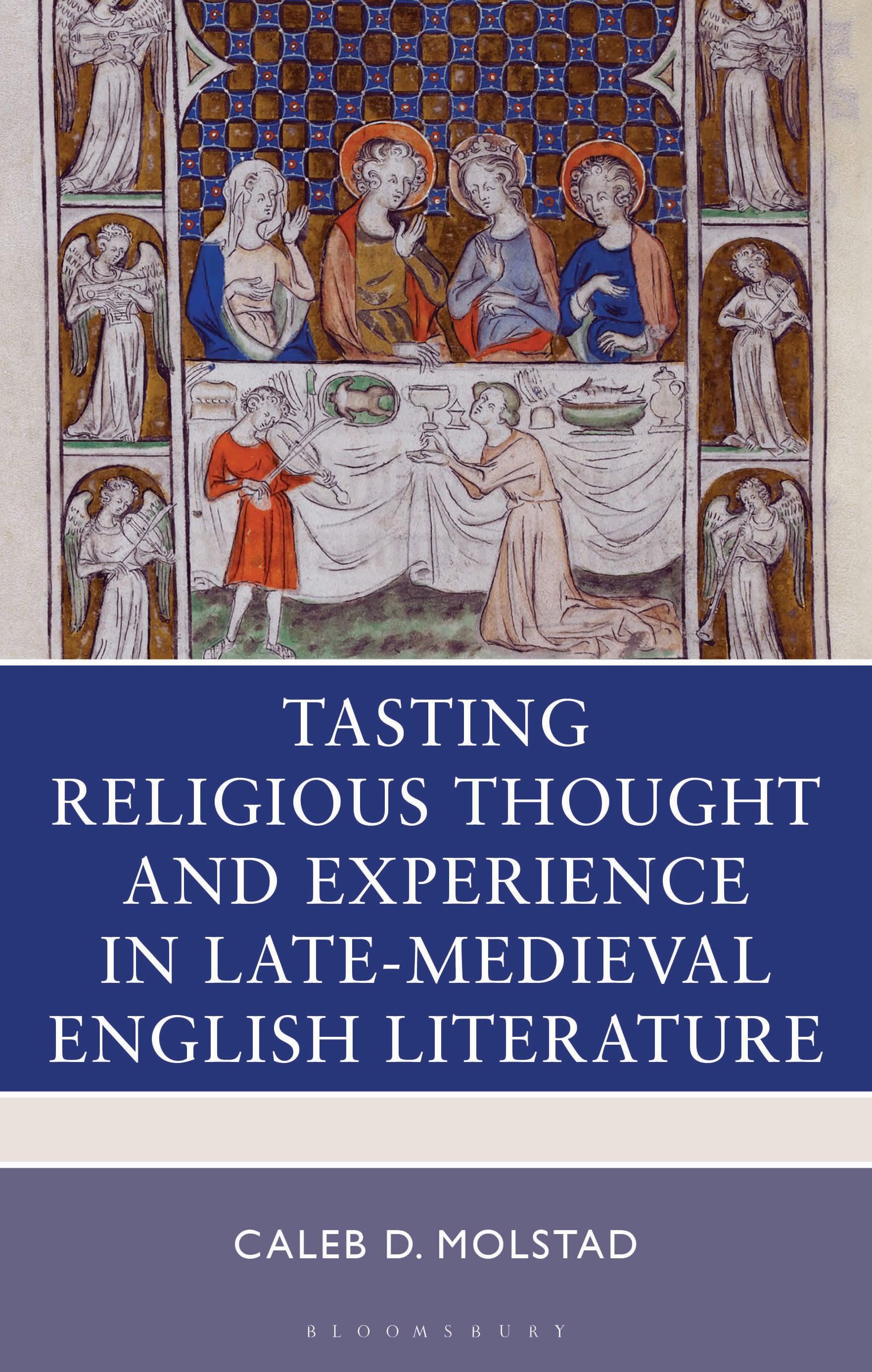
Through an analysis of vernacular metaphors of food and consumption for religious experience and theology in late-fourteenth and early fifteenth century England, Caleb D. Molstad explores what that language reveals about late-medieval religion during a time of swift religious and linguistic change.
In the move from Latin to Middle English, medieval authors gave vibrant expression to religious ideas through the emerging literary language, a phenomenon Nicholas Watson has termed “vernacular theology.” Molstad places focus on poetic and prose works including William Langland's Piers Plowman, Nicholas Love's A Mirror of the Blessed Life of Jesus Christ, and Walter Hilton's Scale of Perfection, Pearl-Poet's Cleanness, and A Ladder of Foure Ronges. Alimentary metaphors not only make religious concepts more accessible to a non-educated, lay audience, the language of food and consumption alters the shape of the religious content communicated through it. This book employs cognitive linguistics and food studies to explore the transcultural, sociological, anthropological, and historical significance of the food and foodways behind the metaphorical language and the theological transformations the metaphors produce.
In the move from Latin to Middle English, medieval authors gave vibrant expression to religious ideas through the emerging literary language, a phenomenon Nicholas Watson has termed “vernacular theology.” Molstad places focus on poetic and prose works including William Langland's Piers Plowman, Nicholas Love's A Mirror of the Blessed Life of Jesus Christ, and Walter Hilton's Scale of Perfection, Pearl-Poet's Cleanness, and A Ladder of Foure Ronges. Alimentary metaphors not only make religious concepts more accessible to a non-educated, lay audience, the language of food and consumption alters the shape of the religious content communicated through it. This book employs cognitive linguistics and food studies to explore the transcultural, sociological, anthropological, and historical significance of the food and foodways behind the metaphorical language and the theological transformations the metaphors produce.
Zahle einfach mit Karte, Klarna, Apple Pay oder Google Pay. Nicht zufrieden? Du hast immer ein 14-tägiges Widerrufsrecht. Lies mehr in unseren AGB. Hast du Fragen, schreib uns eine E-Mail an hello@memmo.org.
Memmo macht das Lernen einfacher – wo auch immer du bist. Bei uns findest du deine Kursbücher und smarte Lerntools an einem Ort: Zusammenfassungen, Quizzes, Podcasts und Lernkarten. Und Ted, dein Lernbuddy, beantwortet alles, was du wissen möchtest. Über 50.000 Studierende lernen bereits hier – gemacht, damit du schneller lernst und weniger Stress hast.