
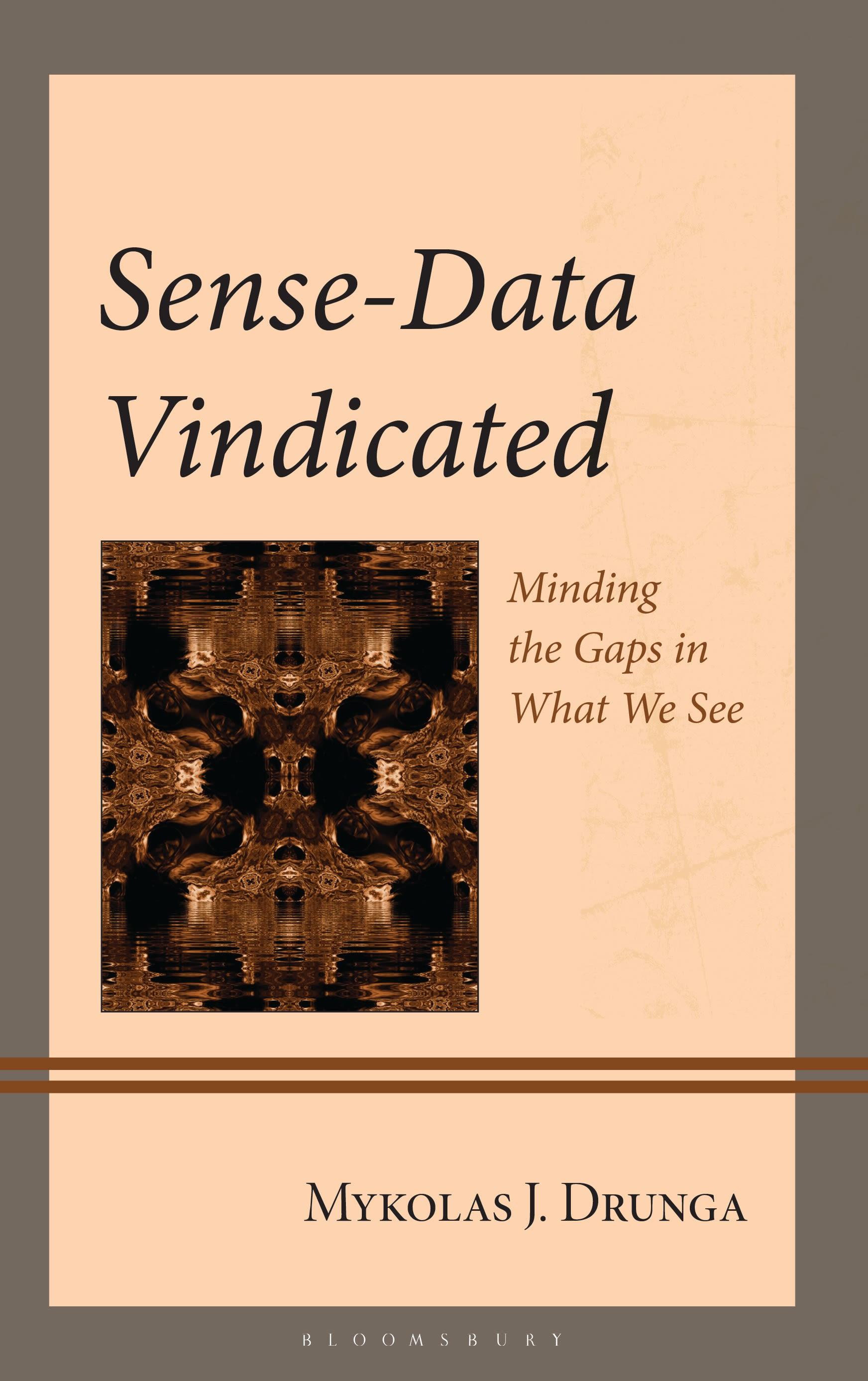
In order to solve the perceptual time-gap problem, this book embraces Idealism and acknowledges the existence of sense-data at the root of perceiving physical objects.
Of all the multiple arguments for introducing sense-data as objects of sensory awareness, the Time-Gap Argument remains persistently puzzling. Since the Middle Ages, scholars have wondered about phenomena such as the light we see from stars far away, and the time-gap problem has resisted a definitive solution.
Examining most of the arguments advanced since the beginning of the twentieth century both for and against the admission of sense-data, Mykolas J. Drunga argues that the problem cannot be solved by denying that the things we see must exist at the time we see them or by claiming we can see deeply into the past. Instead, we will solve it by realizing that what keeps the universe in existence is an eternal spirit. This radical conclusion, in conversation with the Idealist philosophers Leibniz and Berkeley, requires taking a first indispensable step––acknowledging the existence of sense-data at the root of perceiving physical objects.
Drunga vindicates a Direct Realist Subjective Idealism, which alone allows perception of the world to be both possible and understandable. If Subjective Idealism is thus a necessary condition for the possibility and intelligibility of sensory perception, we thereby have a strong proof of Idealism's truth. Ultimately, to be just is to perceive (to be on the way toward coming to know something) or to be perceived (to be on the way toward becoming known to someone).
Of all the multiple arguments for introducing sense-data as objects of sensory awareness, the Time-Gap Argument remains persistently puzzling. Since the Middle Ages, scholars have wondered about phenomena such as the light we see from stars far away, and the time-gap problem has resisted a definitive solution.
Examining most of the arguments advanced since the beginning of the twentieth century both for and against the admission of sense-data, Mykolas J. Drunga argues that the problem cannot be solved by denying that the things we see must exist at the time we see them or by claiming we can see deeply into the past. Instead, we will solve it by realizing that what keeps the universe in existence is an eternal spirit. This radical conclusion, in conversation with the Idealist philosophers Leibniz and Berkeley, requires taking a first indispensable step––acknowledging the existence of sense-data at the root of perceiving physical objects.
Drunga vindicates a Direct Realist Subjective Idealism, which alone allows perception of the world to be both possible and understandable. If Subjective Idealism is thus a necessary condition for the possibility and intelligibility of sensory perception, we thereby have a strong proof of Idealism's truth. Ultimately, to be just is to perceive (to be on the way toward coming to know something) or to be perceived (to be on the way toward becoming known to someone).
Zahle einfach mit Karte, Klarna, Apple Pay oder Google Pay. Nicht zufrieden? Du hast immer ein 14-tägiges Widerrufsrecht. Lies mehr in unseren AGB. Hast du Fragen, schreib uns eine E-Mail an hello@memmo.org.
Memmo macht das Lernen einfacher – wo auch immer du bist. Bei uns findest du deine Kursbücher und smarte Lerntools an einem Ort: Zusammenfassungen, Quizzes, Podcasts und Lernkarten. Und Ted, dein Lernbuddy, beantwortet alles, was du wissen möchtest. Über 50.000 Studierende lernen bereits hier – gemacht, damit du schneller lernst und weniger Stress hast.