
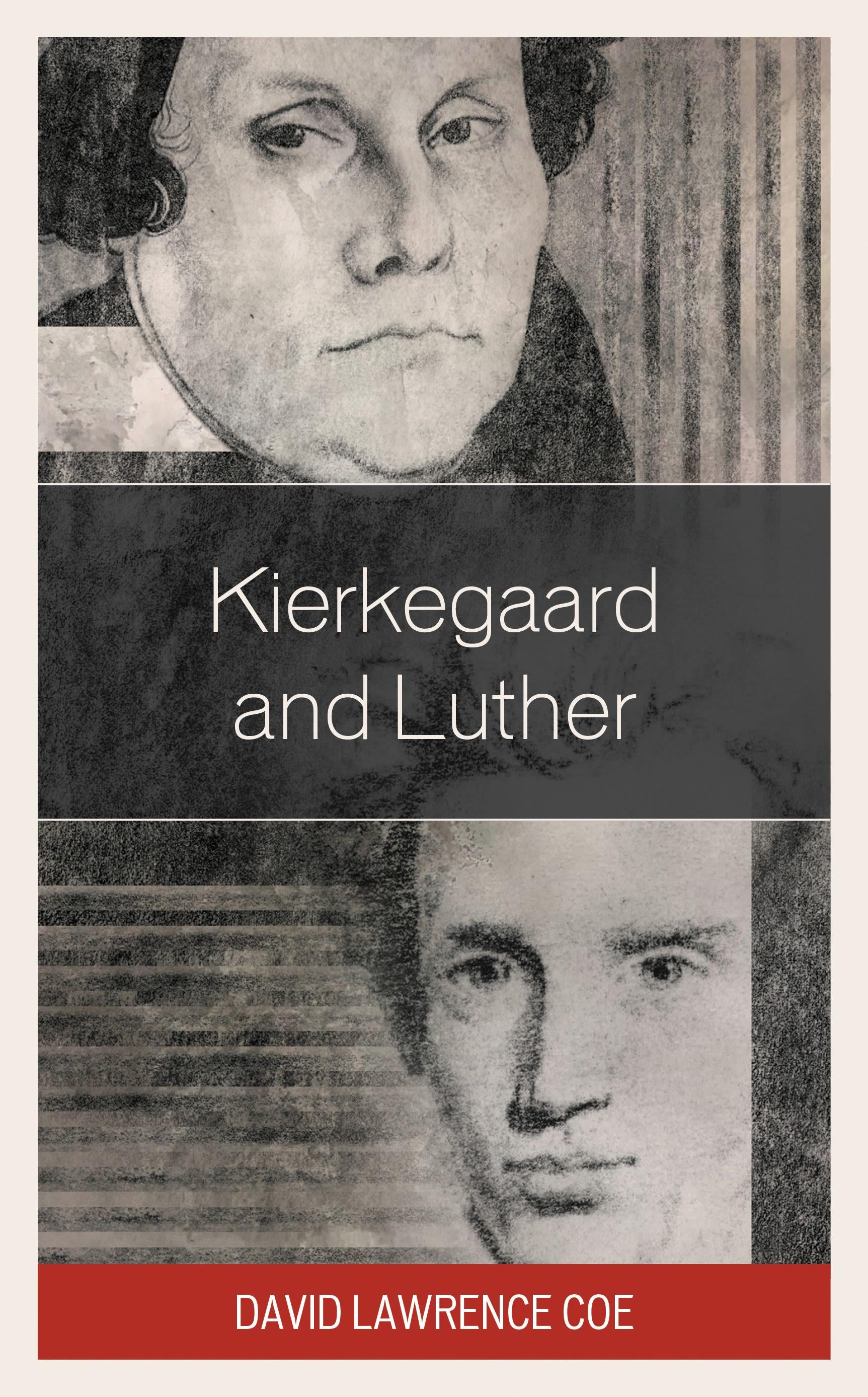
Søren Kierkegaard denounced nineteenth-century Danish Lutheranism for exploiting Martin Luther's doctrine of justification "without works" as justification for an antinomian easy life. Kierkegaard saw his own writing as a corrective: “I have wanted to prevent people in ‘Christendom’ from existentially taking in vain Luther and the significance of Luther's life.” In 1847, Kierkegaard began an eight-year reading of Luther’s sermons, forking through them for extracts to confirm his theological corrective rather than to comprehend the breadth of Luther’s thought. While he found much to laud, Kierkegaard also found much to lance, privately commenting that Luther was partially responsible for what he considered the problematic Lutheranism of his own day. Furthermore, David Coe argues, Kierkegaard was unaware that his copy of Luther's church and house postils was a heavily abridged edition of extracts from those postils. Therefore, his appraisal of Luther begs to be investigated. Kierkegaard and Luther examines the Luther sermons Kierkegaard read, what he praised and criticized, missed, and misjudged of Luther, and spotlights the concord these two Lutheran giants actually shared, namely, the negative yet necessary role that Christian suffering (Anfechtung/Anfægtelse) plays in Christian faith and life.
Zahle einfach mit Karte, Klarna, Apple Pay oder Google Pay. Nicht zufrieden? Du hast immer ein 14-tägiges Widerrufsrecht. Lies mehr in unseren AGB. Hast du Fragen, schreib uns eine E-Mail an hello@memmo.org.
Memmo macht das Lernen einfacher – wo auch immer du bist. Bei uns findest du deine Kursbücher und smarte Lerntools an einem Ort: Zusammenfassungen, Quizzes, Podcasts und Lernkarten. Und Ted, dein Lernbuddy, beantwortet alles, was du wissen möchtest. Über 50.000 Studierende lernen bereits hier – gemacht, damit du schneller lernst und weniger Stress hast.