
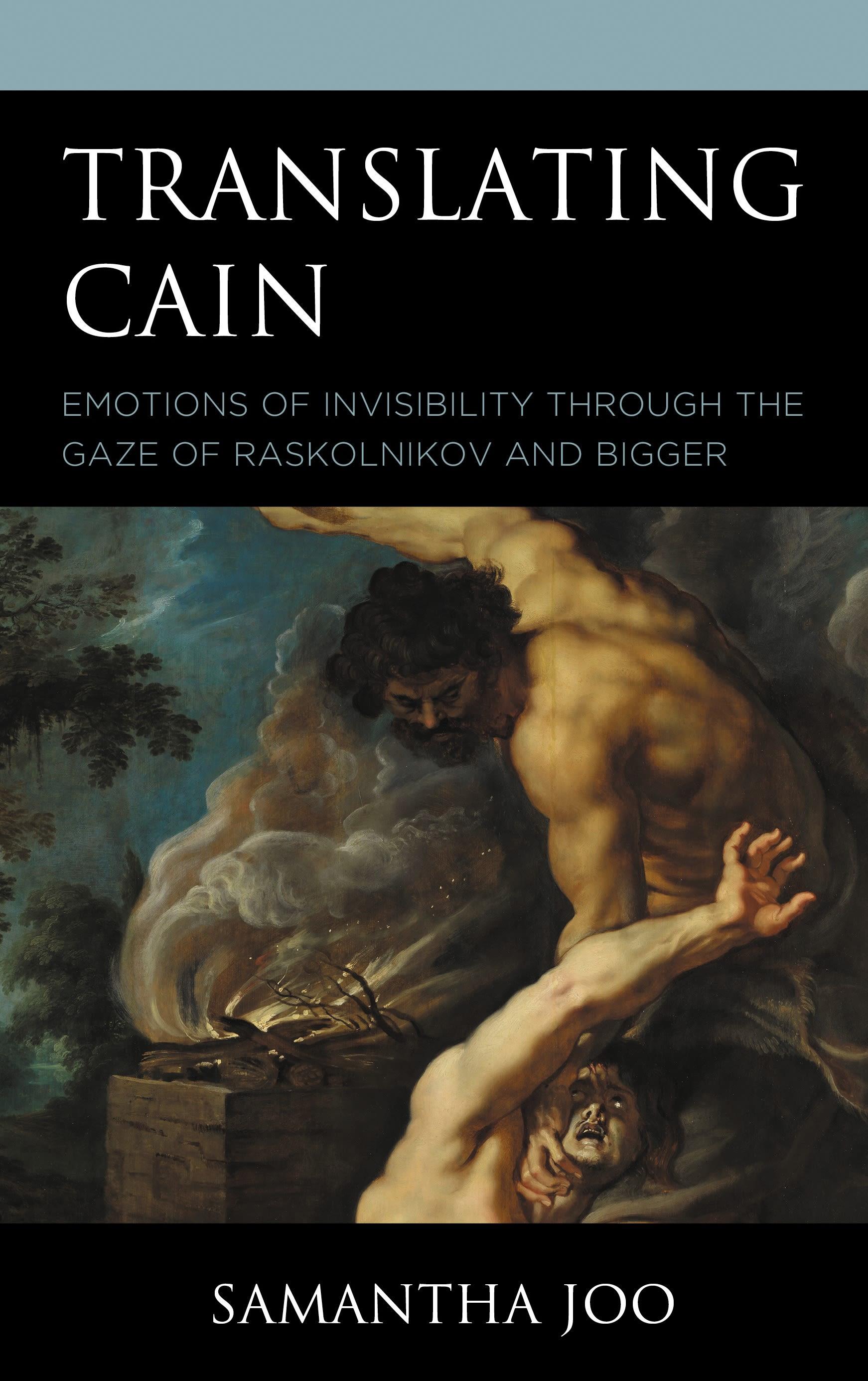
Unless we recognize the cultural context embedded in the Genesis story of Cain and Abel, the significance of Cain’s rejection and consequent violence is often lost in translation. While many interpreters highlight the theme of sibling rivalry to explain Cain’s murderous violence, Samantha Joo relates Cain’s anger and shame to the social marginalization of Kenites in ancient Israel, for whom Cain functions narratively as an ancestor.
To better understand and experience Cain’s emotions in the narrative, Joo provides a method for re-contextualizing an ancient story in modern contexts. Drawing from post-colonial theories of Latin America translators, Joo focuses on analogies which simulate the “moveable event” of a story. She shows that novels like Fyodor Dostoevsky’s Crime and Punishment and Richard Wright’s Native Son, in which protagonists kill to escape their invisibility, capture the “event” of Cain and Abel. Consequently, readers can empathize with the anger and shame resulting from the social marginalization of Cain through the alienation of a poor, ex-university student, Raskolnikov, and the oppression of a young black man, Bigger Thomas.
To better understand and experience Cain’s emotions in the narrative, Joo provides a method for re-contextualizing an ancient story in modern contexts. Drawing from post-colonial theories of Latin America translators, Joo focuses on analogies which simulate the “moveable event” of a story. She shows that novels like Fyodor Dostoevsky’s Crime and Punishment and Richard Wright’s Native Son, in which protagonists kill to escape their invisibility, capture the “event” of Cain and Abel. Consequently, readers can empathize with the anger and shame resulting from the social marginalization of Cain through the alienation of a poor, ex-university student, Raskolnikov, and the oppression of a young black man, Bigger Thomas.
Zahle einfach mit Karte, Klarna, Apple Pay oder Google Pay. Nicht zufrieden? Du hast immer ein 14-tägiges Widerrufsrecht. Lies mehr in unseren AGB. Hast du Fragen, schreib uns eine E-Mail an hello@memmo.org.
Memmo macht das Lernen einfacher – wo auch immer du bist. Bei uns findest du deine Kursbücher und smarte Lerntools an einem Ort: Zusammenfassungen, Quizzes, Podcasts und Lernkarten. Und Ted, dein Lernbuddy, beantwortet alles, was du wissen möchtest. Über 50.000 Studierende lernen bereits hier – gemacht, damit du schneller lernst und weniger Stress hast.