
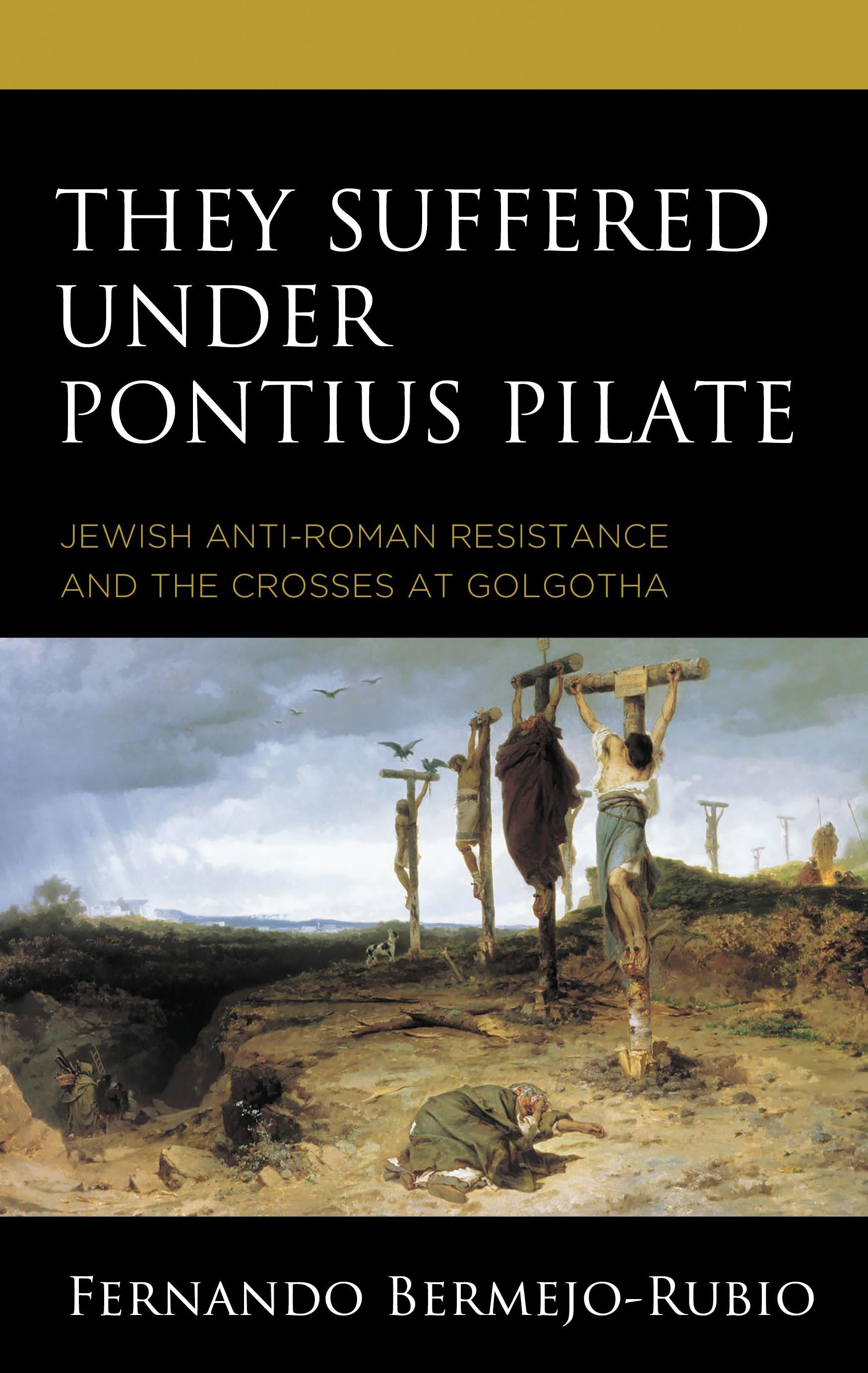
Although, according to the Christian Gospels, three men were crucified ca. 30 CE outside Jerusalem under the prefect Pontius Pilate, both popular wisdom and mainstream scholarship focus solely on the fate of a single man. The story is indeed told, once and again, as if only Jesus of Nazareth had been the target of Roman repression, as if only his suffering were worthy of attention, and as if the other men crucified at Golgotha had nothing to do with him.
The present book forcefully argues that, from an epistemological and even an ethical perspective, this is an odd and worrying state of affairs: the prevailing approach entails one-sided oversight of significant information, betrays a strong bias, and prevents us from grasping the meaning of the episode, thus making no sense from the standpoint of ancient historians. The event which requires being elucidated is not Jesus’ crucifixion, but the whole episode of the execution by the Roman authorities of at least three men.
Who were the other men crucified at Golgotha? Were they actually unconnected to the self-styled “king of the Jews”, as the evangelists want us to believe? Why did the Roman prefect crucify all of them together, in the same place at the same time? And why are we told that Jesus’ cross was placed in the middle of the others? Taking seriously into account the extent of the implausible elements in the Passion accounts, the collective nature of the crucifixion, and the politics of Roman Palestine, They Suffered under Pontius Pilate: Jewish Anti-Roman Resistance and the Crosses at Golgotha provides fresh and consistent answers to these and many other pressing questions, offering a genuinely historical reconstruction. The conclusions obtained challenge many well-rooted assumptions, unveil Jesus’ story as a collective enterprise, have far-reaching implications for the history of Judaism under the Principate, and compel us to critically rethink the beginnings of Christianity.
The present book forcefully argues that, from an epistemological and even an ethical perspective, this is an odd and worrying state of affairs: the prevailing approach entails one-sided oversight of significant information, betrays a strong bias, and prevents us from grasping the meaning of the episode, thus making no sense from the standpoint of ancient historians. The event which requires being elucidated is not Jesus’ crucifixion, but the whole episode of the execution by the Roman authorities of at least three men.
Who were the other men crucified at Golgotha? Were they actually unconnected to the self-styled “king of the Jews”, as the evangelists want us to believe? Why did the Roman prefect crucify all of them together, in the same place at the same time? And why are we told that Jesus’ cross was placed in the middle of the others? Taking seriously into account the extent of the implausible elements in the Passion accounts, the collective nature of the crucifixion, and the politics of Roman Palestine, They Suffered under Pontius Pilate: Jewish Anti-Roman Resistance and the Crosses at Golgotha provides fresh and consistent answers to these and many other pressing questions, offering a genuinely historical reconstruction. The conclusions obtained challenge many well-rooted assumptions, unveil Jesus’ story as a collective enterprise, have far-reaching implications for the history of Judaism under the Principate, and compel us to critically rethink the beginnings of Christianity.
Seiten: 348
Kategorie: Religion & Teologi
e-ISBN: 9781978709584
Versandgewicht: 1.2 kg
Versand in: 1-2 Tage
Zahle einfach mit Karte, Klarna, Apple Pay oder Google Pay. Nicht zufrieden? Du hast immer ein 14-tägiges Widerrufsrecht. Lies mehr in unseren AGB. Hast du Fragen, schreib uns eine E-Mail an hello@memmo.org.
Memmo macht das Lernen einfacher – wo auch immer du bist. Bei uns findest du deine Kursbücher und smarte Lerntools an einem Ort: Zusammenfassungen, Quizzes, Podcasts und Lernkarten. Und Ted, dein Lernbuddy, beantwortet alles, was du wissen möchtest. Über 50.000 Studierende lernen bereits hier – gemacht, damit du schneller lernst und weniger Stress hast.