
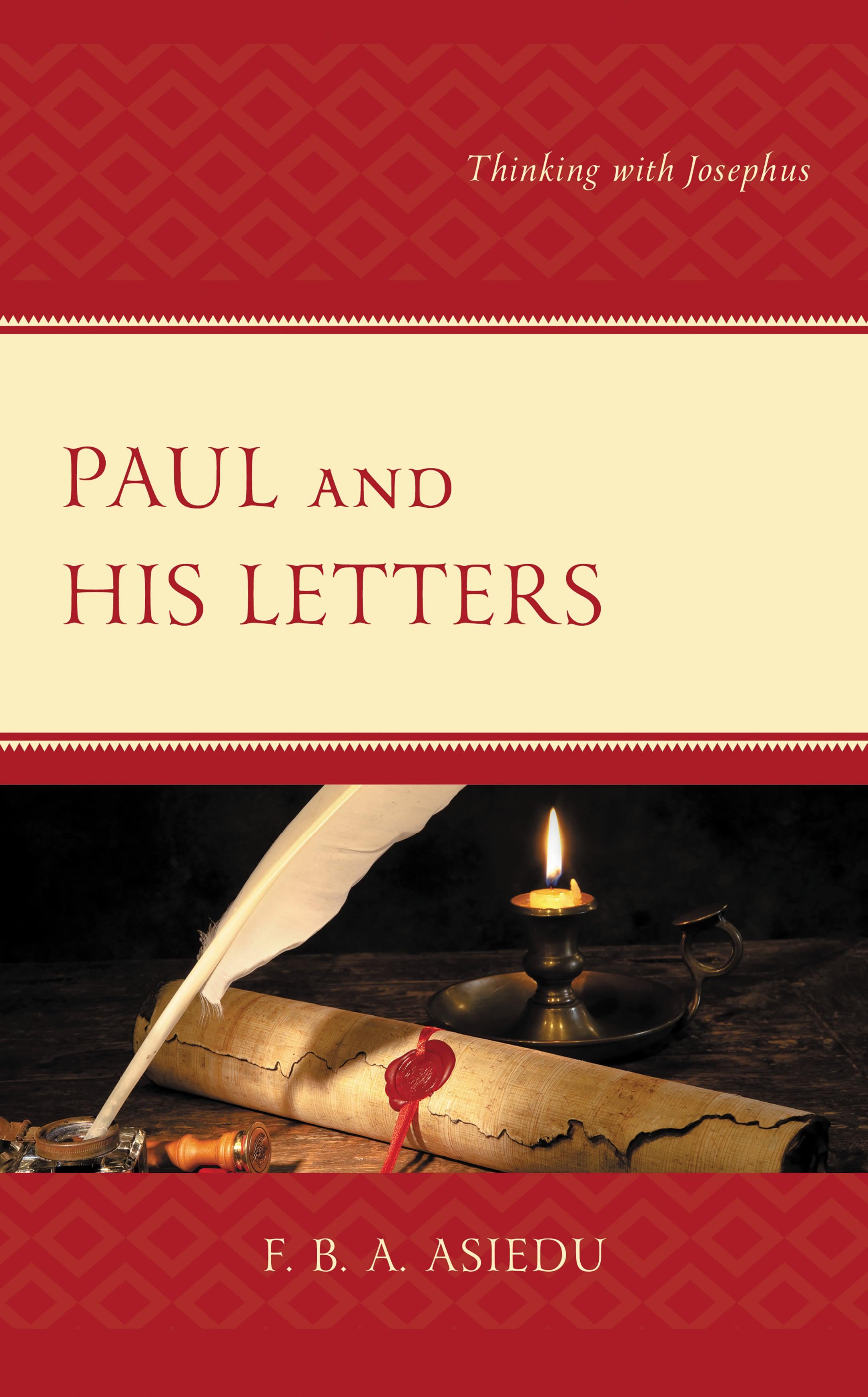
Paul the apostle and historian Flavius Josephus spent considerable parts of their careers away from Jerusalem. They cultivated Roman audiences under very different circumstances: Paul with his Letter to the Romans, and Josephus with the writings he produced in Rome after the Jewish War. Curiously, Paul’s last visit to Jerusalem coincided with Josephus’s entry into public life, a period about which Josephus is deliberately silent. In Paul and His Letters: Thinking with Josephus, F. B. A. Asiedu selects themes from Josephus’s life to explore Paul’s letters and biography that contribute to his uniqueness in Jewish history. He highlights, for example, the need to read Romans 9–11 as aporetic discourse to appreciate Paul as an existential thinker. Asiedu considers, among other things, the authenticity of Paul’s letters and offers an alternative to the prevailing scholarly consensus. He also maintains that the Pauline collection in the New Testament first took shape in the house of Gaius in Corinth, where Paul composed his Letter to the Romans. Asiedu also suggests that the traditional view that Luke the physician wrote the Acts of the Apostles is probably a mistake. He argues that Titus the Greek, the coworker and friend of Barnabas and Paul, most likely authored it.
Zahle einfach mit Karte, Klarna, Apple Pay oder Google Pay. Nicht zufrieden? Du hast immer ein 14-tägiges Widerrufsrecht. Lies mehr in unseren AGB. Hast du Fragen, schreib uns eine E-Mail an hello@memmo.org.
Memmo macht das Lernen einfacher – wo auch immer du bist. Bei uns findest du deine Kursbücher und smarte Lerntools an einem Ort: Zusammenfassungen, Quizzes, Podcasts und Lernkarten. Und Ted, dein Lernbuddy, beantwortet alles, was du wissen möchtest. Über 50.000 Studierende lernen bereits hier – gemacht, damit du schneller lernst und weniger Stress hast.