
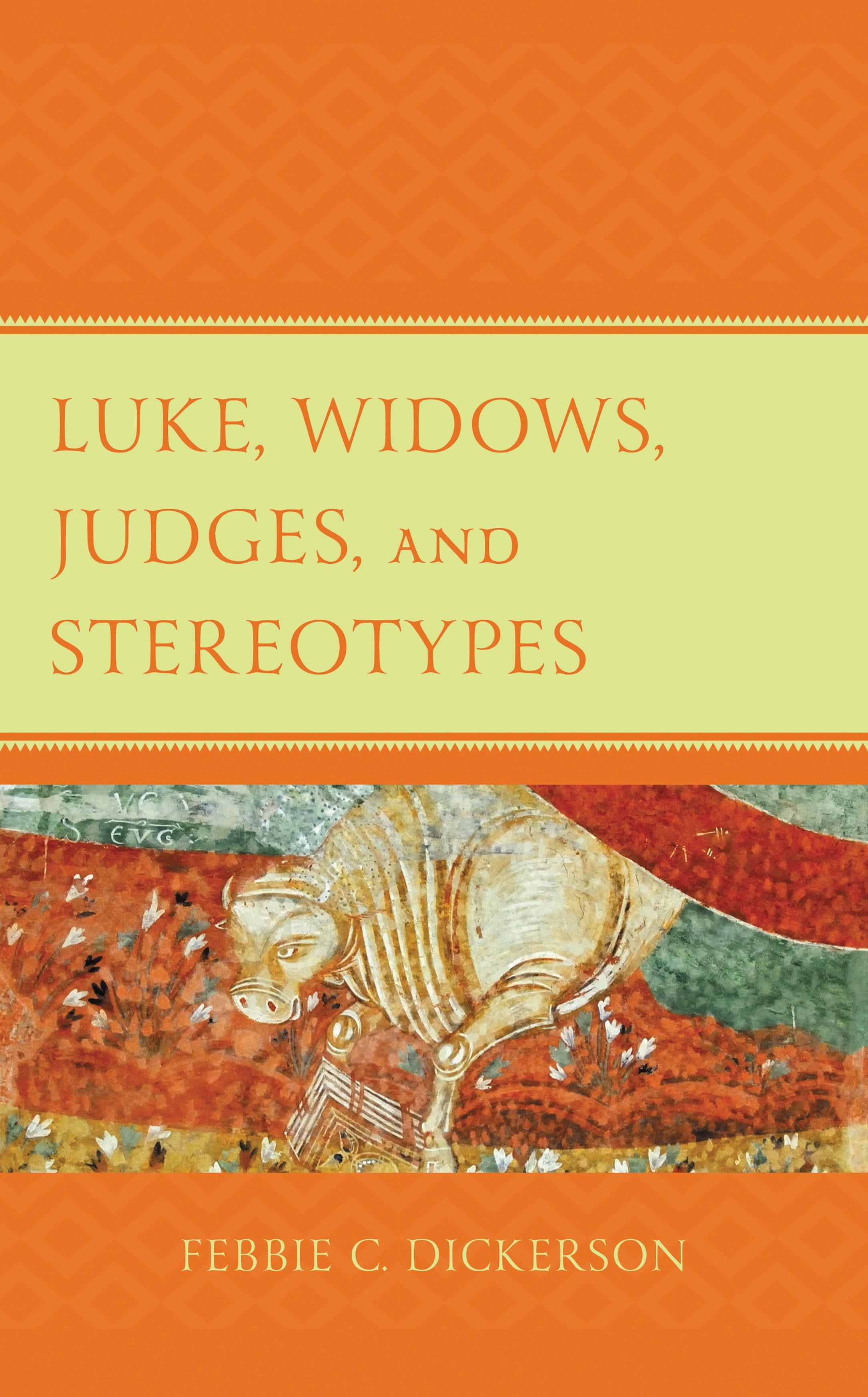
Biblical narratives are not simply sacred stories for religious communities: They are stories that provide transformative insight into cultural biases. By putting historical criticism and reception history into dialogue with womanist biblical hermeneutics, Luke, Widows, Judges, and Stereotypes offers a provocative reading of Jesus’ parable about a widow who confronts a judge and obtains what she seeks by means of physical threat. Rather than simply reading the widow as the model for “one who prays always and does not lose heart” (Luke 18:1), Dickerson shows that read in the context of Luke’s wider narrative, the widow, domesticated and robbed both of her agency and moral ambiguity, is more likely demanding vengeance instead of justice. Likewise, rather than simply reading the judge as one "who neither feared God nor had respect for people" (Luke 18:2), Dickerson argues that the judge is both an ideal man and one who compromises standards of ancient masculinity. Then, reading both the widow and judge through African American stereotypes (Mammy, Jezebel, Sapphire, Cool Black Male, Master-Pastor, and Foolish Judge) that are used to degrade, debase, and control, and reading them into and in light of the parable, Dickerson demonstrates how the parable calls into question these stereotypes thereby producing new liberative readings.
Zahle einfach mit Karte, Klarna, Apple Pay oder Google Pay. Nicht zufrieden? Du hast immer ein 14-tägiges Widerrufsrecht. Lies mehr in unseren AGB. Hast du Fragen, schreib uns eine E-Mail an hello@memmo.org.
Memmo macht das Lernen einfacher – wo auch immer du bist. Bei uns findest du deine Kursbücher und smarte Lerntools an einem Ort: Zusammenfassungen, Quizzes, Podcasts und Lernkarten. Und Ted, dein Lernbuddy, beantwortet alles, was du wissen möchtest. Über 50.000 Studierende lernen bereits hier – gemacht, damit du schneller lernst und weniger Stress hast.