
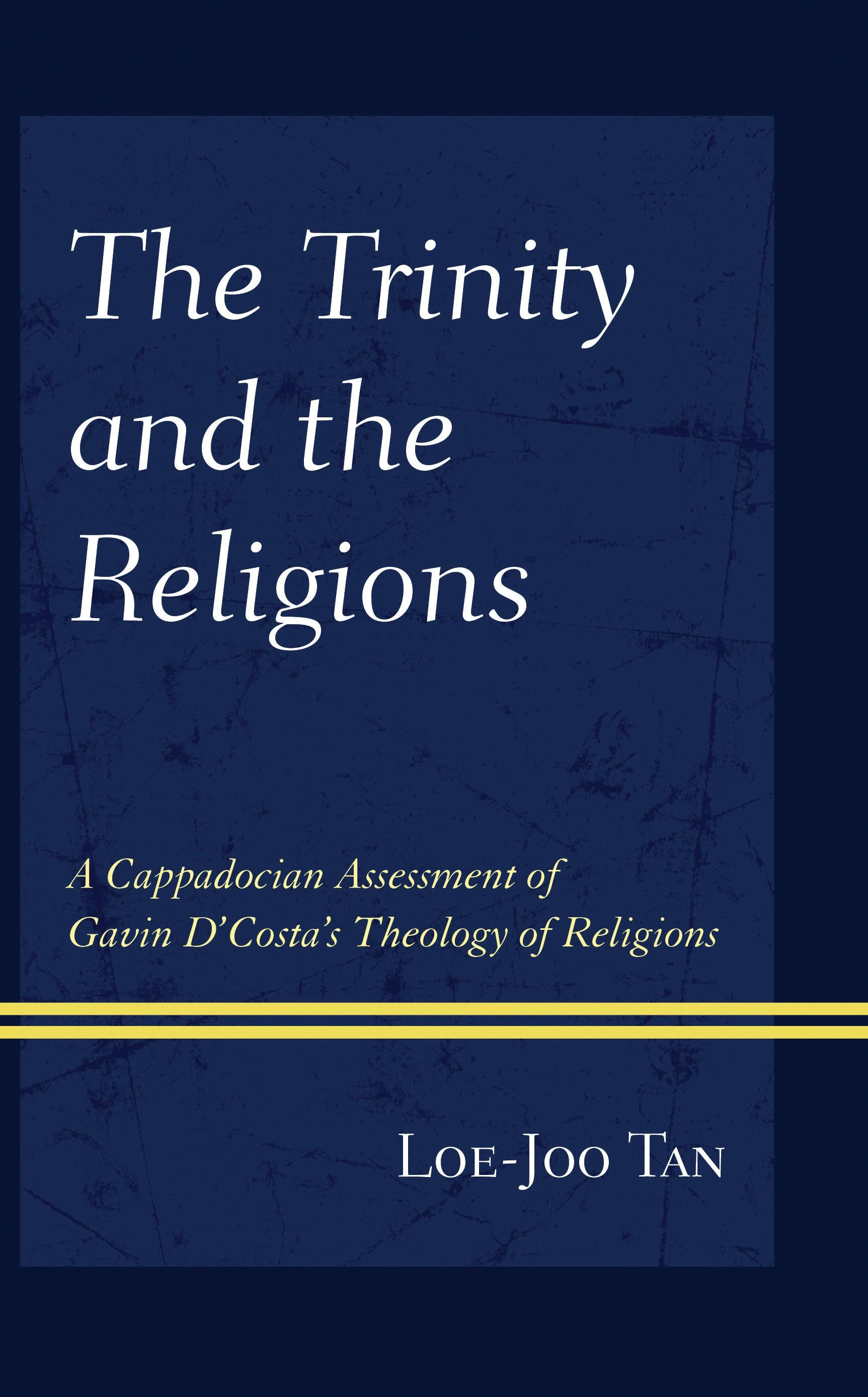
Will the followers of other religions who have not heard of the gospel be saved? Since the Second Vatican Council, the Catholic church has been grappling with this question, culminating in a recent document, Dominus Iesus in 2000. In the post-DI climate, the British theologian, Gavin D’Costa, has been described as a “representative post-DI theologian of religions.” And with good reason, since other theologians such as Jacques Dupuis whose work along the lines of “neo-Rahnerianism” have been curtailed by DI.
D'Costa’s work has spanned the past three decades and is aimed at developing a theology that echoes developments within the Catholic church's efforts to grapple with the existence of other religions. In doing so, he has appropriated the doctrine of the Trinity by reasoning it provides the very resources for interacting with “Others” and developed a form of Trinitarian inclusivism. Based on the work of patristic theologians such as Lewis Ayres and Michel Barnes and their conception of a “Pro-Nicene” theological matrix, this book is an attempt to assess whether D’Costa’s utilization of trinitarian resources for contemporary concerns is faithful to the tradition. The book concludes that while there is much to commend in D’Costa’s system, there remain some features not fully consonant with classical Trinitarianism.
D'Costa’s work has spanned the past three decades and is aimed at developing a theology that echoes developments within the Catholic church's efforts to grapple with the existence of other religions. In doing so, he has appropriated the doctrine of the Trinity by reasoning it provides the very resources for interacting with “Others” and developed a form of Trinitarian inclusivism. Based on the work of patristic theologians such as Lewis Ayres and Michel Barnes and their conception of a “Pro-Nicene” theological matrix, this book is an attempt to assess whether D’Costa’s utilization of trinitarian resources for contemporary concerns is faithful to the tradition. The book concludes that while there is much to commend in D’Costa’s system, there remain some features not fully consonant with classical Trinitarianism.
Zahle einfach mit Karte, Klarna, Apple Pay oder Google Pay. Nicht zufrieden? Du hast immer ein 14-tägiges Widerrufsrecht. Lies mehr in unseren AGB. Hast du Fragen, schreib uns eine E-Mail an hello@memmo.org.
Memmo macht das Lernen einfacher – wo auch immer du bist. Bei uns findest du deine Kursbücher und smarte Lerntools an einem Ort: Zusammenfassungen, Quizzes, Podcasts und Lernkarten. Und Ted, dein Lernbuddy, beantwortet alles, was du wissen möchtest. Über 50.000 Studierende lernen bereits hier – gemacht, damit du schneller lernst und weniger Stress hast.