
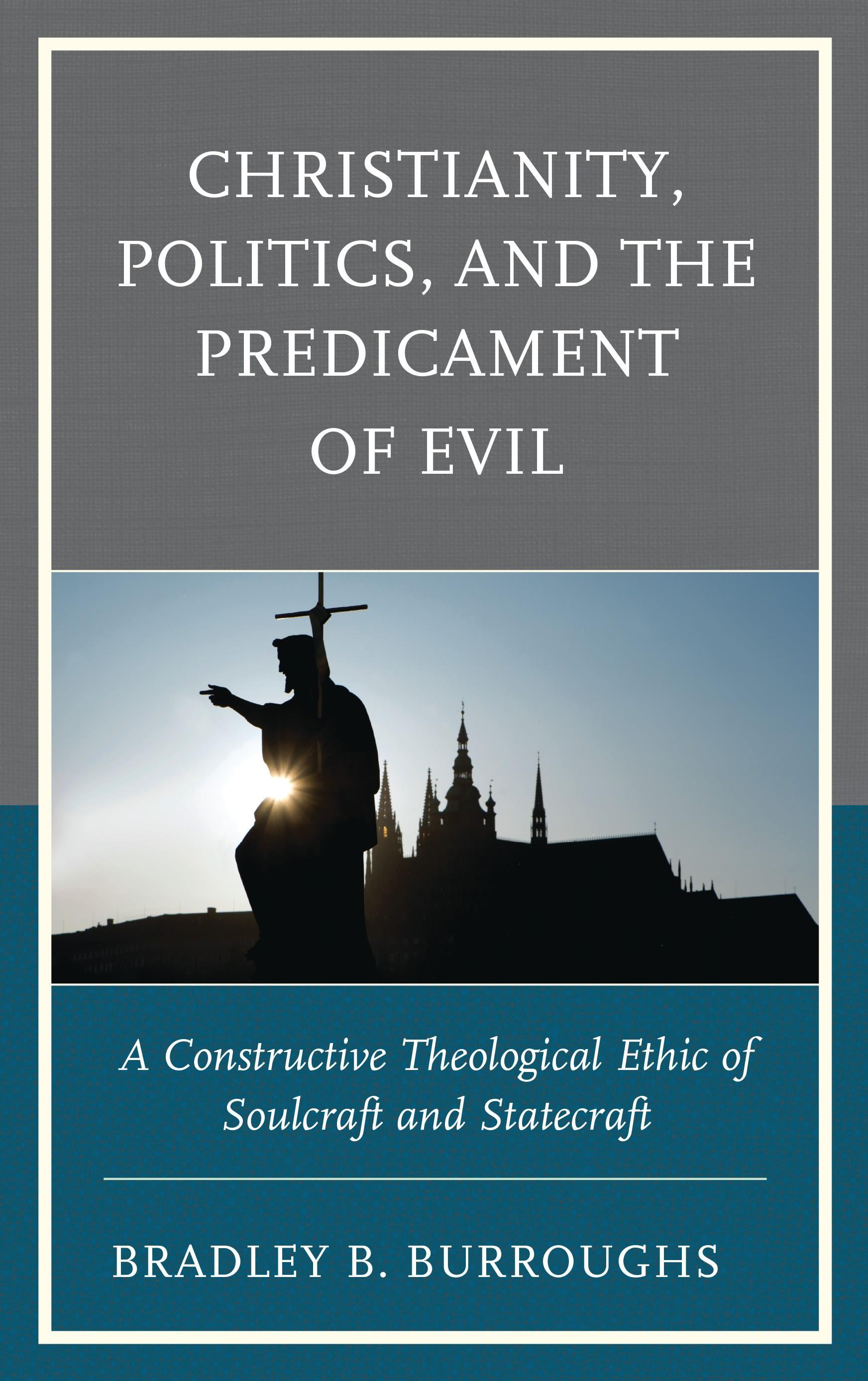
Christianity, Politics, and the Predicament of Evil overcomes a defining divide in contemporary Protestant political ethics created by two contrasting conceptions of politics. The first, exemplified in the work of Reinhold Niebuhr, construes politics as a matter of statecraft that utilizes the power of government to secure the greatest possible order and justice for society as a whole. The second, most prominently articulated by Stanley Hauerwas, maintains that politics concerns itself with the cultivation of virtue; consequently, it finds not the “well-ordered state” but the church to be the exemplar of politics.
Not only illuminating the divide between politics-as-statecraft and politics-as-soulcraft but also redeveloping the conceptual space between them, this book reconceives politics within a theological framework in which the eschatological City of God, rather than the well-ordered state or the faithful church, functions as the paradigm of political life. At the same time, it simultaneously recognizes that the existence of evil, which corrupts individual wills and social structures, inhibits human beings from building the City of God in this world. Analyzing, criticizing, and drawing resources from Niebuhr and Hauerwas, as well as looking beyond to Augustine, Martin Luther King, Jr., and others, this book specifies the respective roles of soulcraft and statecraft in a political ethic capable of guiding Christians as they witness to God’s eschatological intention to establish the City of God in a world currently mired in the predicament of evil.
Not only illuminating the divide between politics-as-statecraft and politics-as-soulcraft but also redeveloping the conceptual space between them, this book reconceives politics within a theological framework in which the eschatological City of God, rather than the well-ordered state or the faithful church, functions as the paradigm of political life. At the same time, it simultaneously recognizes that the existence of evil, which corrupts individual wills and social structures, inhibits human beings from building the City of God in this world. Analyzing, criticizing, and drawing resources from Niebuhr and Hauerwas, as well as looking beyond to Augustine, Martin Luther King, Jr., and others, this book specifies the respective roles of soulcraft and statecraft in a political ethic capable of guiding Christians as they witness to God’s eschatological intention to establish the City of God in a world currently mired in the predicament of evil.
Zahle einfach mit Karte, Klarna, Apple Pay oder Google Pay. Nicht zufrieden? Du hast immer ein 14-tägiges Widerrufsrecht. Lies mehr in unseren AGB. Hast du Fragen, schreib uns eine E-Mail an hello@memmo.org.
Memmo macht das Lernen einfacher – wo auch immer du bist. Bei uns findest du deine Kursbücher und smarte Lerntools an einem Ort: Zusammenfassungen, Quizzes, Podcasts und Lernkarten. Und Ted, dein Lernbuddy, beantwortet alles, was du wissen möchtest. Über 50.000 Studierende lernen bereits hier – gemacht, damit du schneller lernst und weniger Stress hast.