
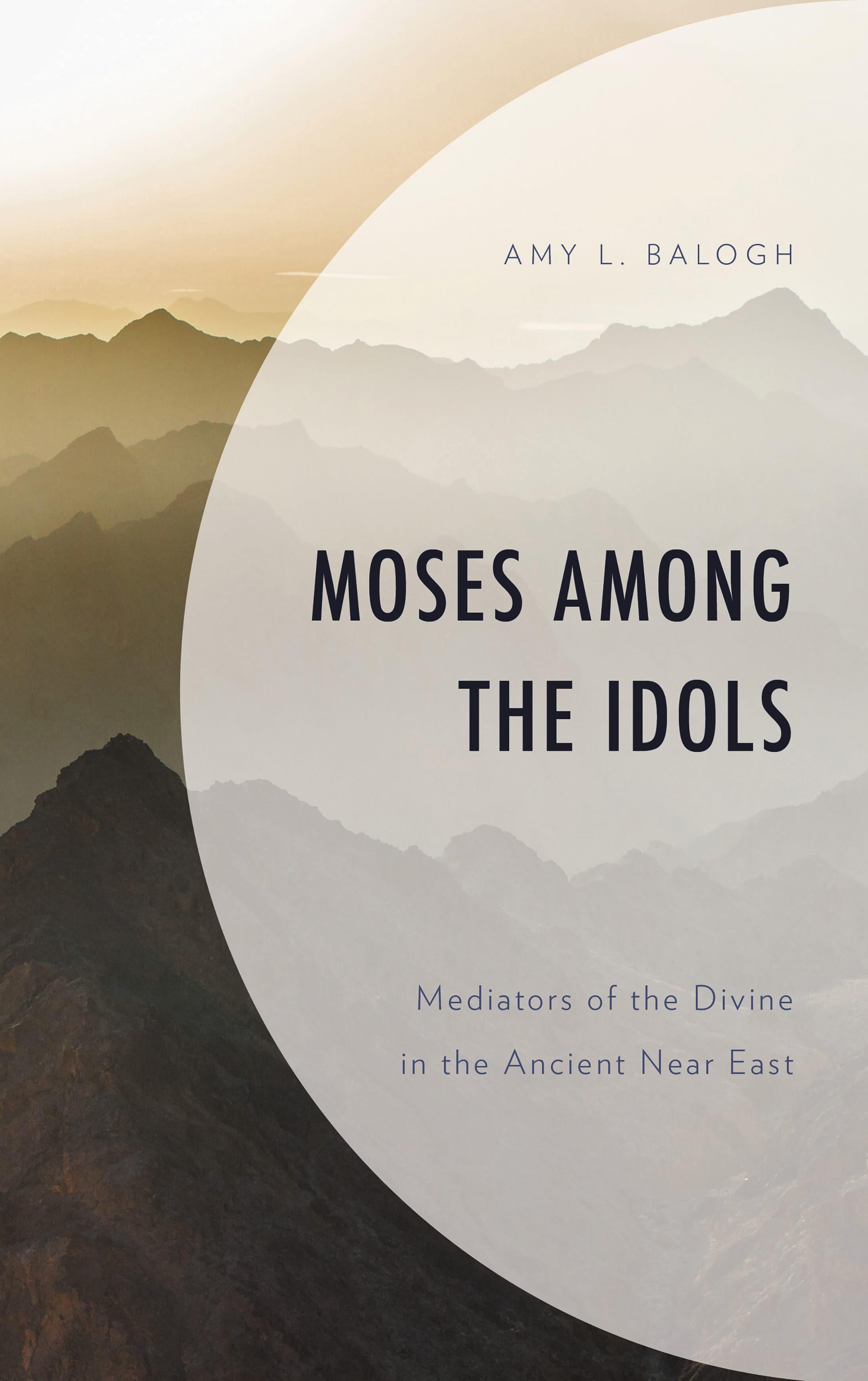
In Moses among the Idols: Mediators of the Divine in the Ancient Near East, Balogh simultaneously redefines one of the greatest figures in the history of religion and challenges the historically popular understanding of ancient Mesopotamian idols as the idle objects of antiquated faiths. Drawing on interdisciplinary research and methods of comparison, Balogh not only offers new insight into the lives of idols as active mediators between humanity and divinity, she also makes the case that when it comes to understanding the figure of Moses, Mesopotamian idols are the best analogy that the ancient Near East provides. This new understanding of Moses, idols, and the interplay between the two on the stage of history and within the biblical text has been made possible only with the recent publication of pertinent texts from ancient Mesopotamia.
Drawing from the fields of Assyriology, biblical studies, comparative religion, and archaeology, Balogh identifies a problem with Moses’s status, and offers an unexpected solution to that problem. Moses among the Idols centers on the question: What is it that transforms Moses from an inadequate representative of Yahweh who is “uncircumcised of lips” to “god to Pharaoh” (Exodus 6:28-7:1)? In this moment, Moses undergoes a status change best understood through comparison with the induction ritual for ancient Mesopotamian idols as described in the texts of the Mis P?, “Washing” or “Purification of the Mouth.” This solution to the problem of Moses’s status explains not only his status change, but also why Moses radiates light after speaking with YHWH (Exod 34:29-35), and his peculiar relationship with YHWH and people of Israel. The comparative, interdisciplinary perspective provided by Balogh allows one to read these and other millennia-old interpretive issues anew, and to do so in a way that underscores the contribution of in-depth comparison to our understanding of ancient civilizations, texts, and intellectual frameworks.
Drawing from the fields of Assyriology, biblical studies, comparative religion, and archaeology, Balogh identifies a problem with Moses’s status, and offers an unexpected solution to that problem. Moses among the Idols centers on the question: What is it that transforms Moses from an inadequate representative of Yahweh who is “uncircumcised of lips” to “god to Pharaoh” (Exodus 6:28-7:1)? In this moment, Moses undergoes a status change best understood through comparison with the induction ritual for ancient Mesopotamian idols as described in the texts of the Mis P?, “Washing” or “Purification of the Mouth.” This solution to the problem of Moses’s status explains not only his status change, but also why Moses radiates light after speaking with YHWH (Exod 34:29-35), and his peculiar relationship with YHWH and people of Israel. The comparative, interdisciplinary perspective provided by Balogh allows one to read these and other millennia-old interpretive issues anew, and to do so in a way that underscores the contribution of in-depth comparison to our understanding of ancient civilizations, texts, and intellectual frameworks.
Zahle einfach mit Karte, Klarna, Apple Pay oder Google Pay. Nicht zufrieden? Du hast immer ein 14-tägiges Widerrufsrecht. Lies mehr in unseren AGB. Hast du Fragen, schreib uns eine E-Mail an hello@memmo.org.
Memmo macht das Lernen einfacher – wo auch immer du bist. Bei uns findest du deine Kursbücher und smarte Lerntools an einem Ort: Zusammenfassungen, Quizzes, Podcasts und Lernkarten. Und Ted, dein Lernbuddy, beantwortet alles, was du wissen möchtest. Über 50.000 Studierende lernen bereits hier – gemacht, damit du schneller lernst und weniger Stress hast.