
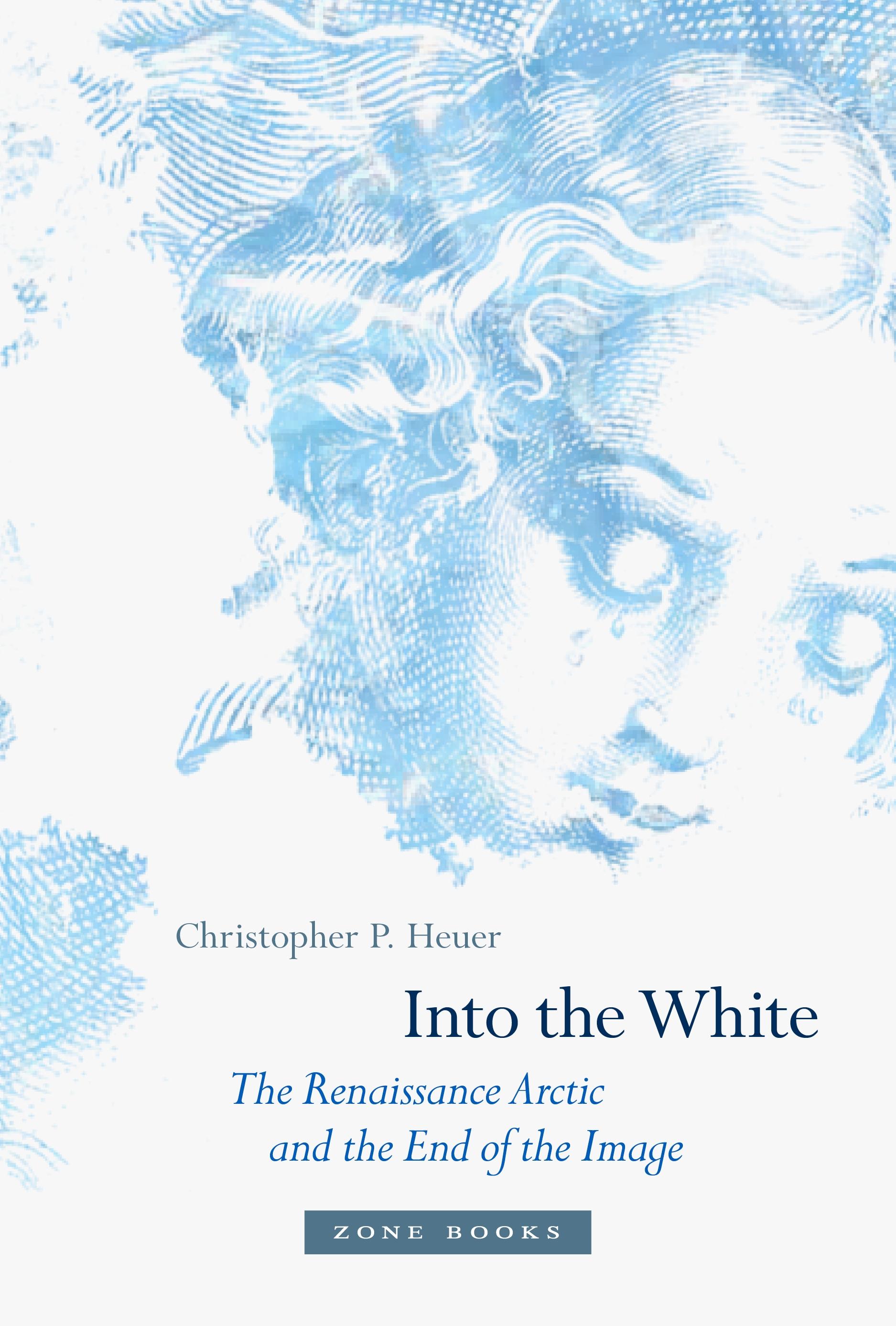
European narratives of the Atlantic New World tell stories of people and things: strange flora, wondrous animals, and sun-drenched populations for Europeans to mythologize or exploit. Yet between 1500 and 1700 one region upended all of these conventions in travel writing, science, and, most unexpectedly, art: the Arctic. Icy, unpopulated, visually and temporally “abstract,” the far North – a different kind of terra incognita for the Renaissance imagination – offered more than new stuff to be mapped, plundered, or even seen. Neither a continent, an ocean, nor a meteorological circumstance, the Arctic forced visitors from England, the Netherlands, Germany, and Italy, to grapple with what we would now call a “nonsite,” spurring dozens of previously unknown works, objects, and texts – and this all in an intellectual and political milieu crackling with Reformation debates over art’s very legitimacy.
Into the White uses five case studies to probe how the early modern Arctic (as site, myth, and ecology) affected contemporary debates of perception and matter, of representation, discovery, and the time of the earth – long before the nineteenth century romanticized the polar landscape. In the far North, this book contends, the Renaissance exotic became something far stranger than the marvelous or the curious, something darkly material and unmasterable, something beyond the idea of image itself.
Zahle einfach mit Karte, Klarna, Apple Pay oder Google Pay. Nicht zufrieden? Du hast immer ein 14-tägiges Widerrufsrecht. Lies mehr in unseren AGB. Hast du Fragen, schreib uns eine E-Mail an hello@memmo.org.
Memmo macht das Lernen einfacher – wo auch immer du bist. Bei uns findest du deine Kursbücher und smarte Lerntools an einem Ort: Zusammenfassungen, Quizzes, Podcasts und Lernkarten. Und Ted, dein Lernbuddy, beantwortet alles, was du wissen möchtest. Über 50.000 Studierende lernen bereits hier – gemacht, damit du schneller lernst und weniger Stress hast.