
This book is available as open access through the Bloomsbury Open Access programme and is available on www.bloomsburycollections.com.
Chris Marsden maneuvers through the hype articulated by Netwrok Neutrality advocates and opponents. He offers a clear-headed analysis of the high stakes in this debate about the Internet's future, and fearlessly refutes the misinformation and misconceptions that about' Professor Rob Freiden, Penn State University
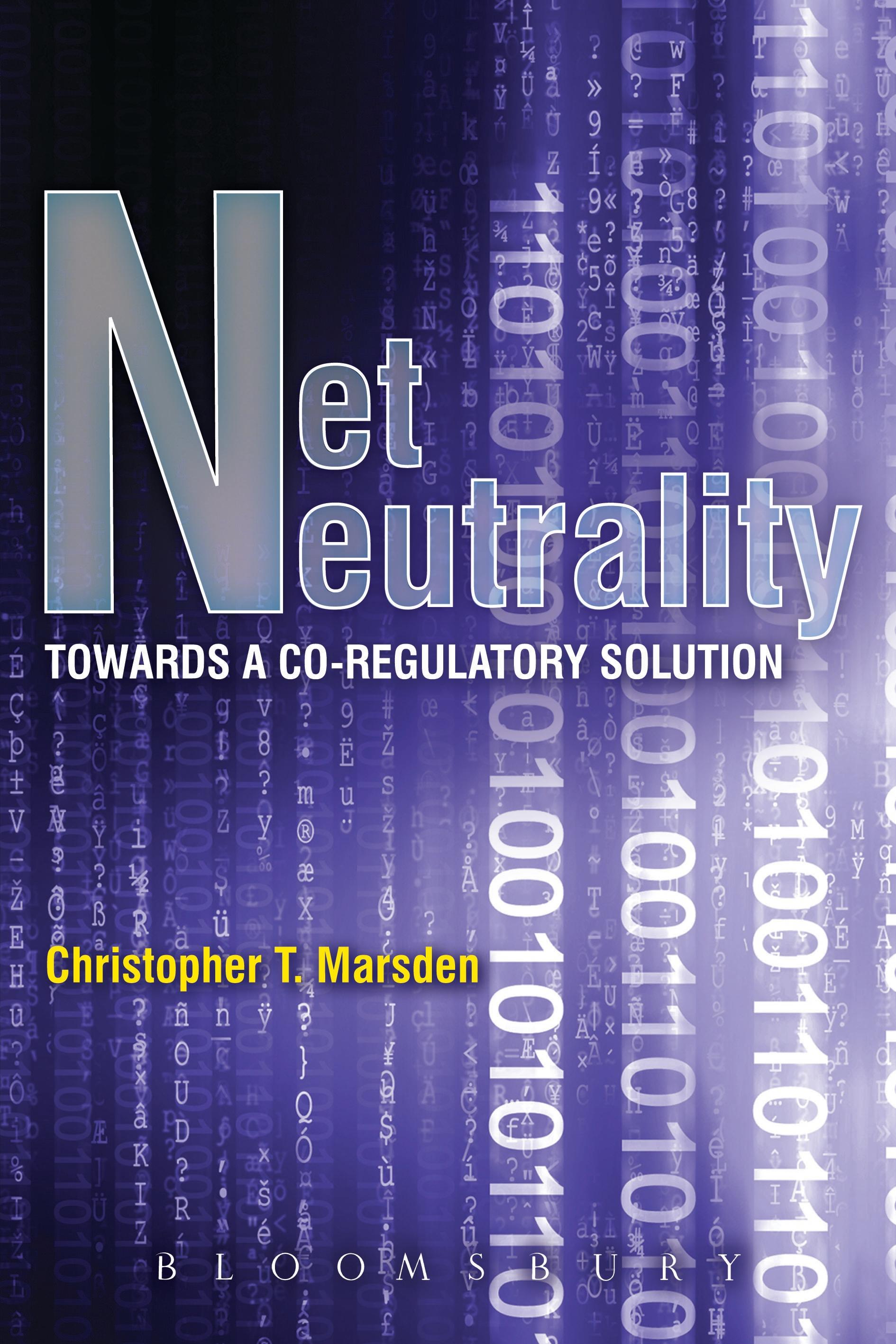
Net Neutrality is a very heated and contested policy principle regarding access for content providers to the Internet end-user, and potential discrimination in that access where the end-user's ISP (or another ISP) blocks that access in part or whole. The suggestion has been that the problem can be resolved by either introducing greater competition, or closely policing conditions for vertically integrated service, such as VOIP.
However, that is not the whole story, and ISPs as a whole have incentives to discriminate between content for matters such as network management of spam, to secure and maintain customer experience at current levels, and for economic benefit from new Quality of Service standards. This includes offering a 'priority lane' on the network for premium content types such as video and voice service. The author considers market developments and policy responses in Europe and the United States, draws conclusions and proposes regulatory recommendations.
Chris Marsden maneuvers through the hype articulated by Netwrok Neutrality advocates and opponents. He offers a clear-headed analysis of the high stakes in this debate about the Internet's future, and fearlessly refutes the misinformation and misconceptions that about' Professor Rob Freiden, Penn State University
Net Neutrality is a very heated and contested policy principle regarding access for content providers to the Internet end-user, and potential discrimination in that access where the end-user's ISP (or another ISP) blocks that access in part or whole. The suggestion has been that the problem can be resolved by either introducing greater competition, or closely policing conditions for vertically integrated service, such as VOIP.
However, that is not the whole story, and ISPs as a whole have incentives to discriminate between content for matters such as network management of spam, to secure and maintain customer experience at current levels, and for economic benefit from new Quality of Service standards. This includes offering a 'priority lane' on the network for premium content types such as video and voice service. The author considers market developments and policy responses in Europe and the United States, draws conclusions and proposes regulatory recommendations.
Zahle einfach mit Karte, Klarna, Apple Pay oder Google Pay. Nicht zufrieden? Du hast immer ein 14-tägiges Widerrufsrecht. Lies mehr in unseren AGB. Hast du Fragen, schreib uns eine E-Mail an hello@memmo.org.
Memmo macht das Lernen einfacher – wo auch immer du bist. Bei uns findest du deine Kursbücher und smarte Lerntools an einem Ort: Zusammenfassungen, Quizzes, Podcasts und Lernkarten. Und Ted, dein Lernbuddy, beantwortet alles, was du wissen möchtest. Über 50.000 Studierende lernen bereits hier – gemacht, damit du schneller lernst und weniger Stress hast.