
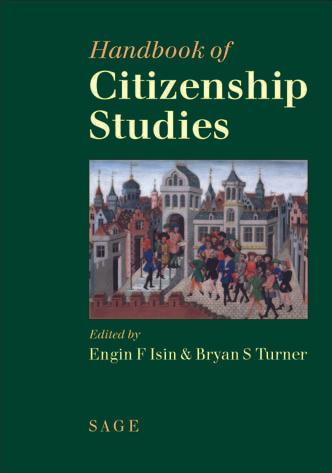
From women′s rights, civil rights, and sexual rights for gays and lesbians to disability rights and language rights, we have experienced in the past few decades a major trend in Western nation-states towards new claims for inclusion. This trend has echoed around the world: from the Zapatistas to Chechen and Kurdish nationalists, social and political movements are framing their struggles in the languages of rights and recognition, and hence, of citizenship.
Citizenship has thus become an increasingly important axis in the social sciences. Social scientists have been rethinking the role of political agent or subject. Not only are the rights and obligations of citizens being redefined, but also what it means to be a citizen has become an issue of central concern.
As the process of globalization produces multiple diasporas, we can expect increasingly complex relationships between homeland and host societies that will make the traditional idea of national citizenship problematic. As societies are forced to manage cultural difference and associated tensions and conflict, there will be changes in the processes by which states allocate citizenship and a differentiation of the category of citizen.
This book constitutes the most authoritative and comprehensive guide to the terrain. Drawing on a wealth of interdisciplinary knowledge, and including some of the leading commentators of the day, it is an essential guide to understanding modern citizenship.
About the editors:
Engin F Isin is Associate Professor of Social Science at York University. His recent works include Being Political: Genealogies of Citizenship (Minnesota, 2002) and, with P K Wood, Citizenship and Identity (Sage, 1999). He is the Managing Editor of Citizenship Studies.
Bryan S Turner is Professor of Sociology at the University of Cambridge. He has written widely on the sociology of citizenship in Citizenship and Capitalism (Unwin Hyman, 1986) and Citizenship and Social Theory (Sage, 1993). He is also the author of The Body and Society (Sage, 1996) and Classical Sociology (Sage, 1999), and has been editor of Citizenship Studies since 1997.
Zahle einfach mit Karte, Klarna, Apple Pay oder Google Pay. Nicht zufrieden? Du hast immer ein 14-tägiges Widerrufsrecht. Lies mehr in unseren AGB. Hast du Fragen, schreib uns eine E-Mail an hello@memmo.org.
Memmo macht das Lernen einfacher – wo auch immer du bist. Bei uns findest du deine Kursbücher und smarte Lerntools an einem Ort: Zusammenfassungen, Quizzes, Podcasts und Lernkarten. Und Ted, dein Lernbuddy, beantwortet alles, was du wissen möchtest. Über 50.000 Studierende lernen bereits hier – gemacht, damit du schneller lernst und weniger Stress hast.