
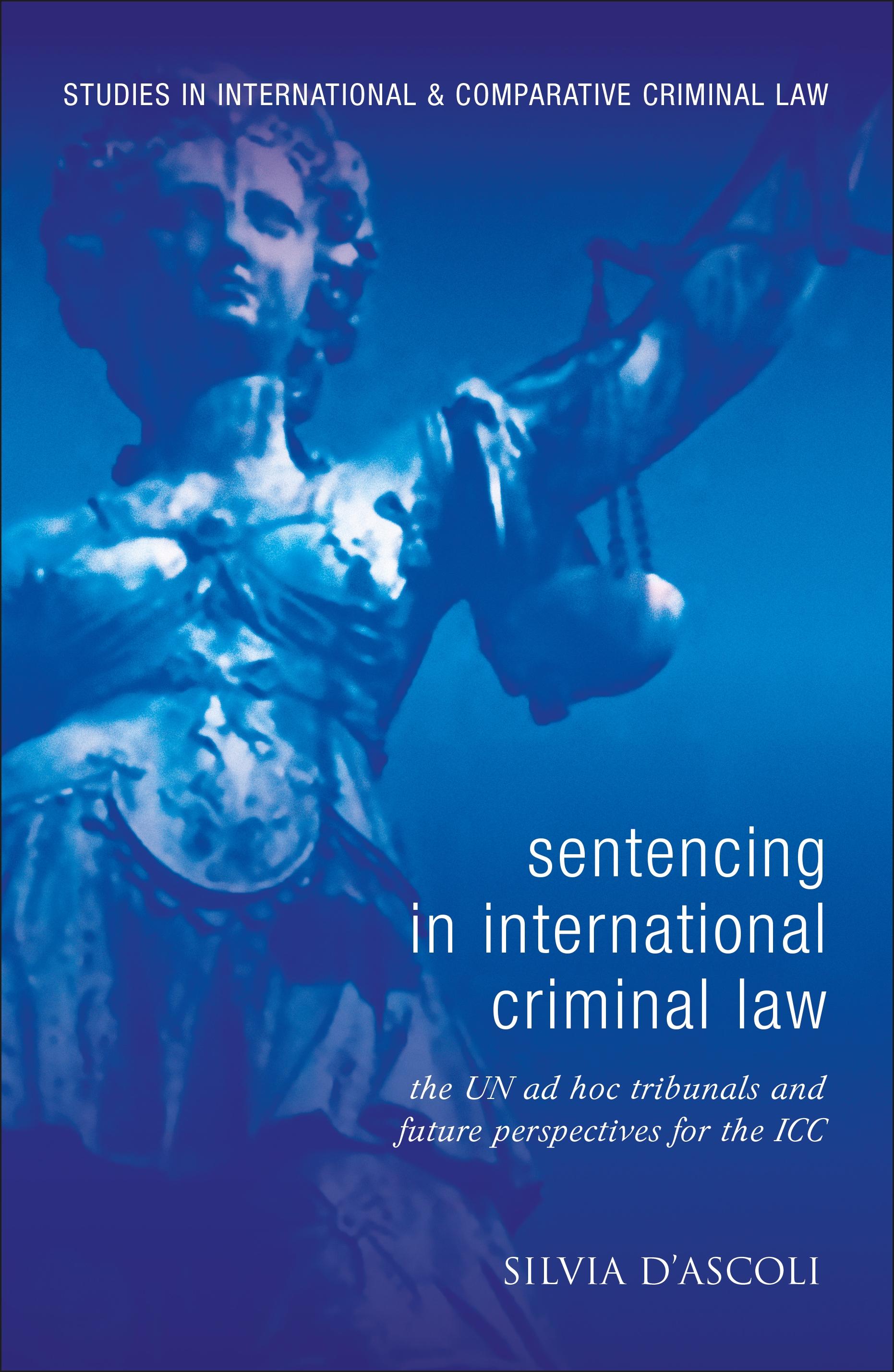
This book deals with sentencing in international criminal law, focusing on the approach of the UN ad hoc Tribunals for the former Yugoslavia (ICTY) and Rwanda (ICTR). In contrast to sentencing in domestic jurisdictions, and in spite of its growing importance, sentencing law is a part of international criminal law that is still 'under construction' and is unregulated in many aspects.
International sentencing law and practice is not yet defined by exact norms and principles and as yet there is no body of international principles concerning the determination of sentence, notwithstanding the huge volume of sentencing research and the extensive modern debate about sentencing principles. Moreover international judges receive very little guidance in sentencing matters: this contributes to inconsistencies and may increase the risk that similar cases will be sentenced in different ways.
One purpose of this book is to investigate and evaluate the process of international sentencing, especially as interpreted by the ICTY and the ICTR, and to suggest a more comprehensive and coherent system of guiding principles, which will foster the development of a law of sentencing for international criminal justice.
The book discusses the law and jurisprudence of the ad hoc Tribunals, and also presents an empirical analysis of influential factors and other data from ICTY and ICTR sentencing practice, thus offering quantitative support for the doctrinal analysis.
This publication is one of the first to be entirely devoted to the process of sentencing in international criminal justice. The book will thus be of great interest to practitioners, academics and students of the subject.
International sentencing law and practice is not yet defined by exact norms and principles and as yet there is no body of international principles concerning the determination of sentence, notwithstanding the huge volume of sentencing research and the extensive modern debate about sentencing principles. Moreover international judges receive very little guidance in sentencing matters: this contributes to inconsistencies and may increase the risk that similar cases will be sentenced in different ways.
One purpose of this book is to investigate and evaluate the process of international sentencing, especially as interpreted by the ICTY and the ICTR, and to suggest a more comprehensive and coherent system of guiding principles, which will foster the development of a law of sentencing for international criminal justice.
The book discusses the law and jurisprudence of the ad hoc Tribunals, and also presents an empirical analysis of influential factors and other data from ICTY and ICTR sentencing practice, thus offering quantitative support for the doctrinal analysis.
This publication is one of the first to be entirely devoted to the process of sentencing in international criminal justice. The book will thus be of great interest to practitioners, academics and students of the subject.
Zahle einfach mit Karte, Klarna, Apple Pay oder Google Pay. Nicht zufrieden? Du hast immer ein 14-tägiges Widerrufsrecht. Lies mehr in unseren AGB. Hast du Fragen, schreib uns eine E-Mail an hello@memmo.org.
Memmo macht das Lernen einfacher – wo auch immer du bist. Bei uns findest du deine Kursbücher und smarte Lerntools an einem Ort: Zusammenfassungen, Quizzes, Podcasts und Lernkarten. Und Ted, dein Lernbuddy, beantwortet alles, was du wissen möchtest. Über 50.000 Studierende lernen bereits hier – gemacht, damit du schneller lernst und weniger Stress hast.