
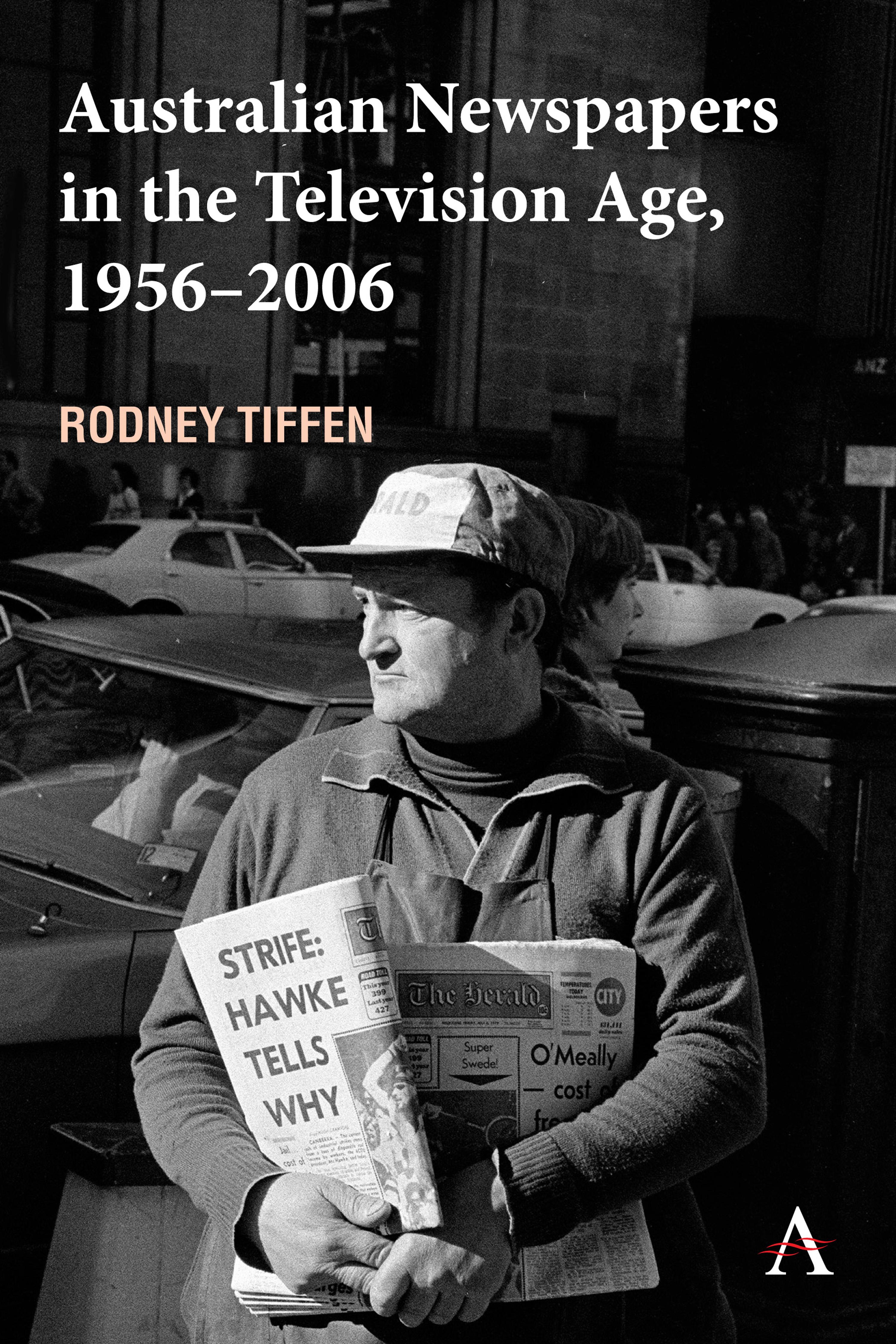
This book looks at Australian newspapers over the half century following the introduction of television in 1956. Through a quantitative study, it illuminates how the nature of news has changed and how central journalistic practices have developed. It examines newspapers’ changing size and structure, their story priorities, their use of visual aids and interpretive frames, their changing range and treatment of sources, and how these changes affected their political and international coverage.
The content analysis shows a dominant theme of growth and improvement. Newspapers offered their readers much more at the end of the half century than at the beginning. The much larger volume of news was presented in more visually attractive and reader-friendly ways than before. News agendas expanded in response both to changing reader interests and a changing political environment. Newspapers had a more active orientation towards using a wider range of sources. All papers shared in the major trends but to varying degrees so that by the end of the period there were sharper differences between the papers than at the beginning.
Mapping the multi-dimensional nature of change in this pivotal period lays a groundwork for analysing the changing nature of journalism during the existential crisis that news organisations are now facing during the digital age.
Zahle einfach mit Karte, Klarna, Apple Pay oder Google Pay. Nicht zufrieden? Du hast immer ein 14-tägiges Widerrufsrecht. Lies mehr in unseren AGB. Hast du Fragen, schreib uns eine E-Mail an hello@memmo.org.
Memmo macht das Lernen einfacher – wo auch immer du bist. Bei uns findest du deine Kursbücher und smarte Lerntools an einem Ort: Zusammenfassungen, Quizzes, Podcasts und Lernkarten. Und Ted, dein Lernbuddy, beantwortet alles, was du wissen möchtest. Über 50.000 Studierende lernen bereits hier – gemacht, damit du schneller lernst und weniger Stress hast.