
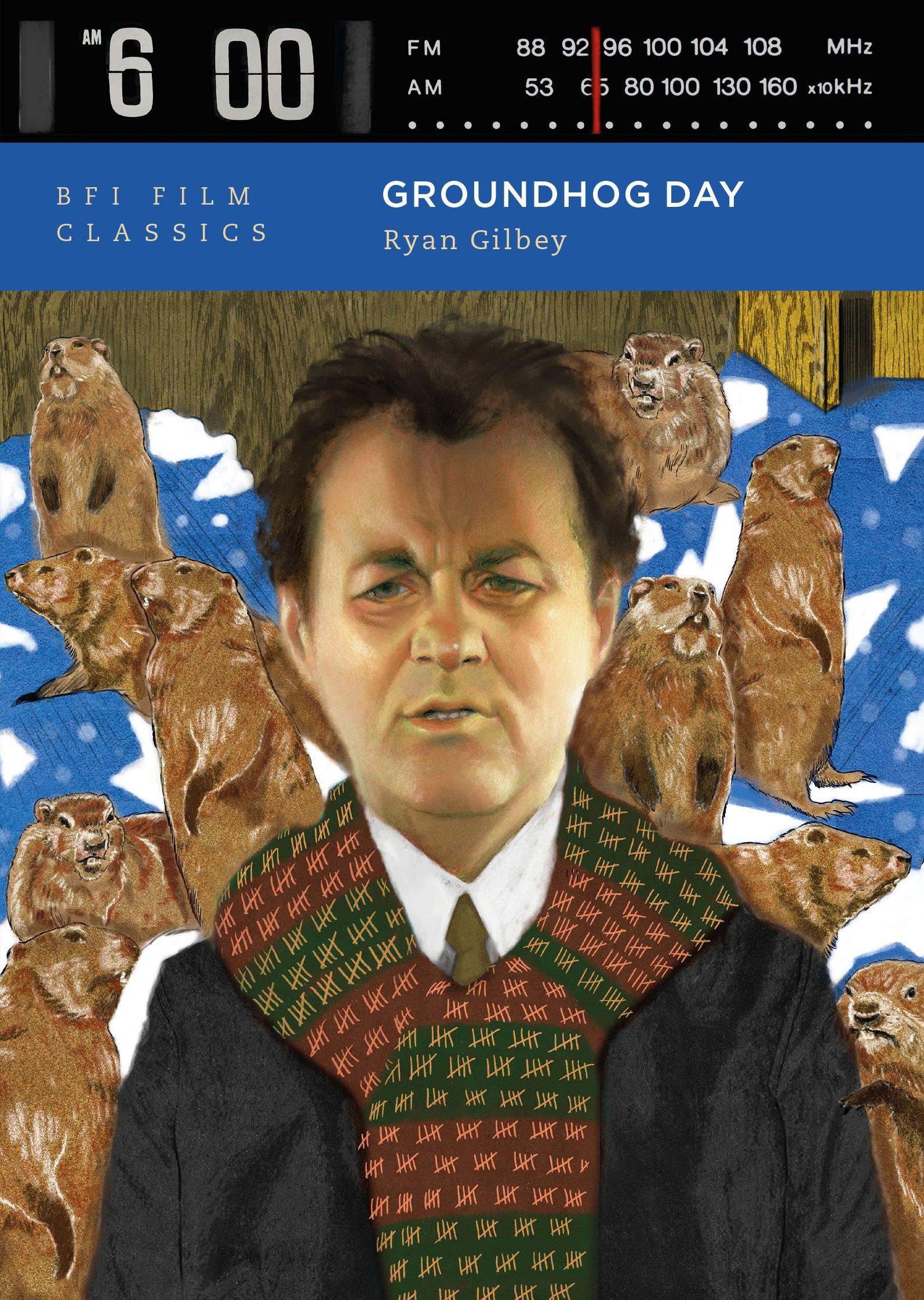
Groundhog Day (1993), directed by Harold Ramis and starring Bill Murray, is widely regarded as one of the most original and enduring films of 1990s Hollywood. What begins as a high-concept romantic comedy about a cynical television weatherman forced to repeatedly relive the same day soon deepens into a tale of despair and renewal, coloured by existential unease and the spirit of Samuel Beckett.
In this engaging study, Ryan Gilbey traces the film's unlikely journey from Danny Rubin's speculative script, centred on a man condemned to eternity in a small town, to its transformation into a studio classic. Drawing on fresh interviews with Rubin, Gilbey explores the inspired casting of Murray and Andie MacDowell, the film's quietly radical structure, and the delicate balance between comedy and melancholy that gives Groundhog Day its lasting power.
This new edition includes an afterword in which Gilbey reflects on the film's continuing cultural impact, its themes of repetition and despair assuming fresh resonance in the wake of the Covid-19 pandemic with its cycle of lockdown and re-opening. He considers Groundhog Day's influence on movies and television from Source Code (2011) and Edge of Tomorrow (2014) to Russian Doll (2019–2022) and I May Destroy You (2020), as well as the 2016 stage musical based on the movie. Groundhog Day, Gilbey argues, has become more than a film; it is now a lens through which we examine repetition, transformation and the rhythms of contemporary life.
In this engaging study, Ryan Gilbey traces the film's unlikely journey from Danny Rubin's speculative script, centred on a man condemned to eternity in a small town, to its transformation into a studio classic. Drawing on fresh interviews with Rubin, Gilbey explores the inspired casting of Murray and Andie MacDowell, the film's quietly radical structure, and the delicate balance between comedy and melancholy that gives Groundhog Day its lasting power.
This new edition includes an afterword in which Gilbey reflects on the film's continuing cultural impact, its themes of repetition and despair assuming fresh resonance in the wake of the Covid-19 pandemic with its cycle of lockdown and re-opening. He considers Groundhog Day's influence on movies and television from Source Code (2011) and Edge of Tomorrow (2014) to Russian Doll (2019–2022) and I May Destroy You (2020), as well as the 2016 stage musical based on the movie. Groundhog Day, Gilbey argues, has become more than a film; it is now a lens through which we examine repetition, transformation and the rhythms of contemporary life.
Zahle einfach mit Karte, Klarna, Apple Pay oder Google Pay. Nicht zufrieden? Du hast immer ein 14-tägiges Widerrufsrecht. Lies mehr in unseren AGB. Hast du Fragen, schreib uns eine E-Mail an hello@memmo.org.
Memmo macht das Lernen einfacher – wo auch immer du bist. Bei uns findest du deine Kursbücher und smarte Lerntools an einem Ort: Zusammenfassungen, Quizzes, Podcasts und Lernkarten. Und Ted, dein Lernbuddy, beantwortet alles, was du wissen möchtest. Über 50.000 Studierende lernen bereits hier – gemacht, damit du schneller lernst und weniger Stress hast.