
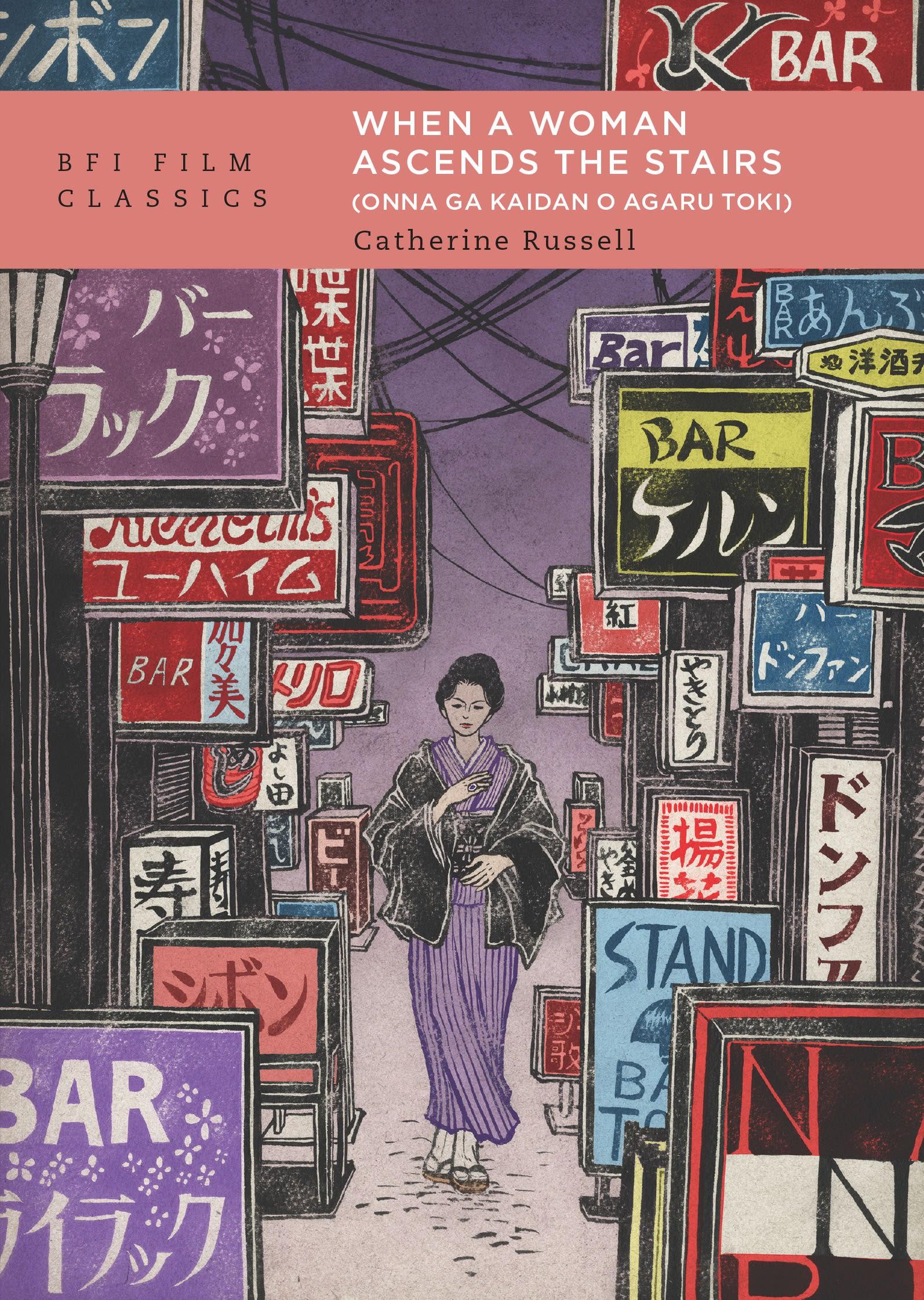
Mikio Naruse's When A Woman Ascends The Stairs (1960) combines high melodrama with modernist film language, telling the story of Keiko, a bar hostess struggling to succeed in Tokyo's Ginza district.
Catherine Russell's study of the film provides an in-depth analysis of Naruse's distinctive filmmaking, from his use of two-shots in confined spaces, unique lighting techniques, and his "invisible" and "rhythmic" editing style. She analyses the recurring motif of a woman's white-stockinged feet climbing stairs, considering how this symbolizes the social dynamics of the high-class Japanese sex industry that sustains hostess bar culture.
Russell goes on to argue that the film is a “late” woman's film which engages with the institutional barriers to woman's success in postwar Japan. She situates the film within the trajectory of Naruse's career and analyses how his social critique is balanced with an aestheticization of a harsh and brutally gendered world, creating an affective tension that is symptomatic of Naruse's own position as an industrial worker.
Catherine Russell's study of the film provides an in-depth analysis of Naruse's distinctive filmmaking, from his use of two-shots in confined spaces, unique lighting techniques, and his "invisible" and "rhythmic" editing style. She analyses the recurring motif of a woman's white-stockinged feet climbing stairs, considering how this symbolizes the social dynamics of the high-class Japanese sex industry that sustains hostess bar culture.
Russell goes on to argue that the film is a “late” woman's film which engages with the institutional barriers to woman's success in postwar Japan. She situates the film within the trajectory of Naruse's career and analyses how his social critique is balanced with an aestheticization of a harsh and brutally gendered world, creating an affective tension that is symptomatic of Naruse's own position as an industrial worker.
Seiten: 88
Kategorie: Film- & Medievetenskap
e-ISBN: 9781839026447
Versandgewicht: 1.2 kg
Versand in: 1-2 Tage
Zahle einfach mit Karte, Klarna, Apple Pay oder Google Pay. Nicht zufrieden? Du hast immer ein 14-tägiges Widerrufsrecht. Lies mehr in unseren AGB. Hast du Fragen, schreib uns eine E-Mail an hello@memmo.org.
Memmo macht das Lernen einfacher – wo auch immer du bist. Bei uns findest du deine Kursbücher und smarte Lerntools an einem Ort: Zusammenfassungen, Quizzes, Podcasts und Lernkarten. Und Ted, dein Lernbuddy, beantwortet alles, was du wissen möchtest. Über 50.000 Studierende lernen bereits hier – gemacht, damit du schneller lernst und weniger Stress hast.